
Beet root weevil
Cleonis glaucus
Description
How to identify
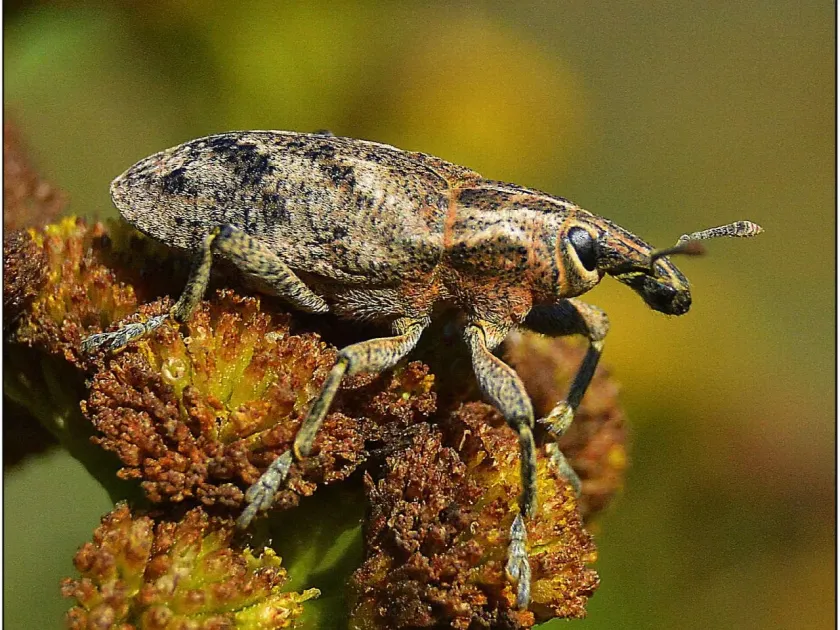
The beet root weevil (Cleonis glaucus) belongs to the order Coleoptera and the Curculionidae family. Adults are large weevils, measuring 12–18 mm, with a robust body covered in greyish or brownish scales that provide effective camouflage on soil surfaces.
They are characterized by a strong rostrum adapted to boring into tough plant tissues. The larvae are typical of the weevil family: legless, C-shaped, fleshy, and white in color with a distinctive brown head, spending their entire development underground.
The insect’s cryptic lifestyle makes it difficult to detect during early stages of infestation. Adults are often found hiding in soil crevices or near the base of host plants, which facilitates their survival in various environmental conditions.
Developmental timing is highly dependent on soil temperature. Adults emerge in spring when the soil warms up, beginning a period of supplementary feeding on leaves before mating and laying eggs in the soil near the host plants.
Climatic factors play a crucial role in population dynamics. Dry, hot seasons typically accelerate the development of the larvae and increase the overall survival rate of the offspring, leading to higher infestation pressure.
What it damages
The primary hosts of this pest include sugar beets, table beets, and fodder beets. When preferred hosts are scarce, they can occasionally feed on other Chenopodiaceae plants and associated weeds found in the field margins.
Larval feeding is the most destructive phase. Larvae bore deep, winding galleries inside the main taproot, which significantly impairs the plant's ability to transport nutrients and water from the root to the foliage.
Damaged plants exhibit reduced growth, wilting during daytime heat, and a dramatic decrease in both total root mass and sucrose content. This translates into direct yield losses and lower sugar extraction efficiency.
Adult weevils consume foliage, leaving irregular, notched edges on the leaves. In high populations, they may destroy young seedling stands by severing stems at the base, leading to uneven crop density and empty patches in the field.
Furthermore, the physical injury caused by larval tunneling acts as an entry point for various secondary infections and decay-causing fungi. This compromises the post-harvest storage quality of the affected beets.
When it appears
Emergence of overwintered adults typically coincides with the seedling emergence phase of the sugar beet crop. This process is usually spread out over time, depending on soil warming patterns in the spring.
The peak period for mating and oviposition occurs in May and June. During this time, adults are most active on the soil surface and foliage, making this the critical window for monitoring the pest population.
Larval development occurs throughout the summer months. The infestation becomes most evident during the mid-summer period (July and August), when larvae reach larger instars and cause substantial internal damage to the taproots.
Pupation takes place within the soil, typically in the second half of the summer. New generation adults remain in the soil as they prepare for winter diapause, completing the annual cycle.
For effective agronomic management, it is essential to monitor for the pest throughout the entire growing season, keeping in mind the shift in damage types from leaf feeding in spring to root feeding in summer.
Signs of infestation
Initial signs of infestation appear on the leaves as irregular notches along the edges, caused by adult feeding. Monitoring for these leaf damages is crucial in the early development stages of the crop.
Patchy wilting of plants during hot, sunny weather is a clear indicator that the root system has been compromised by larvae. Digging up and inspecting these wilting plants usually reveals distinct galleries within the taproot.
Soil excavations around the base of the plants can reveal larvae of various ages. The presence of excrement within the tunnels inside the root confirms the infestation by this specific weevil species.
Reduced root size and uneven plant development at harvest are clear indicators of a past infestation. Such roots are often characterized by internal cavities and compromised structural integrity.
- Notched leaf edges caused by adults.
- Wilting of plants in daytime heat.
- Deep galleries and tunnels in taproots.
- Stunted plant growth and development.
- Larvae present in soil during excavations.
Control measures
A solid crop rotation plan is the cornerstone of control. Avoiding the cultivation of sugar beets in fields where other Chenopodiaceae were recently grown significantly reduces the risk of population buildup.
Deep autumn plowing is a highly effective cultural practice. It disrupts the overwintering sites of the weevils, exposing them to harsh temperatures and natural predators, thus significantly reducing the spring population.
Chemical protection for young seedlings is best achieved through insecticidal seed treatments. This ensures that the crop is protected from day one, minimizing damage during the most vulnerable seedling stage.
In-season foliar applications of systemic insecticides should be triggered by economic injury thresholds. It is recommended to spray in the evening hours when weevil activity on the foliage and soil surface is at its peak.
Rigorous weed control, particularly targeting Chenopodiaceae weeds, removes alternative food sources and breeding grounds for the weevil, helping to keep the overall field infestation under better management.
Taxonomy
- Latin name
- Cleonis glaucus
- Order
- Coleoptera (beetles)
- Family
- Curculionidae
- EPPO code
- CLEOGH
Discussion
No discussions yet — be the first.