
Cleonis coloradensis
Cleonis coloradensis
Description
How to identify
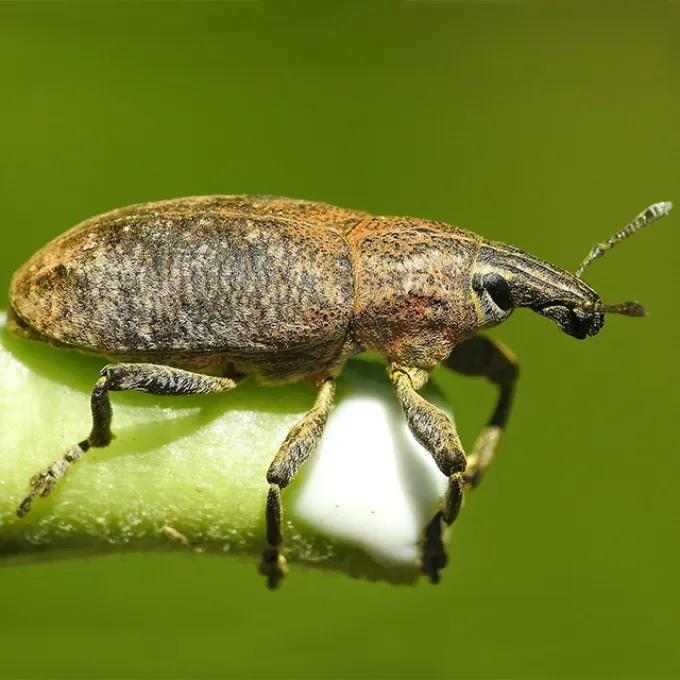
Cleonis coloradensis is a species of weevil (Curculionidae family) known as an agricultural pest. The adult beetle is characterized by an elongated body shape, typical of the genus Cleonis, and is covered in fine scales that provide a grayish, mottled camouflage appearance.
The head features a well-developed rostrum (snout), which is a key diagnostic feature of weevils. This structure allows the insect to feed effectively on plant tissues and access protected parts of the plant.
Larvae are legless, fleshy, and exhibit a creamy-white color with a distinct, hardened head capsule. They primarily lead a cryptic lifestyle, developing inside the roots or lower stems of host plants.
The morphology of the adult beetle includes specific patterns on the elytra, which helps in field identification. However, due to the diversity of weevils, microscopic examination is often required for precise species verification.
This beetle is well-adapted to semi-arid environments, making it a persistent threat in regions where its preferred host plants thrive in dry or saline soil conditions.
What it damages
The primary hosts for Cleonis coloradensis are plants in the Chenopodiaceae family, with sugar beet and fodder beet being the most economically significant victims of their feeding activity.
Adult beetles cause damage by feeding on the leaves, creating irregular notches along the edges of the leaf blades. This reduces the photosynthetic capacity of the plant during its critical early growth stages.
The larvae are responsible for more severe damage as they bore into the root system or the taproot of the beet. This tunneling interferes with water and nutrient transport, causing the plant to wilt and decline.
In addition to direct physiological stress, the damage created by larvae serves as an entry point for secondary pathogens, such as soil-borne fungi and bacteria, leading to rot and storage problems.
Heavy infestations can result in significant stand losses, reducing the overall sugar yield and quality of the crop, necessitating costly interventions and potential re-sowing of affected areas.
When it appears
The life cycle begins in spring when overwintering adults emerge from the soil as temperatures rise. This timing often coincides with the emergence of young beet seedlings, which are most vulnerable.
Adults engage in feeding and mating throughout late spring and early summer. During this period, they are active and move between plants, which is when most monitoring efforts occur.
The species typically completes one generation per year. Larval development occurs throughout the summer months as they feed and grow within the host plant's root structures.
As autumn approaches, the newly emerged adults prepare for wintering. They seek shelter in the soil or under debris, where they remain in diapause until the following spring.
Environmental conditions, particularly soil moisture and temperature levels, play a crucial role in the survival rate of the larvae and the timing of the adult emergence in the subsequent season.
Signs of infestation
The first visual signs of infestation are notched or scalloped edges on the leaves of the beets, caused by the adult weevils feeding on the foliage.
Wilting of the plants during hot, sunny weather is a clear indicator that the root system has been compromised by larval tunneling, reducing the plant's ability to uptake water.
- Irregularly notched leaf margins.
- Stunted plant growth and localized wilting.
- Visible tunnels or galleries within harvested roots.
- Presence of adult weevils near the base of the plant during the day.
Digging up a wilting beet often reveals the larvae within the root, which provides definitive confirmation of the pest's presence in the field.
Infestation patches often start from the field edges near areas with high weed density, especially where Chenopodiaceae weeds are present, serving as a primary site of initial attack.
Control measures
Cultural control is essential, with deep autumn plowing being the most effective method to disrupt the life cycle of the beetles by destroying their overwintering sites in the soil.
Effective weed management is vital, as removing Chenopodiaceae weeds from the field borders and interior reduces the available host plants, limiting the population growth of the pest.
Proper crop rotation and maintaining spatial isolation between new beet fields and previous year's infested areas can significantly decrease the risk of colonization.
Chemical control should be applied based on economic injury thresholds derived from regular field scouting. Applying systemic or contact insecticides at the correct time is key to success.
Seed treatments with appropriate insecticides can protect young seedlings from the initial wave of adult feeding, providing the crop with a head start until it becomes more resilient.
Taxonomy
- Latin name
- Cleonis coloradensis
- Order
- Coleoptera (beetles)
- Family
- Curculionidae
- EPPO code
- CLEOCO
Discussion
No discussions yet — be the first.