
Zitting Cisticola
Cisticola juncidis
Description
How to identify
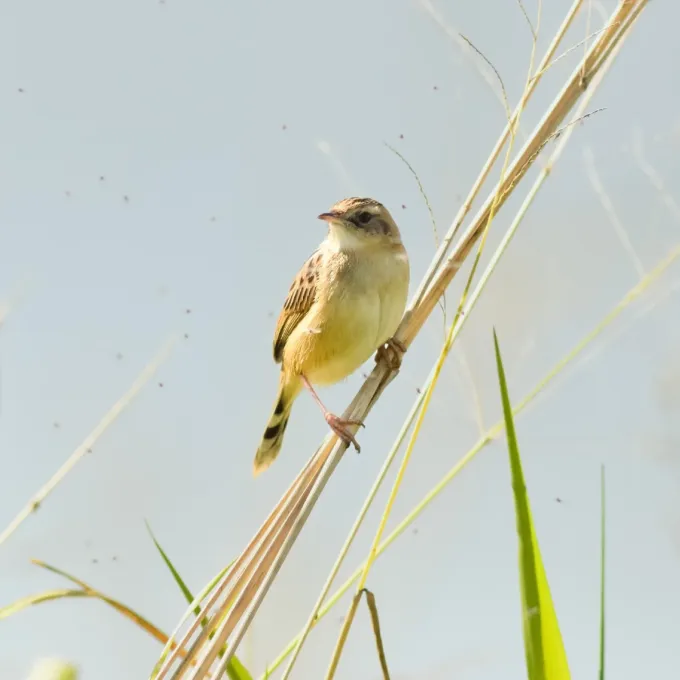
The Zitting Cisticola (Cisticola juncidis) is a small passerine bird belonging to the Cisticolidae family. These birds are tiny, usually measuring about 10–12 centimeters in length, with a cryptic, streaked brownish plumage.
Its common name, "Zitting," is derived from its repetitive alarm call, while "fan-tail" (referring to the fan-shaped tail) describes its characteristic flight behavior during courtship displays.
They are primarily found in open grassy habitats, wetlands, and various agricultural areas where they forage for small invertebrates in the lower vegetation layers.
Identifying this species in the field is easiest during the breeding season when males perform spectacular flight displays accompanied by a distinctive "zit-zit-zit" sound.
Although they serve as natural insect control agents, their nesting habits can sometimes conflict with intensive agricultural practices.
What it damages
The Zitting Cisticola causes damage primarily through its unique nesting behavior. It builds its nests by stitching together leaves and stems of tall grasses and crop plants using spider webs.
This behavior is particularly problematic in cereal crops like wheat, rice, and forage grasses. The binding of stems leads to stunted growth, distortion, and potential lodging of the crop.
Mechanical damage to the plant tissue often occurs, which can weaken the stems and make the crop more susceptible to secondary fungal or bacterial infections.
In high-density populations, the cumulative effect of many nests can interfere with mechanized harvesting, leading to yield losses and lower product quality.
The disturbance of the plant canopy can also create uneven ripening patterns across the field, which negatively impacts the uniformity of the harvest.
When it appears
The presence of the Zitting Cisticola in agricultural areas is highly seasonal, peaking during the spring and summer months when vegetation cover is at its densest.
The breeding season, which typically spans from late spring through mid-summer, is when the birds are most active and likely to build nests within the crop fields.
Because they are capable of multiple broods per season, the period of potential impact on the crops can extend for several months, depending on the local climate and temperature.
As the harvest approaches in late summer or autumn, the birds typically migrate or move to denser, non-crop habitats like reed beds, ending their interaction with the primary crop.
Monitoring for nesting activity should be intensified early in the growth stage to implement preventative measures before the nests become established.
Control measures
Management of the Zitting Cisticola should prioritize non-lethal and eco-friendly deterrents, as many populations are protected by local or international wildlife regulations.
Acoustic deterrents that broadcast the distress calls of predatory birds are highly effective at discouraging Zitting Cisticolas from settling in specific field sectors.
Good agricultural practices, such as maintaining weed-free field margins and buffer zones, significantly reduce the number of suitable nesting sites available to the birds.
Visual deterrents, including reflective tapes, scarecrows, or silhouette decoys of raptors, can be deployed during the critical nesting phase to keep the birds at bay.
An integrated strategy focusing on early monitoring and habitat management is the most sustainable approach to preventing crop damage while respecting local wildlife.
Taxonomy
- Latin name
- Cisticola juncidis
- Family
- Cisticolidae
- EPPO code
- CSTCJU
Discussion
No discussions yet — be the first.