
Mullein weevil
Cionus scrophulariae
Description
How to identify
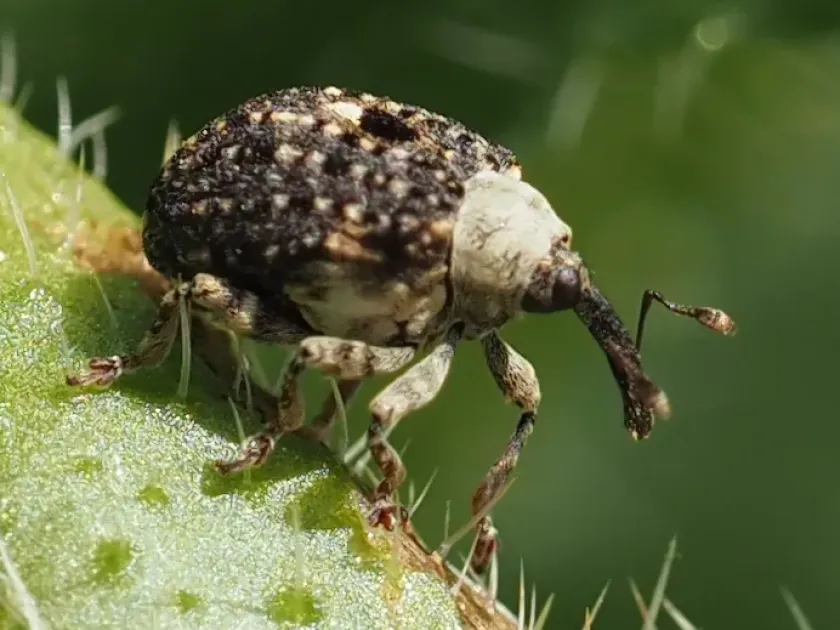
The Mullein weevil (Cionus scrophulariae) is a member of the Curculionidae family within the order Coleoptera. Adult beetles measure about 5–7 mm in length and possess the characteristic elongated snout common to all weevils.
The body is covered with dense, greyish-brown hairs. A key identification feature is the presence of three distinct dark spots on the elytra, each encircled by a lighter ring, which differentiates this species from other relatives.
The larvae have a pale yellow to whitish appearance. They are frequently covered in a layer of mucus, giving them a superficial resemblance to small slugs, which is an unusual trait among weevil larvae.
Pupation occurs within spherical, parchment-like cocoons. These are usually found attached to the stems or leaves of the host plant and exhibit a brownish, papery texture.
The life cycle involves complete metamorphosis. All developmental stages are highly dependent on plants within the Scrophulariaceae family, which serve as the exclusive source of nutrition and habitat.
What it damages
The Mullein weevil primarily targets plants in the Scrophulariaceae family, particularly species within the Scrophularia (figwort) and Verbascum (mullein) genera.
In ornamental gardening, this pest can significantly damage flower beds. The aesthetic value of these plants is severely compromised, and their overall vigor can be reduced by continuous feeding.
Adult beetles feed on leaves, creating irregular holes. In cases of high infestation, this can lead to extensive defoliation, severely inhibiting the plant's ability to perform photosynthesis.
The larvae are equally destructive, skeletonizing the leaves by consuming the soft tissue and leaving behind only the veins. This causes the leaves to wither and eventually turn brown and die.
In addition to foliage, large populations of the weevil may attack flower buds, preventing normal flowering and reducing seed production, which affects both the plant's beauty and its reproductive capacity.
When it appears
Adult beetles overwinter in sheltered locations such as leaf litter, plant debris, or the top layer of the soil, showing high cold tolerance to survive the winter months.
As temperatures rise in the spring, the beetles emerge from hibernation. They begin feeding on young leaves of figwort or mullein, preparing for the reproductive phase.
Mating and oviposition occur throughout late spring and early summer. Females lay eggs in small clusters on the undersides of leaves to protect the offspring from predators and environmental stress.
Larvae appear in early summer. They lead an exposed lifestyle, feeding openly on the leaves for several weeks as they develop toward the pupal stage.
A new generation of adults typically emerges in the second half of summer. They feed actively before seeking out suitable sites to hibernate once autumn temperatures begin to decline.
Signs of infestation
The most noticeable sign of an infestation is the presence of numerous irregular holes in the foliage, which expand rapidly as the larvae and adults continue to feed.
Upon inspecting the underside of the leaves, one can often find the slug-like, mucous-covered larvae. They remain relatively sedentary, making them easy to spot if you look closely.
The presence of small, spherical, papery cocoons fixed to the stems is a definitive indicator of an established Mullein weevil population developing on your plants.
Excrement from the larvae left on the damaged leaves, combined with the mucous trails, often creates a messy, sickly appearance that stands out from healthy vegetation.
General stunting of the plant, wilting of younger shoots, and premature yellowing in the middle of the growing season are strong indicators of significant pest pressure.
Control measures
For small-scale gardens, manual removal of the adults and larvae is highly effective. Regular monitoring and physical destruction of infested leaves and cocoons can significantly curb the population.
Good garden hygiene, specifically the removal of dead plant material in autumn, is essential for destroying overwintering sites and preventing the next season's infestation.
Biological control using entomopathogenic fungi or bacterial preparations can be an effective way to target larvae while minimizing the impact on beneficial garden insects.
In cases of severe infestation, systemic or contact-based insecticides approved for ornamental plants can be used to protect the crops and restore their health.
- Apply treatments during the evening to avoid harming pollinators
- Rotate chemical classes to prevent the development of pesticide resistance
- Remove weeds related to the Scrophulariaceae family from the garden area
- Use a surfactant or spreader-sticker to help treatments penetrate the larvae's mucous layer
Taxonomy
- Latin name
- Cionus scrophulariae
- Order
- Coleoptera (beetles)
- Family
- Curculionidae
- EPPO code
- CIOUSC
Discussion
No discussions yet — be the first.