
Ciona
Ciona
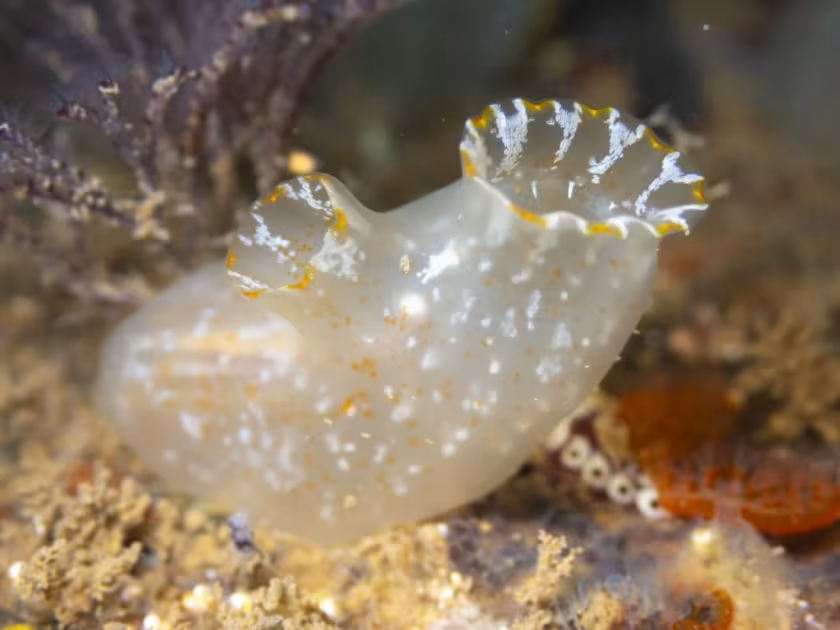
Description
How to identify
Ciona is a genus of tunicates within the class Ascidiacea. Known commonly as sea squirts, these marine invertebrates are recognized as significant biofoulers in global aquaculture environments.
They possess a sac-like body protected by a tunic made of cellulose-like material. They feature two siphons through which water is filtered, allowing them to capture plankton while attached to submerged objects.
The life cycle begins with a mobile, tadpole-like larva that searches for a suitable surface. Once they find a substrate, they undergo metamorphosis, becoming sessile organisms that remain fixed for the rest of their lives.
Due to their hermaphroditic nature and rapid growth rates, Ciona populations can expand aggressively, outcompeting native species for space and nutrients on marine structures.
Their high reproductive potential allows them to inhabit a wide range of water temperatures, making them a common sight on piers, vessel hulls, and aquaculture collection systems.
What it damages
Ciona does not affect terrestrial plants but acts as a major pest in aquaculture, specifically interfering with the farming of bivalves like mussels and oysters.
By settling on farming equipment, they add immense weight to submerged structures, leading to equipment failure and the structural collapse of oyster racks and mussel ropes.
Their filtering activity removes a significant portion of phytoplankton from the water, directly depriving farmed shellfish of the nutrients required for optimal growth and development.
The presence of Ciona on harvested products creates significant labor challenges, requiring extra costs for cleaning and processing before the seafood can be brought to market.
Furthermore, the dense colonies can cause localized environmental changes, potentially reducing water flow and oxygen levels around shellfish, which puts additional stress on the farmed species.
Control measures
Mitigation strategies primarily involve physical removal, which requires consistent and labor-intensive maintenance of aquaculture equipment to clear biofouling layers before they reach maturity.
Strategic management of harvesting and seeding schedules based on larval settlement monitoring is a proven method to avoid the most intense periods of Ciona infestation.
The use of eco-friendly anti-fouling treatments on ropes and submerged cages helps to reduce the ability of Ciona larvae to attach, significantly lengthening the service life of farm gear.
Environmental management techniques, such as adjusting the depth of submerged lines, can sometimes minimize the density of tunicates if the target depths are less favorable for larval attachment.
Continuous monitoring of water quality and the use of site-specific data allow aquaculture managers to make informed decisions regarding the timing of equipment maintenance and rotation.
Taxonomy
- Latin name
- Ciona
- Family
- Cionidae
- EPPO code
- CIONSP
Discussion
No discussions yet — be the first.