
Chthalamus stellatus
Chthalamus stellatus
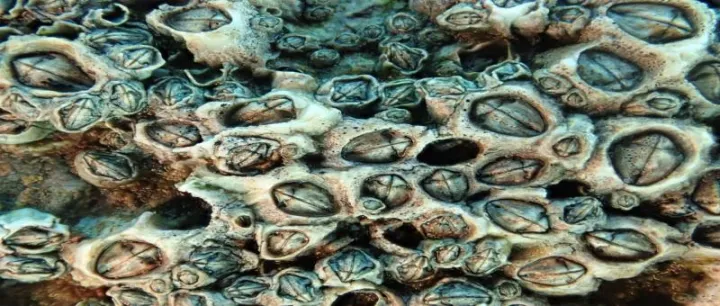
Description
How to identify
Chthalamus stellatus, commonly known as the stellate barnacle, is a species of crustacean belonging to the family Chthamalidae within the order Sessilia.
The organism is characterized by a conical shell composed of interlocking calcareous plates, typically displaying a greyish or whitish hue with distinct radial ridges.
These barnacles are sessile, meaning they permanently attach themselves to hard substrates like rocks, pier pilings, and various submerged man-made structures.
The species is highly resilient to desiccation, which allows it to thrive in the intertidal zone where it is exposed to air for significant portions of the day.
Their life cycle includes a planktonic larval phase, during which they drift with ocean currents until they locate a suitable surface to settle and undergo metamorphosis.
What it damages
While not a plant pathogen, Chthalamus stellatus is a significant pest in aquaculture and maritime industries due to its role in biofouling.
Massive colonization of net pens, cages, and filtration systems reduces water flow, which negatively affects oxygen levels and waste removal for cultivated species.
The weight of accumulated barnacle colonies places excessive stress on floating equipment, leading to increased wear, tears in netting, and structural failures.
Infrastructure such as water intake pipes, desalination plants, and pumps often suffer from severe clogging, resulting in reduced efficiency and higher energy costs.
Furthermore, the physical attachment of these crustaceans disrupts protective coatings on metal surfaces, accelerating the rate of corrosion in aquatic environments.
When it appears
The seasonal cycle of the stellate barnacle is largely driven by water temperature and food availability, which govern their reproduction and growth rates.
Spawning and the subsequent release of larvae into the water column typically peak during the warmer months of spring and summer.
The settlement phase, when larvae attach to substrates, is most intensive during these periods of higher thermal activity, leading to rapid expansion of colonies.
During colder winter months, the growth rate of adult barnacles significantly slows down, though they remain firmly attached to their host surfaces.
Successful colonization is highly dependent on timing, and agricultural managers often track water temperature to predict and preempt major settlement events.
Signs of infestation
The first sign of infestation is the appearance of tiny, star-shaped white spots on surfaces submerged in water, representing the newly settled larvae.
Operators will notice a distinct roughening of surface textures; when touched, equipment will feel coarse, almost like sandpaper or sharp gravel.
Advanced stages of infestation are characterized by a dense, calcified crust that entirely masks the underlying material, whether it be plastic, steel, or concrete.
The presence of debris and sediment trapped between the shell plates of the barnacles is another indicator of a long-established and dense colony.
Observing a significant increase in the weight or drag of submerged equipment is a clear functional sign that heavy biofouling has occurred.
Control measures
Mechanical cleaning using high-pressure water jets is the most common and effective method for removing barnacles from aquaculture netting and infrastructure.
The application of non-toxic anti-fouling coatings is a standard preventive measure used to deter larvae from settling on sensitive surfaces.
Routine inspections during peak settlement seasons allow for early intervention, enabling the removal of colonies before they reach their full, hardened size.
In some aquaculture setups, using specialized net materials with smoother textures can reduce the success rate of barnacle attachment.
For critical infrastructure like intake pipes, automated scraping or periodic thermal treatment can be employed to maintain clear water flow pathways.
Taxonomy
- Latin name
- Chthalamus stellatus
- Family
- Chthalamidae
- EPPO code
- CHTHST
Discussion
No discussions yet — be the first.