
Chthalamus
Chthalamus
Description
How to identify
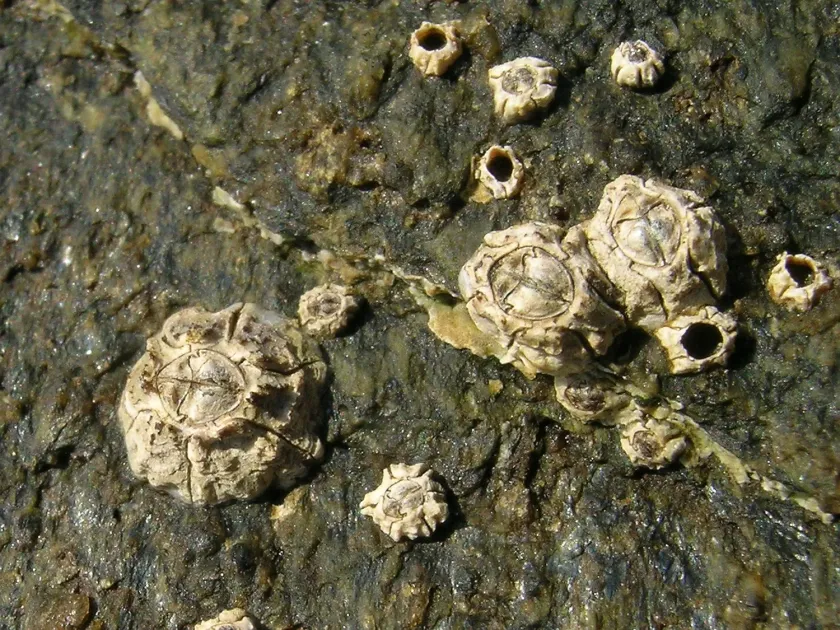
Chthalamus is a genus of acorn barnacles belonging to the family Chthamalidae. These organisms are sessile crustaceans with a hard, calcified shell.
Systematically, they are classified under the subphylum Crustacea. Their body is protected by a cone-shaped shell consisting of six fused plates.
They are characterized by their ability to remain tightly attached to rocks or artificial structures in the intertidal zone of marine environments.
When submerged, they extend their cirri (feathery appendages) to filter plankton from the surrounding seawater for nutrition.
Due to their evolutionary adaptation, they can survive temporary exposure to air during low tide, which is a key feature of their survival strategy.
What it damages
Chthalamus is not a pest of agricultural plants. It does not feed on crops and does not possess mouthparts capable of damaging plant tissues.
The primary economic impact of this organism relates to biofouling in marine-based agricultural infrastructure, such as desalination or irrigation plants.
Heavy colonization by these barnacles can obstruct water intake pipes, reducing flow efficiency and increasing maintenance costs for irrigation water supply.
While they do not affect soil-grown crops, their presence on maritime farm machinery or offshore aquaculture installations can be problematic.
Damage is therefore strictly limited to physical interference with technical equipment and hydraulic conduits used in coastal farming operations.
When it appears
The reproduction cycle is highly seasonal, typically peaking during the warmer months when water temperatures support larval development.
Larval stages are planktonic, drifting with currents until they find a suitable hard surface to settle and undergo metamorphosis.
Settlement frequency is highest in late spring and summer, which correlates with the period when biofouling intensity increases on exposed equipment.
Winter conditions significantly slow down the metabolic rate and reproductive output of established barnacle populations.
Understanding these seasonal patterns is essential for scheduling maintenance intervals for hydraulic equipment exposed to seawater.
Control measures
Management of Chthalamus is focused on mechanical maintenance rather than chemical pest control, as it poses no threat to crops.
Effective control measures include the application of anti-fouling coatings on underwater structures to prevent larvae from anchoring.
Mechanical removal through high-pressure water jets or scraping is standard practice for clearing intake valves and pipes clogged by barnacle growth.
Design choices, such as using smooth materials for pipes, can also reduce the rate of colonization by these crustaceans.
There are no biological or chemical insecticides recommended, as the organism remains confined to aquatic environments away from agricultural fields.
Taxonomy
- Latin name
- Chthalamus
- Family
- Chthalamidae
- EPPO code
- CHTHSP
Discussion
No discussions yet — be the first.