
Cape golden mole
Chrysochloris asiatica
Description
How to identify
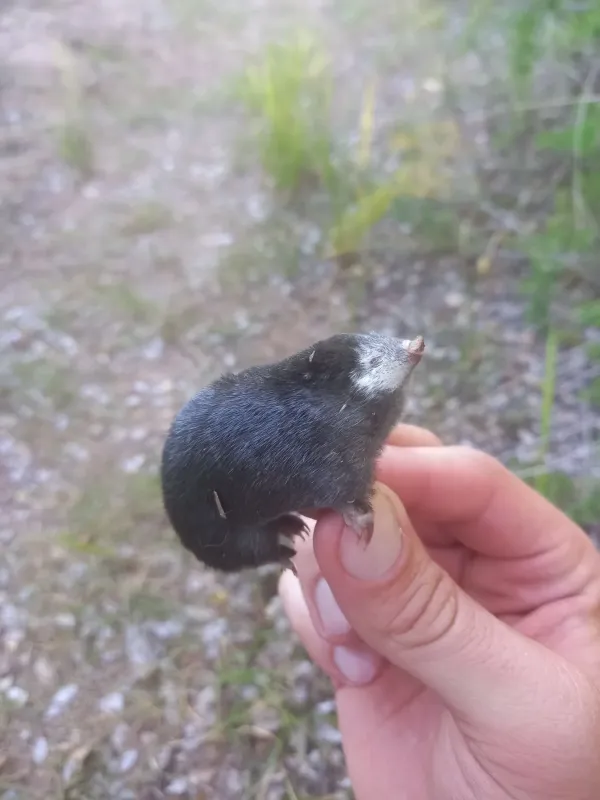
The Cape golden mole (Chrysochloris asiatica) belongs to the order Afrosoricida, family Chrysochloridae. It is a small mammal adapted for an underground life, characterized by a metallic sheen on its fur.
The animal has a compact body about 10–12 cm long, with no visible tail. One of its key features is the powerful claws on the forelimbs, designed for efficient soil digging.
Golden moles are primarily nocturnal or crepuscular, rarely appearing on the surface. Their eyes are covered by skin, so they rely on hearing and tactile senses for orientation.
The species' range is limited to the southern regions of Africa, where they prefer loose, sandy soils. Their activity is directly dependent on soil moisture, which facilitates movement through the ground.
The biology of this species is that of a typical insectivore, but in an agronomic context, its behavior is classified as destructive to root systems due to tunnel formation.
What it damages
The Cape golden mole does not feed on plants directly, as it is an insectivore. However, in the process of searching for food, it damages the root systems of vegetable and ornamental crops.
The main harm lies in the creation of an extensive system of underground tunnels. As tunnels are dug, roots are mechanically severed, leading to wilting and the death of cultivated plants.
It poses a particular danger to young seedlings and crops with shallow root systems. The roots become suspended in voids, losing contact with soil moisture and essential nutrients.
Disturbance of the soil structure leads to the drying out of the root zone. As a result, agrocenoses lose stability, and yields in affected areas are significantly reduced.
Golden moles also indirectly contribute to the spread of soil-borne pathogens by creating optimal paths for them to reach the root systems of plants.
Signs of infestation
The first sign of the pest's presence is the appearance of characteristic mounds of loose soil that rise above the surface after the animal passes through.
When inspecting the site, one can observe linear soil bulges, which indicate the digging of shallow feeding tunnels just below the surface.
Plants may show sudden wilting without any visible signs of pests on the foliage, which often indicates damage to the root system.
In areas of mole activity, the soil becomes overly aerated and "hollow," leading to ground subsidence after irrigation or heavy rainfall.
There may also be damage to seed beds, as golden moles can disturb seeding depth, pushing seeds to the surface or burying them too deep while digging.
Control measures
An effective method is the use of ultrasonic repellers that create vibrations, which are unpleasant for the animal's sensitive hearing.
Installing mechanical barriers around the perimeter (fine mesh metal wire buried to a depth of 50-60 cm) limits the pest's access to crop areas.
Agronomic techniques, such as regular soil cultivation and intensive irrigation, can force the animal to migrate due to increased moisture and soil instability.
It is recommended to plant repellent species, such as Fritillaria imperialis or certain types of bulbs, which can deter the animals from the area.
The use of chemical control methods is strictly limited and not recommended, as golden moles are part of the natural ecosystem and feed primarily on soil invertebrates.
Taxonomy
- Latin name
- Chrysochloris asiatica
- Family
- Chrysochloridae
- EPPO code
- CRKHAS
Discussion
No discussions yet — be the first.