
Retiniana leafroller
Choristoneura retiniana
Description
How to identify
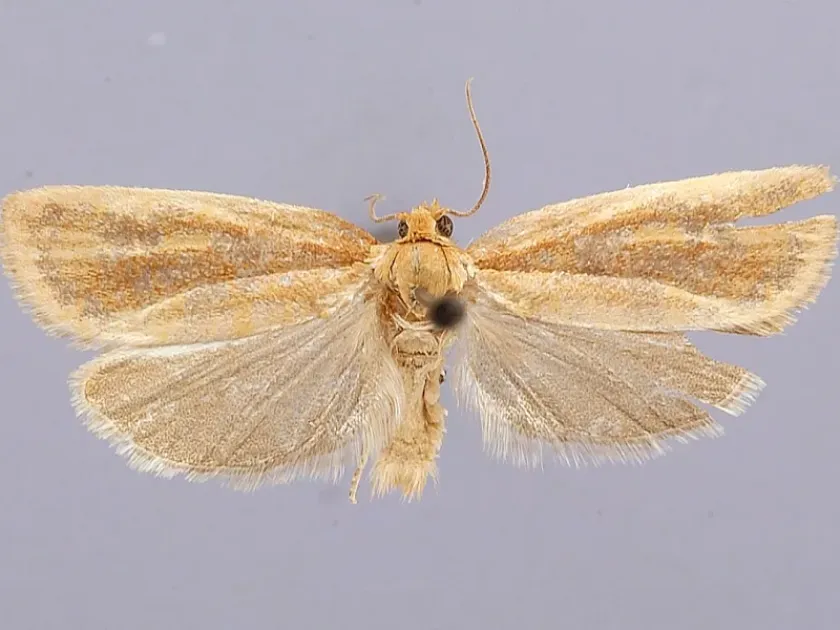
The Retiniana leafroller (Choristoneura retiniana) is a moth belonging to the family Tortricidae. Adult moths are characterized by a wingspan ranging from 20 to 25 mm, featuring distinct reticulated (net-like) patterns on their forewings.
Larvae pass through several growth stages, typically displaying a pale green to brownish body color with a dark, sclerotized head. The presence of fine hairs on the body helps them blend into foliage, making them difficult to detect without close inspection.
Females lay eggs in tight, overlapping clusters on the upper surface of leaves. These egg masses resemble small, hardened scales, providing excellent camouflage against the leaf surface and surrounding vegetation.
Overwintering occurs primarily in the larval stage. Young larvae construct dense, silk-lined hibernacula in protected areas such as bark crevices, branch crotches, or leaf debris, waiting for spring temperatures to rise.
Development is highly dependent on environmental conditions, with optimal activity peaking during spring when plants are in their flush of vegetative growth, coinciding with the availability of tender tissues.
What it damages
This pest is a polyphagous species that targets a wide range of fruit trees, including apples, pears, cherries, and plums. It is also known to infest various coniferous and deciduous forest trees, causing significant ecological impact.
The primary damage is caused by larvae feeding on newly developing buds and succulent leaves. In severe infestations, the cumulative feeding activity can lead to complete defoliation, which severely stresses the host plant.
Larvae often web leaves together, creating shelters where they feed undisturbed. This behavior not only protects them from natural predators but also prevents direct contact with contact-based pesticides.
Fruit damage is a significant concern in commercial orchards. Larvae feed on the surface of young fruit, leaving scars and deep holes that facilitate rot and fungal infections, rendering the produce unmarketable.
Continuous feeding on apical shoots can disrupt the natural structural development of young trees, leading to stunted growth and reduced vigor over successive growing seasons.
Signs of infestation
The most visible sign of infestation is the presence of rolled or folded leaves fastened with silk threads. These nests provide a clear indicator of larval activity within the canopy of the tree.
Small, irregular holes in leaves, where larvae have scraped the green tissue, are early signs of infestation. Over time, these areas become necrotic and dry out, showing a characteristic brownish appearance.
Accumulation of larval frass (tiny dark pellets) within the webbed leaf shelters is a reliable diagnostic feature. Its presence confirms that the leafroller is currently active in that specific area.
Blossoms and fruit sets may show damage, often failing to develop properly or falling prematurely. This reproductive loss directly impacts the final yield, especially in high-density orchard systems.
A silvery, reflective sheen on foliage due to the presence of silk webbing is often detectable under bright sunlight. This visual marker is an essential cue for agronomists to begin localized pest management.
Control measures
Cultural control involves systematic orchard hygiene. This includes removing and destroying infested twigs and leaves, as well as scraping loose bark from tree trunks to eliminate overwintering sites for the larvae.
Biological control methods utilizing Bacillus thuringiensis sprays have proven effective against young larvae. This approach helps maintain the ecological balance by sparing beneficial insects in the orchard.
Pheromone trapping is a critical tool for monitoring population density and timing insecticide applications. By tracking the flight of adult males, agronomists can apply treatments only when they are most effective.
Chemical control should be applied based on economic threshold levels. Selective insecticides that target specific life stages are preferred to minimize the impact on non-target pollinators and predator populations.
- Monitor orchards regularly using pheromone traps.
- Encourage the presence of natural enemies like parasitic wasps.
- Remove weeds and wild host plants around the orchard perimeter.
- Use biorational insecticides during the early larval stages.
- Maintain tree vigor through balanced irrigation and fertilization.
Taxonomy
- Latin name
- Choristoneura retiniana
- Order
- Lepidoptera (butterflies)
- Family
- Tortricidae
- EPPO code
- CHONRE
Discussion
No discussions yet — be the first.