
Parallel-lined leafroller
Choristoneura parallela
Description
How to identify
The Parallel-lined leafroller, scientifically known as Choristoneura parallela, is a moth species belonging to the family Tortricidae. These moths are recognized by their distinct wing patterns and nocturnal behavior.
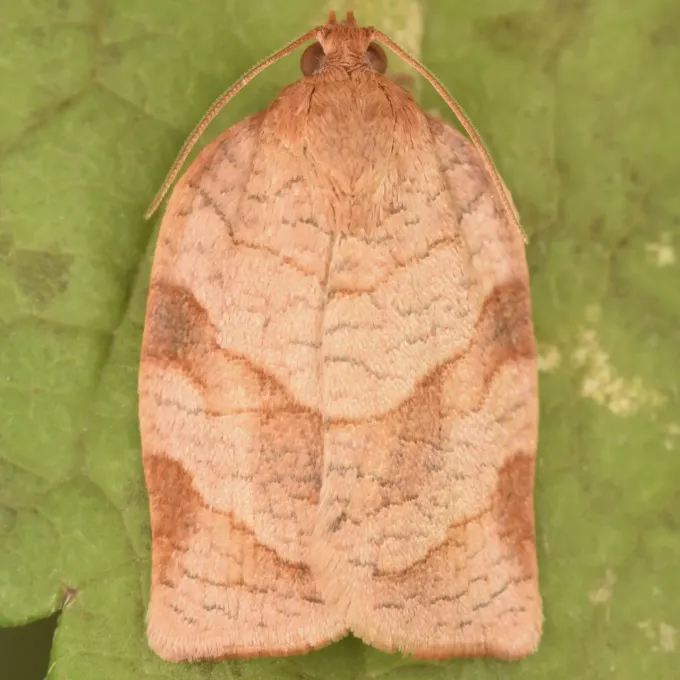
Adult moths have a wingspan of approximately 18–24 mm. Their forewings usually display a combination of tan and dark brown coloration with parallel lines that distinguish them from other leafroller species in the same habitat.
The larvae, or caterpillars, are the primary life stage causing damage to vegetation. They possess a caterpillar-like body with distinct prolegs, allowing them to move efficiently across leaves and stems.
This species typically overwinters as young larvae in protected sites, such as bark crevices or folded leaves. As temperatures rise in the spring, they emerge to resume their feeding cycle on host plants.
The life cycle consists of complete metamorphosis: egg, larva, pupa, and adult. Depending on the geographical location, this pest can produce multiple generations per year, increasing the risk of infestation.
What it damages
The Parallel-lined leafroller is considered a polyphagous pest, meaning it feeds on a wide variety of plant hosts, particularly those within the Rosaceae family such as apples, pears, and various stone fruits.
The larvae feed on expanding buds, foliage, and developing fruit. By webbing leaves together, they create protective shelters that make them difficult for predators and contact-based pesticides to reach.
Severe infestations can lead to significant defoliation of fruit trees, which weakens the plant's overall vigor and reduces its ability to produce high-quality yields in subsequent seasons.
Fruit damage often involves superficial scarring, which significantly degrades the market value of the produce and makes it more susceptible to rot and secondary fungal infections.
Berries and small shrubs are also common targets, where larval feeding can completely destroy flower clusters, resulting in a total loss of fruit set for the affected stems.
Signs of infestation
The most prominent sign of infestation is the presence of rolled or folded leaves held together by thin, silk-like threads produced by the larvae. This creates a visual nest on the tips of branches.
Feeding damage on fruit appears as irregular, shallow cavities or holes in the skin. When larvae feed on buds, they often leave behind empty, dried-out shells that fail to develop into flowers or leaves.
Fecal matter (frass) left by the caterpillars inside their silken nests is a clear indicator of active feeding activity within the foliage or near developing fruits.
- Leaves rolled or tied with silk webbing.
- Hollowed-out flower buds in the spring.
- Irregular scarring on the surface of young fruits.
- Premature fruit drop caused by larval damage.
- Visible silk strands connecting leaves and twigs.
Monitoring for adults during their flight period using pheromone traps is an effective way to track population density and time control measures appropriately.
Control measures
Cultural control methods, such as manual removal of infested leaves and winter pruning to eliminate overwintering sites, can significantly reduce the pest pressure in small orchards.
Biological control agents, including Bacillus thuringiensis sprays and the conservation of beneficial predatory insects like lacewings and parasitic wasps, play a vital role in organic management.
Chemical control should be implemented based on monitoring results, targeting the early larval stages when they are most vulnerable to insecticides before they build protective webs.
Maintaining a balanced orchard ecosystem helps suppress leafroller populations naturally. Avoiding broad-spectrum pesticides preserves the populations of natural enemies that prey on the larvae.
Pest management programs should emphasize integrated approaches, combining cultural, biological, and, if necessary, judicious chemical treatments to ensure long-term control and crop safety.
Taxonomy
- Latin name
- Choristoneura parallela
- Order
- Lepidoptera (butterflies)
- Family
- Tortricidae
- EPPO code
- CHONPA
Discussion
No discussions yet — be the first.