
Lambert's Pine Moth
Choristoneura lambertiana
Description
How to identify
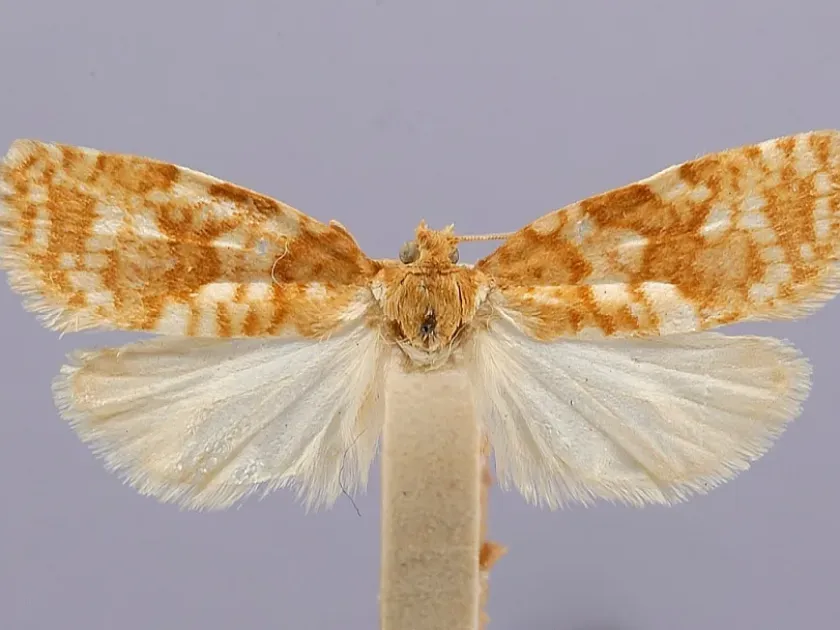
The Lambert's pine moth (Choristoneura lambertiana) is a moth belonging to the Tortricidae family within the order Lepidoptera. The adult moth typically has a wingspan of about 20–25 mm, with forewings displaying brownish-grey to dark patterns.
Larvae (caterpillars) progress through several instars, initially appearing yellowish-green with a dark head. As they mature, their coloration shifts toward olive-brown, often featuring longitudinal stripes along the dorsal side.
Pupation occurs within webbed nests created on infested twigs, where the pupa remains concealed until the adult moth emerges. These nests are vital for protection against predators.
This species is a specialist pest, having a life cycle closely synced with the phenology of various pine species. Their cryptic behavior makes early detection challenging for foresters and growers.
Identification is primarily based on the characteristic webbing and larval feeding patterns observed on the needles and new shoot growth of host trees.
What it damages
The moth primarily targets various pine species, including lodgepole pine and other local conifers within its geographic range. Feeding activities are concentrated on new foliage and developing buds.
Larvae consume the needles, which disrupts the tree's photosynthetic capacity. Continued feeding on new shoots severely stunts growth and weakens the overall vigor of the host tree.
Significant defoliation occurs during outbreak years, where high larval density can lead to the loss of up to 90% of the tree's new foliage, causing severe crown thinness.
Weakened trees are highly susceptible to secondary attacks from bark beetles and wood-boring insects, which can lead to rapid tree mortality if infestations persist over multiple seasons.
In forest nurseries and plantations, the feeding damage often leads to permanent malformation of the tree crown, which reduces the economic value of the wood and the aesthetic appeal of the trees.
When it appears
Lambert's pine moth typically completes one generation per year (univoltine). They overwinter as early-stage larvae inside protective silken hibernacula located under bark scales or needle fascicles.
In spring, as host trees begin their growth cycle, the overwintered larvae emerge to feed on developing needles and buds, taking advantage of the high nutrient content in fresh growth.
Adult flight usually occurs during mid-summer, typically in July. During this time, mating occurs and females lay eggs on the surface of needles or tree twigs.
Eggs undergo a short incubation period, and newly hatched larvae begin feeding for a brief time before finding suitable overwintering sites for the coming cold season.
By late autumn, larval activity ceases completely as they move into their hibernacula to survive the winter period, completing their annual developmental cycle.
Signs of infestation
The most prominent sign of infestation is the presence of silk webbing on young shoots, which binds several needles together into a protective cluster or "nest."
Infested needles eventually turn yellowish or reddish-brown, dry out, and drop prematurely, resulting in a sparse and unhealthy-looking tree crown.
The presence of fine frass (larval waste) caught within the needle bases and webbing is a strong indicator of active feeding by the caterpillars.
Close inspection of the shoots reveals partially consumed needles, where larvae have hollowed out the internal tissues, leaving only the thin epidermis behind.
Mass outbreaks lead to visible browning across large forest patches, a phenomenon often detected through aerial surveys and forest health monitoring programs.
Control measures
Management of the Lambert's pine moth involves an integrated approach, utilizing both biological and chemical controls based on the level of infestation.
Biological control using Bacillus thuringiensis sprays has proven effective against early-instar larvae, providing a targeted way to reduce populations with minimal environmental impact.
Chemical intervention with systemic or contact insecticides is reserved for serious outbreaks, timed precisely to coincide with the larval emergence in spring to prevent major damage.
Cultural control measures, such as the pruning and disposal of infested twigs in small-scale landscapes, can help limit the spread of the pest within localized areas.
- Encouraging the presence of natural enemies like parasitoid wasps and predatory bugs.
- Using pheromone traps for monitoring population dynamics and timing application of controls.
- Implementing sanitary forest practices to remove heavily infested timber or trees.
Taxonomy
- Latin name
- Choristoneura lambertiana
- Order
- Lepidoptera (butterflies)
- Family
- Tortricidae
- EPPO code
- TORTLA
Discussion
No discussions yet — be the first.