
Aspen leafroller
Choristoneura conflictana
Description
How to identify
The aspen leafroller (Choristoneura conflictana) is a moth species within the Tortricidae family, known for its significant impact on deciduous forests.
Adult moths feature a wingspan of approximately 30 to 40 mm, with wings typically displaying shades of grayish-brown patterns that help them blend into tree bark.
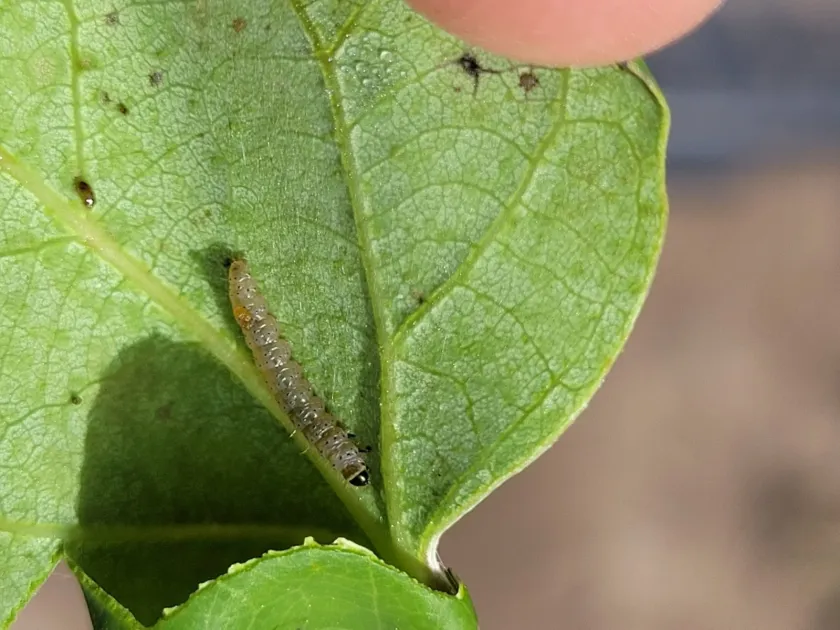
The larval stage consists of several instars, where the caterpillars transition from light green to a darker olive color, consistently sporting a dark or black head capsule.
The lifecycle follows a distinct seasonal pattern: eggs are laid in masses, followed by larval growth, pupation inside rolled leaves, and the adult flight stage.
Overwintering occurs at the first or second larval instar stage, with the insects hiding in crevices or under bark scales to survive cold temperatures.
What it damages
As the name suggests, the primary host is the aspen (Populus tremuloides), but the pest also infests other trees such as poplar, birch, and alder.
During outbreaks, this insect can cause severe defoliation across entire forest stands, leaving the branches bare by early or mid-summer.
Persistent feeding reduces the tree’s photosynthetic capacity, leading to weakened states that make trees susceptible to wood-boring beetles and fungal pathogens.
Growth loss is a major economic concern, as repeated infestations over multiple years significantly decrease the annual wood production of forest stands.
In ornamental urban settings, the aesthetic value of trees is severely compromised, as the webbing and leaf-rolling create an unkempt appearance.
When it appears
Larval activity commences in early spring, coinciding with the bud burst, as the insects emerge from hibernation to feed on developing leaves.
Adult moths typically emerge and begin their flight in late spring or early summer, depending on local temperatures and latitude.
Egg-laying occurs shortly after mating, with new generations appearing throughout the summer months to continue the cycle.
By late summer, the new generation of larvae enters a pre-diapause state, seeking sheltered areas for the upcoming winter season.
Weather conditions, particularly spring temperature patterns, play a crucial role in predicting the severity of the infestation for the current year.
Signs of infestation
The most visible sign of an infestation is the presence of leaves rolled into tight cylinders or tubes, secured with sturdy silk webbing.
Skeletonized leaf patches appear as larvae consume the green tissue, leaving behind only the veins and the upper cuticle of the foliage.
Heavy accumulation of frass (larval droppings) on the leaves and beneath the tree canopy is a strong indicator of a high pest population.
Branch tips may show premature browning and drooping, which is a symptom of the larvae feeding on the terminal buds and tender new growth.
Small, white-ish silk nests found in tree bark crevices during winter indicate where the larvae are successfully overwintering.
Control measures
Biological control methods, such as encouraging the presence of native parasitoid wasps and birds, are the most sustainable long-term strategies.
Microbial insecticides, specifically those containing Bacillus thuringiensis, are highly effective against larvae while minimizing impact on non-target species.
In critical forest management areas, chemical interventions using systemic insecticides may be necessary during peak larval activity to save valuable stands.
Monitoring programs using pheromone-baited traps allow foresters to track moth populations and identify the precise window for control applications.
- Removal of infested twigs in nursery settings.
- Encouraging diverse tree species to limit outbreak spread.
- Using pheromone monitoring to optimize treatment timing.
Taxonomy
- Latin name
- Choristoneura conflictana
- Order
- Lepidoptera (butterflies)
- Family
- Tortricidae
- EPPO code
- ARCHCO
Discussion
No discussions yet — be the first.