
Spruce budworm
Choristoneura
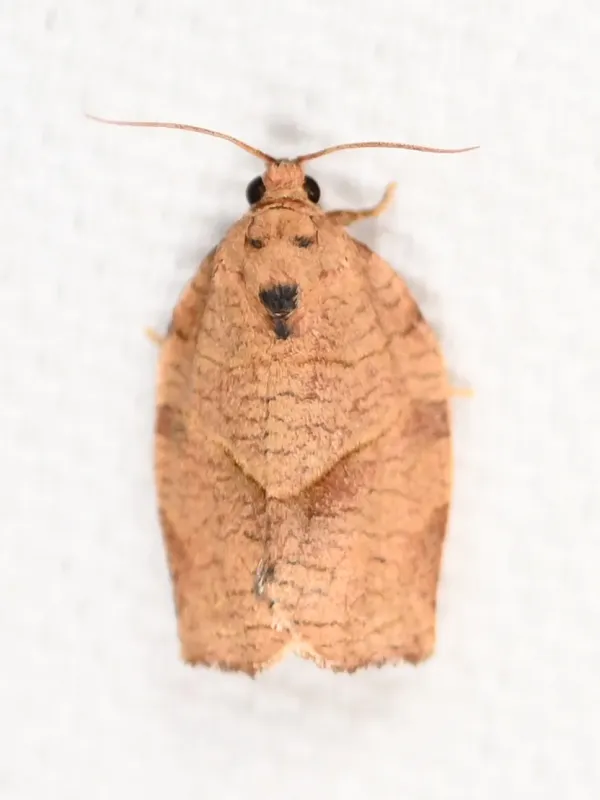
Description
How to identify
The spruce budworm, scientifically known as Choristoneura, is a member of the Tortricidae family within the order Lepidoptera. These moths typically have a wingspan ranging from 20 to 35 mm, with a complex pattern of dark bands on their forewings.
Adults are primarily nocturnal, remaining hidden under leaves or bark during daylight hours. Their coloration is usually a blend of brown and grey tones, which provides excellent camouflage against tree bark.
The larvae (caterpillars) are slender and grow up to 30 mm in length. They often display variations in color from light green to brownish, usually with distinct dark spots on their heads and thoracic shields.
Females lay their eggs in overlapping, scale-like clusters on the upper surface of needles, often protected by a specialized secretion that hardens to shield the eggs from the environment.
The insects overwinter in the early larval stage. They construct small, tough silk-like shelters called hibernacula, which are hidden in bark crevices or near bud scales, remaining dormant until the spring.
What it damages
This pest primarily attacks coniferous trees, including spruce, fir, pine, and larch. Outbreaks can lead to extensive defoliation, covering vast forest landscapes and causing significant ecological and economic impact.
In nursery settings, larvae consume developing needles and young shoots, which stunts tree growth and significantly weakens the health of the specimens.
Beyond needle consumption, the larvae frequently feed on reproductive structures like buds and developing cones, which disrupts the natural regeneration cycle of conifer forests.
Trees weakened by budworm defoliation become highly susceptible to secondary invaders, such as bark beetles and wood-boring insects, which often kill the tree completely.
The economic impact is manifested in reduced timber growth, lower yields in forest plantations, and a loss of market value for ornamental nursery stock.
When it appears
The life cycle is univoltine, meaning there is only one generation per year. The adult flight period typically occurs between mid-June and early August.
Larval feeding begins in early spring, synchronized with the bud-burst phase of the host trees. The larvae emerge from their winter shelters to feed immediately upon the swelling buds.
Pupation occurs in June, usually within protective nests made of webbed-together needles. This stage lasts approximately two weeks before the adult moths emerge to mate.
The mass emergence of larvae coincides with the most sensitive growth stage of the trees. During dry seasons, development rates may accelerate, causing more severe damage in shorter periods.
By late autumn, the young larvae (first instar) do not feed; they immediately seek out suitable spots for overwintering, marking the end of their activity for the year.
Signs of infestation
The primary indicator of an infestation is the presence of silk-webbed nests between needles, where the larvae hide and feed safely from predators.
- Browning and drying of branch tips throughout the canopy.
- Accumulation of small, granular dark waste (frass) near feeding sites.
- Missing or hollowed-out buds that stop terminal growth.
- Needles appearing as translucent "windows" after the tissue has been eaten from inside.
- Abundant silk webbing visible across the foliage on bright, sunny days.
In cases of severe infestation, the tree canopy develops a distinct reddish-brown tint by mid-summer, signaling substantial loss of photosynthetic capacity.
Watching for adult moths swarming around tree tops during evening hours provides a reliable indicator of high population densities in a specific area.
Locating egg masses on needles during July is an essential monitoring task to predict future infestation levels and prepare management actions.
Control measures
Management often involves the application of contact or systemic insecticides. Treatments are most effective when timed precisely with the spring emergence of the larvae.
Biological control, including the use of Bacillus thuringiensis, is a highly recommended method as it specifically targets lepidopteran larvae without harming beneficial pollinators or predatory insects.
Silvicultural and cultural practices, such as removing heavily infested branches or selective thinning, help reduce the overall population density within a localized area.
Pheromone traps are excellent tools for monitoring moth activity and adult flight patterns, allowing agronomists to optimize the timing of chemical control applications.
Encouraging the presence of natural predators, such as insectivorous birds and parasitic wasps, is a key component of an integrated pest management strategy to keep population levels in check.
Taxonomy
- Latin name
- Choristoneura
- Order
- Lepidoptera (butterflies)
- Family
- Tortricidae
- EPPO code
- CHONSP
Discussion
No discussions yet — be the first.