
Cholus zonatus
Cholus zonatus
Description
How to identify
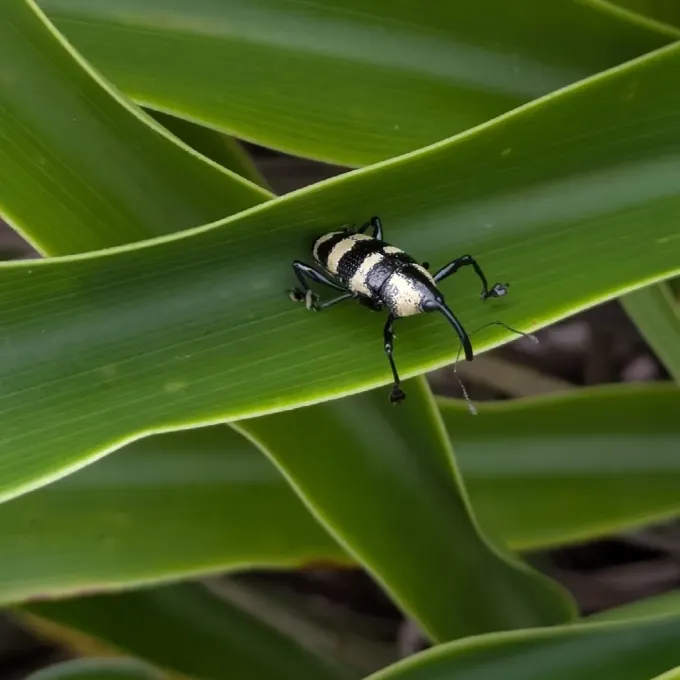
Cholus zonatus is a species of weevil belonging to the family Curculionidae. These beetles are characterized by their robust morphology, typically featuring a distinct pattern on the elytra that serves as camouflage against the bark of host trees.
The snout, or rostrum, is a defining anatomical feature used by females to bore into plant tissue for oviposition and by both sexes to feed on plant sap and tissue.
The larvae are apodous (legless), fleshy, and typically pale white with a darker, sclerotized head capsule. They are strictly endophagous, meaning they complete their development inside the host plant.
The pupal stage occurs within a protected chamber formed by the larva, which is essential for survival during the metamorphosis into an adult beetle.
Accurate identification of this species is critical for effective management, often requiring attention to the specific patterns and morphological details that differentiate it from other related weevil species.
What it damages
This pest is primarily associated with palm species, notably those in the Bactris genus. It poses a significant threat to commercial palm heart production due to its destructive larval feeding habits.
Larvae tunnel through the interior tissues of the palm stem, disrupting the vascular system and preventing the efficient transport of water and nutrients, which eventually leads to plant senescence.
Adult beetles contribute to damage by feeding on young leaves and developing shoots, creating entry points for secondary infections like fungi and bacteria, which can be even more lethal to the plant.
Severe infestations often result in structural failure of the palm stem, leading to reduced yield quality and, in many cases, the total death of the crop plant.
The economic impact is exacerbated by the cryptic nature of the larvae, which are difficult to detect until structural damage to the host is already advanced.
When it appears
The life cycle of Cholus zonatus is intrinsically linked to the environmental conditions and the developmental stages of the host palms. Adult activity peaks during warmer, humid periods.
Females prioritize laying eggs in the most vulnerable parts of the palm, such as the crown or near the bases of young fronds, where the tissue is softest and easiest to penetrate.
Larval development takes several months, during which the larvae increase in size and consume progressively more internal tissue. This duration can vary based on local temperatures and rainfall patterns.
Adult emergence typically follows a pattern that correlates with seasonal moisture, making it a critical time for monitoring and trapping programs to mitigate future population surges.
Integrated pest management programs rely on understanding these seasonal dynamics to apply controls precisely when they are most likely to be effective against the adult stages.
Signs of infestation
The most reliable sign of an infestation is the presence of sap or resinous exudates on the stem, which occurs as a defense reaction by the palm to the larval tunneling.
Accumulation of sawdust-like frass (larval excrement) at the base of the plant or around entry holes is a strong indicator that larvae are actively feeding within the stem.
General wilting or yellowing of the central fronds is a late-stage indicator that the structural integrity of the palm has been severely compromised by internal tunneling.
Direct observation of adult weevils on the trunk or foliage can provide early warning signs of an incoming infestation before major larval damage occurs.
- Entrance/exit holes in the bark.
- Presence of larval frass on the trunk surface.
- Asymmetric growth or crown dieback.
Control measures
Preventative measures are the first line of defense, focusing on maintaining palm vigor through proper irrigation and balanced fertilization to ensure resilience against pests.
Sanitation practices, including the systematic removal and destruction of infested palms, are essential to break the breeding cycle and prevent the spread of adult beetles.
Pheromone-based trapping systems are highly recommended for monitoring population densities and can be used to capture adult beetles before they successfully mate or oviposit.
Systemic insecticides are the preferred chemical control method, as they can be absorbed by the plant and reach the larvae residing deep within the stem tissues.
Biological control methods, such as the application of entomopathogenic fungi like Beauveria bassiana, offer an eco-friendly alternative for managing larvae and reducing the overall chemical footprint.
Taxonomy
- Latin name
- Cholus zonatus
- Order
- Coleoptera (beetles)
- Family
- Curculionidae
- EPPO code
- CHOLZO
Discussion
No discussions yet — be the first.