
Black-spotted weevil
Cholus nigromaculatus
Description
How to identify
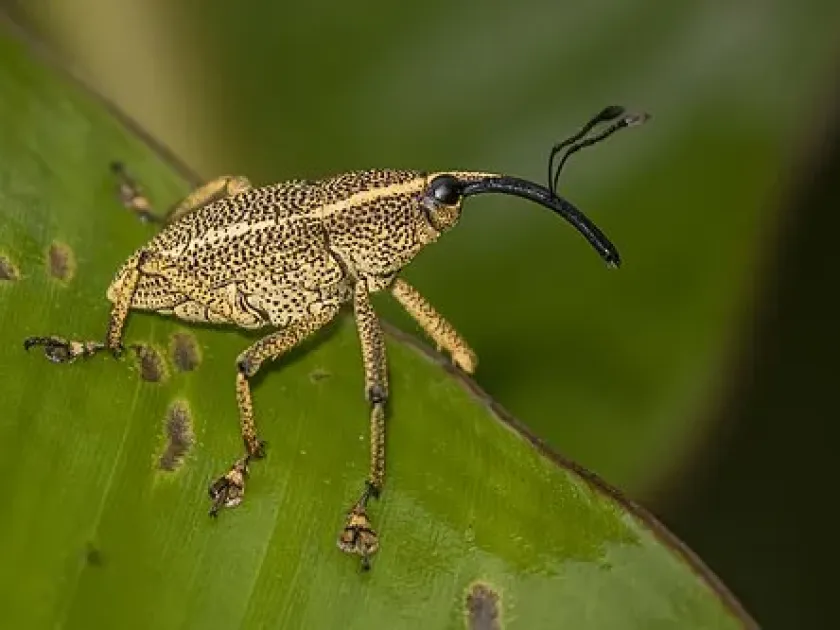
The black-spotted weevil (lat. Cholus nigromaculatus) belongs to the order Coleoptera and the family Curculionidae. This insect is of medium size and possesses an elongated rostrum, a common morphological feature for the entire weevil family.
The adult body is oval-shaped, with a color range from dark brown to black, featuring distinctive light or contrasting spots on the elytra, which explains its common name. The elytra surface is often marked with small pits or striae.
The larvae are apodous (legless), creamy white in color, and have a well-developed dark head capsule. They live a cryptic lifestyle, developing deep within plant tissues, making detection difficult during early infestation stages.
Pupation typically occurs inside galleries created by the larvae within the host plant or in a specially constructed chamber in the substrate, providing safety from environmental conditions.
The life cycle includes complete metamorphosis: egg, larva, pupa, and adult. Adults are highly mobile and capable of flying significant distances to locate suitable host plants.
What it damages
Black-spotted weevils primarily feed on various tropical and ornamental plants. They are known to cause severe damage to orchids, feeding on their pseudobulbs and stems.
Beyond orchids, this pest has been identified on other plant species that provide thick, succulent tissues, which are ideal for egg-laying and larval development.
Adults feed mainly on young leaves, flower buds, and soft stems, creating characteristic circular holes or surface scars on the plant tissues.
Larvae cause much more significant damage by boring deep tunnels into the core of the plant. This disrupts nutrient and water transport, often leading to the death of the affected plant.
Heavy infestation leads to severe plant stress, inhibition of flowering, deformation of new growth, and secondary infections that develop in the entry and exit holes made by the pest.
Signs of infestation
The first sign of an infestation is the appearance of small, clean-cut holes on leaves and stems, caused by the adult weevil feeding with its rostrum.
If larvae are developing within a pseudobulb or stem, the plant will start to show premature yellowing or loss of turgor pressure, even with proper watering routines.
The presence of brownish frass (excrement) around entry points or on the potting substrate is a strong indicator of larval activity inside the tissues.
Upon careful inspection, one may notice tunnels or hollowed-out areas that may start to rot when exposed to humidity, often misidentified as fungal disease.
- small circular holes on young shoots;
- sudden wilting of specific plant parts;
- soft, dark lesions on the stems;
- presence of sawdust-like frass on the substrate;
- stunted growth and failure to bloom.
Control measures
Strict phytosanitary control of all new plant material before introducing it into a collection or greenhouse is the most effective preventative measure.
Manual collection of adults during the early morning or evening hours, when activity is lower, can help keep local populations under control.
If deep damage is observed, the infested parts of the plant must be removed and destroyed immediately to prevent the completion of the larval life cycle.
Chemical control strategies often require the use of systemic insecticides that can penetrate plant tissues, which is necessary to reach larvae feeding internally.
Regular prophylactic treatments during the growing season help minimize the risk of direct feeding damage and prevent the onset of secondary rot diseases at the injury sites.
Taxonomy
- Latin name
- Cholus nigromaculatus
- Order
- Coleoptera (beetles)
- Family
- Curculionidae
- EPPO code
- CHOLNI
Discussion
No discussions yet — be the first.