
Cholus
Cholus
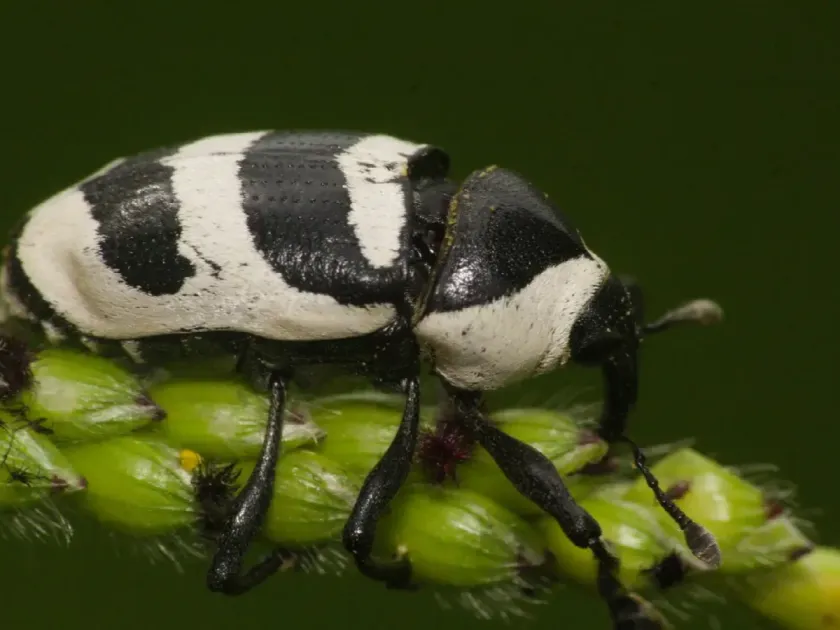
Description
How to identify
Cholus is a genus of weevils belonging to the Curculionidae family. These insects are distinguished by their elongated rostrum (snout), which they use for feeding on plant tissues and creating oviposition sites.
Adult beetles typically possess a robust body covered in scales or hairs, with colors ranging from dark brown to mottled patterns, providing excellent camouflage against bark and plant stems.
The genus is characterized by high specialization to specific tropical and subtropical plants. Accurate identification of species within the genus is often challenging and frequently requires anatomical examination.
Larvae of Cholus are typical legless weevil larvae, featuring fleshy, curved white or creamy bodies with a dark, sclerotized head capsule. They live endophytically, developing inside plant tissues.
Adult beetles have powerful mandibles at the tip of their rostrum, allowing them to bore into relatively tough plant materials, causing significant structural damage to the host plant.
What it damages
This pest primarily attacks plants in the Bromeliaceae (bromeliads), Arecaceae (palms), and several fruit crops, including species of Ananas (pineapples).
Cholus vaurieae is particularly notable as a serious pest of pineapple plantations, causing severe damage to fruits and significantly reducing the marketability of the harvest.
The pest damages not only the fruits but also the root zone, stems, and leaf bases, which can lead to the death of the entire plant during outbreaks.
Agricultural observations indicate that young plants are the most vulnerable due to their softer tissues, which provide an ideal food source for developing larvae.
Damage is compound: mechanical destruction by the beetles allows for the secondary entry of opportunistic pathogens, including fungal and bacterial rots.
When it appears
The life cycle of Cholus is strictly dependent on the climatic conditions of the region, as the genus is primarily distributed in humid tropical zones with stable temperatures.
Females lay eggs directly into plant tissues by boring small holes. A single female is capable of laying dozens of eggs throughout her adult life span.
Upon hatching, the larvae begin feeding on internal plant tissues, creating winding galleries that protect them from external contact insecticides.
Pupation occurs within the damaged plant part (stem or fruit), after which the emerging adult bores an exit hole to leave the host.
Pest activity occurs throughout the year in regions without significant seasonal temperature fluctuations, necessitating continuous monitoring of plantations.
Signs of infestation
The primary sign of infestation is the presence of small holes on the surface of stems or fruits, often accompanied by sap flow or resinous secretions.
- Yellowing and wilting of individual leaves or entire shoots.
- Deformation of fruits and retarded growth.
- Presence of cavities and "frass" (larval excrement) inside the stems.
- Premature fruit drop caused by peduncle damage.
Dissection of infested plant parts often reveals larvae inhabiting the galleries carved into the core or vascular bundles of the plant.
Control measures
The primary control method involves strict agricultural sanitation, including the immediate removal and destruction of all infested plants to prevent the emergence of adults.
The application of systemic insecticides during early crop development can provide protection, as the chemical penetrates the plant tissues to target endophagous larvae.
Biological control methods include the use of entomopathogenic fungi such as Beauveria bassiana, which effectively suppress weevil populations in humid environments.
An essential tool for management is the use of pheromone traps to monitor population levels and determine the optimal timing for intervention.
Strict quality control of planting material prevents the introduction of the pest into uninfested areas, which is critical for successful large-scale cultivation.
Taxonomy
- Latin name
- Cholus
- Order
- Coleoptera (beetles)
- Family
- Curculionidae
- EPPO code
- CHOLSP
Discussion
No discussions yet — be the first.