
Linnaeus's two-toed sloth
Choloepus didactylus
Description
How to identify
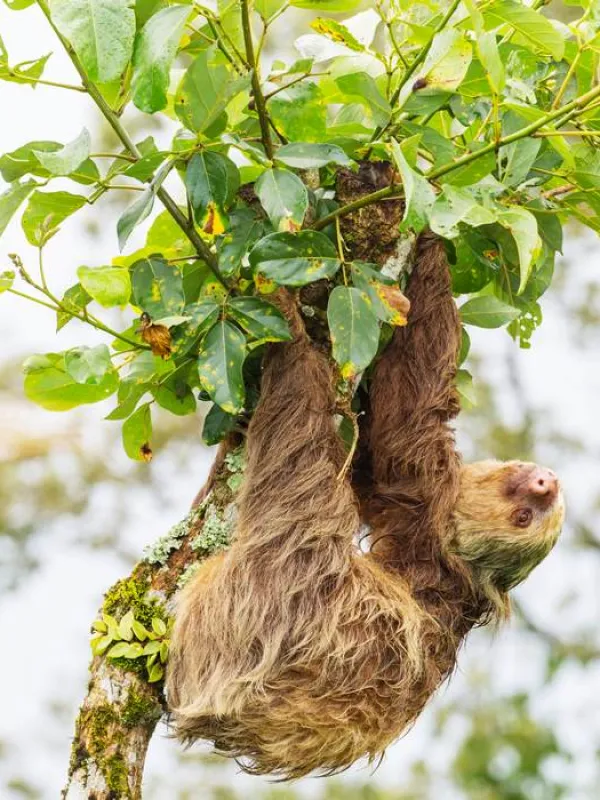
The Linnaeus's two-toed sloth (Choloepus didactylus) is a mammal belonging to the order Pilosa. These creatures are strictly arboreal and are characterized by their distinctively slow metabolic rate and specialized morphology for climbing tropical forest canopy.
The physical identification of the species involves noting their two long, curved claws on the forelimbs and a coarse coat that often hosts symbiotic algae. This algae provides a greenish camouflage, allowing them to remain virtually invisible within the foliage.
Their biology is centered on maintaining a specific niche in high-humidity forests. Because they rely on ambient temperature to regulate their own, they are highly sensitive to local microclimatic changes and agricultural development that alters their natural habitat.
The reproductive cycle is slow, ensuring that their population density remains naturally low. However, their sedentary lifestyle means that if an individual selects a plantation as its home range, its impact on specific trees is localized and persistent.
While not a traditional agricultural pest, their presence in high-value tropical agroforestry systems requires specific management strategies to avoid damage to sensitive plants and nursery stocks.
What it damages
Sloths primarily cause damage by consuming the leaves, buds, and young shoots of various tropical crops, including cacao and fruit-bearing trees. Their selective feeding habits can lead to the defoliation of critical canopy areas.
Mechanical damage is a significant concern for plantation owners. The use of sharp, robust claws to navigate tree branches creates wounds in the plant tissue, which often become points of entry for various pathogenic fungi and pests that cause rot.
In nursery settings, a two-toed sloth can cause irreparable damage to young grafts and seedlings. By stripping the bark or consuming the terminal bud, they effectively halt the vertical growth of the plant, causing significant economic losses.
The cumulative effect of sloth herbivory leads to reduced photosynthetic capacity, weakening the tree and making it less resistant to drought, disease, and other environmental stressors common in tropical agricultural zones.
- Defoliation of sensitive fruit tree varieties.
- Structural damage to limbs through claw penetration.
- Stunted growth of seedlings in open-canopy nurseries.
Control measures
Effective control of two-toed sloths in agricultural landscapes focuses on exclusion techniques that prevent physical access to the trees. Due to their protected status and ecological importance, lethal methods are strictly discouraged.
The most successful mechanical deterrent is the installation of smooth, slippery collars around the trunks of protected trees. These collars prevent the animal from gaining the necessary traction with its claws, forcing it to look for non-cultivated food sources.
Agrotechnical management involves careful pruning of interlinking branches between trees. By creating gaps between the canopy of forest trees and the plantation, farmers can interrupt the movement corridors of the sloths.
Habitat modification by maintaining a diverse buffer zone of non-attractant species around the plantation can significantly reduce the likelihood of sloths entering the core production area in search of food.
Ongoing cooperation with local environmental authorities is recommended for the humane relocation of individuals if they become a recurring issue in high-density planting zones, ensuring a balance between agriculture and wildlife preservation.
Taxonomy
- Latin name
- Choloepus didactylus
- Family
- Megalonychidae
- EPPO code
- CHOSDI
Discussion
No discussions yet — be the first.