
Two-toed sloth
Choloepus
Description
How to identify
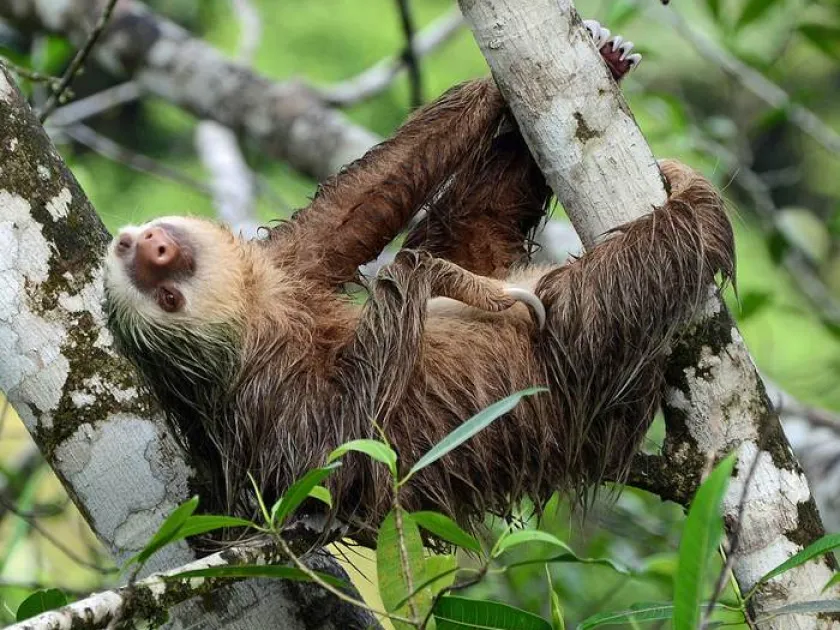
The two-toed sloth (genus Choloepus) is a mammal that, in specific tropical agricultural landscapes, can act as a pest affecting tree growth. It is identified by two prominent claws on its forelimbs and thick, coarse fur.
These animals are arboreal and strictly nocturnal in their activity patterns, making them extremely difficult to detect during standard daytime field inspections.
Adult sloths weigh between 4 and 8 kilograms. Due to their slow metabolic rate, they spend most of their time stationary, which helps them blend into the foliage.
Their morphological structure includes strong, hook-like claws designed for climbing, which are also responsible for the mechanical damage they inflict on host trees.
Field agronomists should be aware of their presence in regions where plantations are integrated into forest ecosystems, as they often utilize plantation trees as part of their habitat.
What it damages
The primary damage caused by Choloepus involves the consumption of young leaves, terminal buds, and soft shoots of various fruit-bearing trees.
In cacao and coffee plantations, excessive feeding on new growth can stunt tree development and lead to significant reductions in commercial yield.
Mechanical damage to the bark caused by their sharp claws creates entry points for various phytopathogens, fungi, and bacterial infections that threaten the overall tree health.
The loss of terminal buds stops vertical growth, leading to abnormal branching patterns that complicate harvest and canopy management.
Persistent browsing by sloths can lead to severe stress for young saplings, making them more susceptible to other pests and drought conditions.
When it appears
Sloths exhibit year-round activity as they reside in tropical environments characterized by stable temperatures and lack of seasonal dormancy.
There is no specific seasonal peak in their feeding activity, although movement between trees may increase depending on the availability of preferred food sources.
Reproductive patterns are not linked to specific months, meaning the population density remains relatively consistent throughout the calendar year.
Agricultural operations must be vigilant at all times, as the slow movement of the species means they do not quickly migrate out of an infested area.
Monitoring should be continuous, focusing on areas with dense canopy cover that provides easy passage for the animals from tree to tree.
Signs of infestation
Key indicators of infestation include irregular or scalloped leaf edges on the upper branches where access is easiest for the animal.
Vertical scratches or grooves along the bark are classic signs of a sloth climbing the tree and using its claws for stability.
Finding droppings on the plantation floor below a specific tree is a strong indicator of an individual inhabiting that particular canopy area.
The presence of fur tufts on branches or a noticeable change in the tree's health profile in certain patches provides clues to their activity.
Stunted growth of young trees in the absence of obvious insect pests often warrants an inspection for larger mammalian herbivores like the sloth.
Control measures
The most effective strategy is the installation of physical barriers, such as slippery metal or plastic bands, wrapped around tree trunks to prevent climbing.
Maintaining clear spaces between the canopies of adjacent trees can effectively isolate the pest and prevent it from moving across the plantation.
In many regions, sloths are protected by local wildlife laws, so humane relocation or non-lethal deterrents are required for population management.
Implementing biodiversity strips outside the plantation provides alternative food sources, successfully diverting the animals away from agricultural crops.
Regular monitoring of the canopy and the use of natural, non-toxic repellents can help keep the sloth population from impacting sensitive nursery crops.
Taxonomy
- Latin name
- Choloepus
- Family
- Megalonychidae
- EPPO code
- CHOSSP
Discussion
No discussions yet — be the first.