
Green leaf weevil
Chlorophanus grandis
Description
How to identify
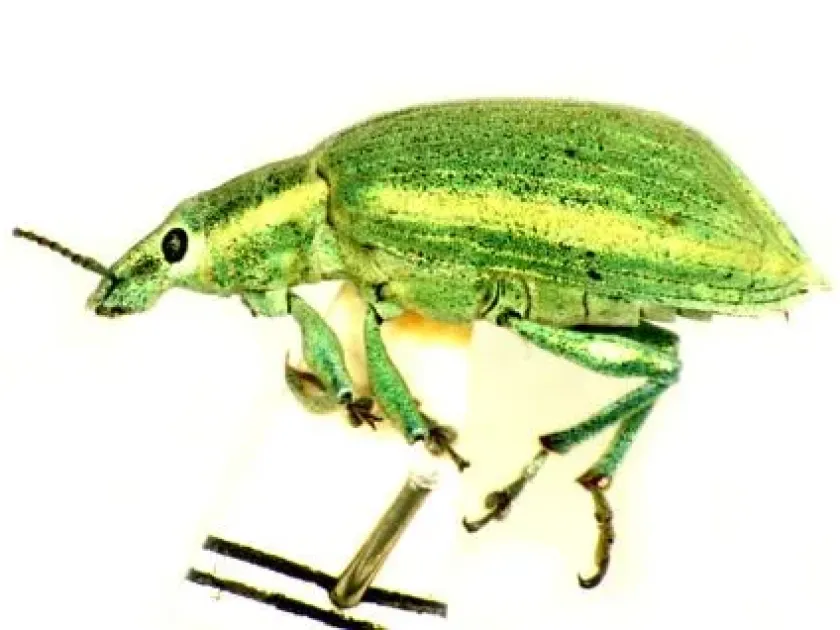
The green leaf weevil (scientific name: Chlorophanus grandis) belongs to the Curculionidae family of beetles. It is easily recognized by its vibrant green color, which allows it to camouflage perfectly against foliage.
The adult beetle has an elongated body covered in fine scales that give it a distinct metallic green sheen. Its length typically ranges from 8 to 12 millimeters.
The head features the characteristic snout (rostrum) typical of all weevils, equipped with chewing mouthparts. Its antennae are elbowed and clubbed, helping to distinguish it from other green insects.
Larvae are worm-like, creamy-white in color, legless, and have a hardened dark head capsule. They lead a secretive lifestyle, residing mostly in the soil or deep within plant tissues.
The life cycle involves complete metamorphosis: egg, larva, pupa, and adult. This biological strategy helps the species survive adverse environmental conditions by overwintering in the soil.
What it damages
This pest feeds on the leaves of numerous deciduous trees, shrubs, and various agricultural crops. It poses a significant threat to fruit orchards, particularly apple, pear, and plum trees.
Beyond orchards, the weevil often targets berry bushes such as raspberries, currants, and gooseberries, causing substantial damage to the plant's vegetative parts.
Adult beetles chew the edges of leaves, creating jagged holes or stripping the leaf blades down to the main veins, which severely weakens the plant's photosynthesis capability.
In cases of high infestation, the beetles can cause total defoliation of young shoots, leading to severe plant stress and reduced resistance to diseases and winter frost.
The larvae cause hidden damage by feeding on the root systems of young seedlings, which can lead to stunted growth, wilting, and even the eventual death of the plant.
When it appears
The green leaf weevil emerges from its overwintering sites in early spring, as soon as soil temperatures become conducive to insect activity.
Peak activity is observed during the bud-burst phase and the period of rapid leaf growth, which provides the beetles with essential nutrition for the upcoming breeding season.
During the summer, the adults remain active but may become less conspicuous due to the dense canopy. This is the period when females lay eggs in the soil.
The larvae hatch and continue to feed on roots throughout the growing season, progressing through several developmental stages before pupation.
Adults primarily overwinter by burrowing into the top layers of the soil, remaining dormant until the return of spring warmth.
Signs of infestation
The primary symptom is the appearance of jagged or notched feeding marks on leaf edges, which become visible upon close inspection of the tree canopy in late spring.
If you shake branches sharply, beetles may drop to the ground. Their bright green color often contrasts with the dark soil, making them easier to spot during a morning inspection.
The presence of fine insect frass (droppings) on the leaf surface near the damaged areas is a strong indicator of active infestation.
Premature yellowing and leaf drop on specific branches can signify severe damage to the foliage, stressing the entire plant structure.
If root damage occurs due to larval activity, the plant may show general wilting or failure to thrive, even when soil moisture levels are adequate.
Control measures
Effective management requires an integrated approach that combines mechanical removal, agricultural practices, and chemical control.
Regular cultivation and loosening of the soil around the base of trees help destroy pupae and larvae overwintering in the upper soil layers.
During periods of high beetle activity, targeted applications of systemic or contact insecticides are recommended to minimize foliage damage.
The use of sticky bands on tree trunks can help reduce the number of beetles climbing up to the canopy to feed, acting as a simple physical barrier.
Timely monitoring of the orchard is crucial; beginning treatments before the infestation reaches economic injury levels is the key to maintaining plant health.
Taxonomy
- Latin name
- Chlorophanus grandis
- Order
- Coleoptera (beetles)
- Family
- Curculionidae
- EPPO code
- CHLSGR
Discussion
No discussions yet — be the first.