
Green weevil
Chlorophanus
Description
How to identify
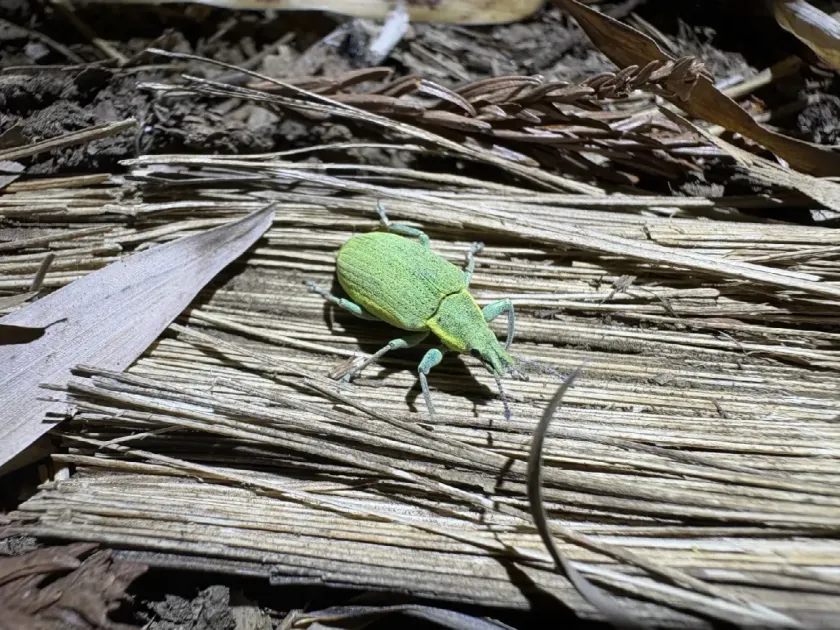
The green weevil (Chlorophanus viridis) is a beetle belonging to the Curculionidae family. Adult insects are typically 7 to 12 mm long, with a distinct elongated body covered in fine scales, which gives them a bright green or yellowish-green appearance.
The snout is relatively short and broad, a characteristic feature of this genus. This green coloration acts as perfect camouflage among dense vegetation, making it exceptionally difficult to spot the beetles on crops without a thorough field inspection.
Larvae are legless, C-shaped, and creamy-white with a brown head capsule. They live primarily in the soil or in sheltered areas near the plant base, making them difficult to detect until significant damage to the root system has already occurred.
The life cycle involves complete metamorphosis, typically completing one generation per year. Both larvae and adults can play a role in overwintering, depending on the specific environmental conditions of the region.
When disturbed, the adults exhibit a distinct defensive behavior: they drop from the plant foliage to the ground and remain motionless, blending in with the soil or debris to avoid detection by predators or humans.
What it damages
The green weevil is a polyphagous pest, meaning it feeds on a wide range of agricultural crops. It is particularly known for attacking sugar beets, sunflowers, legumes, and various vegetable crops, often leading to reduced plant vigor and lower yields.
Adults cause damage by feeding on the leaves, creating irregular, scalloped-shaped notches along the margins. This feeding habit significantly reduces the leaf surface area available for photosynthesis, which impairs the plant's ability to grow, especially in the early stages.
Larvae feed on the roots, causing localized destruction of the root system. This damage limits the plant's uptake of water and essential nutrients, leading to stunted growth, wilting, and in severe cases, the death of young seedlings.
The economic threshold for this pest is often reached during the early seedling stage. Extensive leaf damage combined with root injury can lead to total crop failure, necessitating expensive replanting or the use of aggressive chemical control.
Moreover, the tissue damage inflicted by these weevils facilitates the entry of various soil-borne pathogens. This makes the plants more susceptible to secondary fungal and bacterial infections, which often exacerbate the overall crop damage.
When it appears
Adult activity typically begins in the early spring as temperatures rise, coinciding with the emergence of the first vegetative growth of host plants. This is the period when they migrate to agricultural fields to feed and mate.
The peak feeding and reproductive activity occurs from late spring through early summer. During this timeframe, females lay their eggs in the soil near the base of the host plants, ensuring that the larvae have immediate access to food upon hatching.
Larval development takes place throughout the summer months within the soil profile. They continue to feed and grow, gradually reaching the final stages of their development before preparing for the overwintering period.
Seasonal weather patterns play a crucial role in population dynamics. Moist conditions generally favor larval survival and development, while prolonged periods of extreme heat or drought may lead to higher mortality rates among the soil-dwelling stages.
As autumn approaches, the adults begin to seek shelter for the winter, while the larvae burrow deeper into the soil to escape the freezing temperatures. Their ability to survive winter depends on soil cover and ambient environmental conditions.
Signs of infestation
The most recognizable sign of infestation is the notched appearance of the leaf edges. Adults create irregular bites along the margins, leaving a signature "scalloped" look that is distinct from the damage caused by other leaf-eating insects.
Direct observation is possible during early morning or late evening when the beetles are most active on the foliage. Using a sweep net or a drop cloth underneath the plants can help in confirming their presence in the field.
Yellowing or wilting of individual plants during dry conditions often points to root system damage. Digging up the root zone of such plants frequently reveals the presence of white larvae and truncated or damaged roots.
In addition to physical foliage damage, look for the presence of adult beetles near the base of the stems. Small dark spots of frass on the leaves can also be a secondary indicator of recent feeding activity.
- Scalloped or notched leaf margins.
- Unexplained wilting of young seedlings.
- Presence of larvae in the soil around the roots.
- Stunted growth during the early vegetative phase.
Control measures
Integrated pest management (IPM) for the green weevil starts with crop rotation. By avoiding the cultivation of susceptible host plants in the same field for consecutive years, growers can disrupt the pest's life cycle.
Deep autumn plowing is a highly effective mechanical control method. It exposes the soil-dwelling larvae and pupae to predators and adverse weather, significantly reducing the population that would otherwise emerge the following spring.
Chemical control should be applied based on scouting results and the established economic threshold. Foliar insecticides are effective against adult populations if applied during the early stages of infestation to prevent egg-laying.
Seed treatments or soil insecticides are recommended in areas with a history of high pest pressure. These methods protect the vulnerable seedling stage from both adult feeding and larval root damage, providing a longer window of protection.
Encouraging the presence of natural enemies such as ground beetles (Carabidae) and avian predators helps maintain a natural balance. Biopesticides utilizing entomopathogenic fungi are also viable options for long-term suppression of larval populations.
Taxonomy
- Latin name
- Chlorophanus
- Order
- Coleoptera (beetles)
- Family
- Curculionidae
- EPPO code
- CHLSSP
Discussion
No discussions yet — be the first.