
Fairy shrimp
Chirocephalus diaphanus
Description
How to identify
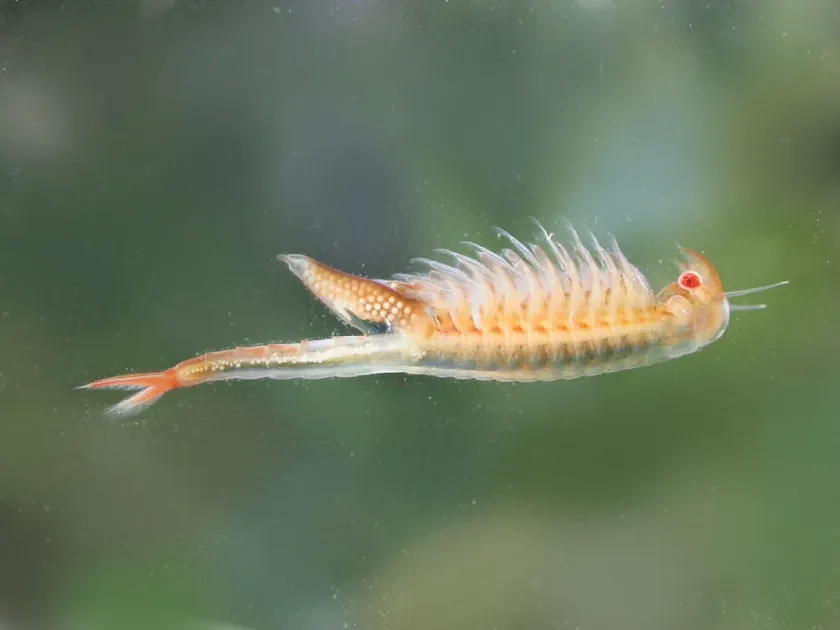
Chirocephalus diaphanus, commonly known as the fairy shrimp, belongs to the order Anostraca. It is a small freshwater crustacean typically reaching a length of 15 to 25 millimeters, characterized by a slender, translucent body.
The anatomy of the fairy shrimp includes 11 pairs of swimming legs that move in rhythmic waves, allowing the creature to swim upside down. They lack a carapace, leaving their segmented, elongated body fully exposed to the water environment.
Males are easily distinguished by their large, complex cephalic appendages used for grasping females during mating. Females carry eggs in a brood sac located on the ventral side of the body, which are released periodically into the substrate.
These crustaceans are uniquely adapted to temporary aquatic habitats, such as vernal pools or flooded fields. Their survival strategy involves the production of dormant cysts that can endure extreme desiccation, cold, and heat for several years.
Identification in the field often relies on observing the characteristic swimming behavior and the presence of the species in shallow, muddy, or turbid water conditions that are typical for their life cycle.
What it damages
While not a primary crop pest, fairy shrimp can become problematic in aquatic-based agriculture, particularly in rice paddies. High populations of these crustaceans can interfere with the physical stability of young rice seedlings.
Their constant movement through the substrate while feeding on organic debris can loosen the soil around roots, hindering plant establishment. This is particularly harmful during the delicate early growth stages of the crops.
The increase in water turbidity caused by their feeding and movement patterns reduces light penetration, which is vital for the health of submerged plants and the overall productivity of the aquatic ecosystem.
In aquaculture environments, fairy shrimp act as competitors for food resources. They feed on plankton and detritus, consuming the nutrients intended for fish fry and potentially reducing the growth rates of the cultivated species.
Furthermore, their presence in high densities can alter the chemical parameters of the water through nitrogenous waste, potentially creating unfavorable conditions for sensitive plant species and other organisms in the cultivation system.
Control measures
Water management is the most effective control strategy. Since the life cycle depends on temporary water bodies, maintaining proper drainage and ensuring that fields are completely dried out between seasons can kill the dormant cysts.
Sanitation of irrigation channels and ditches is essential to minimize the seed bank of the crustacean. Removing sediment from these areas prevents the dispersal of eggs into productive agricultural zones during the irrigation process.
Physical filtration using fine-mesh screens at intake valves is a proactive measure to prevent the introduction of eggs and adult crustaceans from external water sources into the crop or aquaculture facility.
Encouraging biological control by fostering populations of natural predators, such as dragonfly larvae or aquatic beetles, helps maintain the fairy shrimp population below the economic damage threshold.
Chemical intervention is rarely required and should be avoided in favor of sustainable practices. When necessary, only environmentally benign treatments that specifically target branchiopods without harming crops or fish should be utilized.
Taxonomy
- Latin name
- Chirocephalus diaphanus
- Family
- Chirocephalidae
- EPPO code
- CHRKDI
Discussion
No discussions yet — be the first.