
Pseudoscorpion
Chernes
Description
How to identify
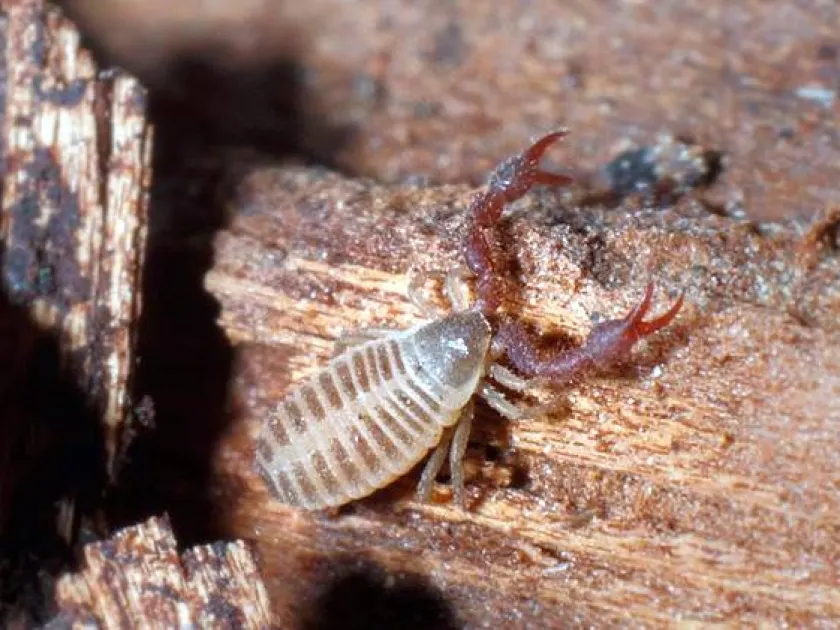
Pseudoscorpions (order Pseudoscorpionida, family Chernetidae) are small arachnids that closely resemble scorpions but lack a telson and venom stinger.
Their bodies are typically flattened and small, ranging from 2 to 5 millimeters in length, with a coloration that often matches their surroundings, such as soil or bark.
Members of the genus Chernes are characterized by prominent pedipalps, which are modified into large, formidable-looking pincers used to grasp prey.
They are strictly carnivorous, feeding on tiny soil-dwelling arthropods, mites, and springtails, making them an important part of the micro-fauna.
Despite their somewhat intimidating appearance, they pose no threat to humans or vegetation, as they lack any mechanisms to puncture plant tissues.
What it damages
Pseudoscorpions are not classified as agricultural pests because they do not consume plant sap, leaves, or roots, and do not cause damage to crops.
There is no economic harm associated with their presence in fields or orchards; in fact, they are often beneficial due to their predatory nature.
They help regulate the populations of smaller, potentially harmful arthropods, acting as a natural biological control agent within the ecosystem.
No agricultural studies have ever identified these creatures as damaging to plant health, as they are exclusively predators of other small invertebrates.
Farmers should consider their presence as a sign of a diverse and balanced soil ecosystem, rather than a threat to their cultivated plants.
When it appears
The activity of pseudoscorpions is highly dependent on environmental conditions, particularly humidity and soil moisture levels during the growing season.
They are most active during the warmer months when they actively hunt for food in the top layers of soil or under the bark of trees.
During the winter, they enter a state of dormancy, seeking shelter in protected areas such as crevices, leaf litter, or deep soil layers to survive the cold.
Their life cycle includes egg, nymphal stages, and adult, with development speed primarily regulated by the availability of prey and ambient temperature.
In greenhouses or controlled environments, they can remain active throughout the year as long as sufficient moisture and food sources are available.
Signs of infestation
Since pseudoscorpions do not feed on plant tissues, there are no characteristic symptoms of damage such as chlorosis, necrosis, or structural injury to plants.
Their presence is usually detected by chance during soil cultivation, digging, or the removal of old tree bark where they seek refuge.
They live solitary lives and do not form colonies, which makes a "mass infestation" scenario impossible for this specific group of organisms.
If you encounter one on a plant, it is likely just passing through or hunting for small insects, and it will not stay to cause any harm.
There are no diagnostic signs of "infestation" because they do not damage the plant, and their appearance should not be a cause for concern.
Control measures
There is no need for any control measures against pseudoscorpions, as they do not constitute a pest problem for any agricultural or horticultural crop.
The use of pesticides to eliminate them is highly discouraged, as it would destroy beneficial biodiversity and disrupt the ecological balance of the garden.
Maintaining a healthy, rich soil environment with proper organic matter content naturally supports these predators and other beneficial organisms.
Integrated Pest Management (IPM) practices focus on eliminating real pests, while pseudoscorpions should be protected as part of the natural regulatory complex.
Focusing on plant health through correct irrigation and soil care will naturally maintain an environment that supports these beneficial arachnids.
Taxonomy
- Latin name
- Chernes
- Family
- Chernetidae
- EPPO code
- CHERSP
Discussion
No discussions yet — be the first.