
Thicklip grey mullet
Chelon labrosus
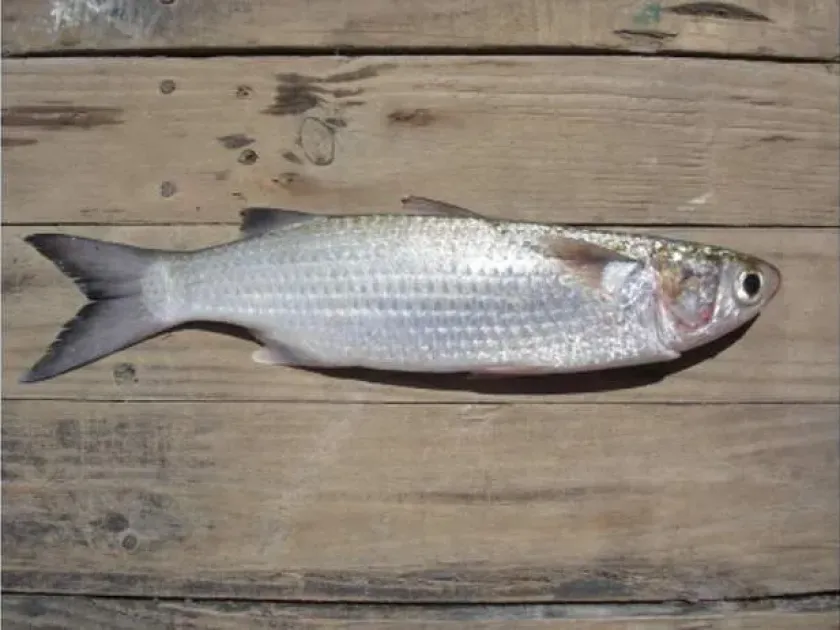
Description
How to identify
The thicklip grey mullet (Chelon labrosus) belongs to the Mugilidae family, known for its distinctive morphology and adaptability to various water salinities.
Its most prominent feature is the thick, fleshy upper lip, which is covered in rows of tiny papillae used for scraping algae and detritus off surfaces.
The body is elongated and streamlined with a silvery appearance, featuring longitudinal dark stripes that provide effective camouflage in its natural habitat.
The two dorsal fins are separated by a noticeable gap, a key taxonomic feature that distinguishes this species from other mullet varieties.
This fish exhibits remarkable physiological plasticity, allowing it to thrive in both marine environments and brackish estuaries throughout its life cycle.
What it damages
In aquaculture, the thicklip grey mullet can become a significant nuisance, particularly in intensive pond systems where it competes for natural food sources.
By grazing heavily on phytoplankton and biofilm, the fish depletes essential nutrients needed for the healthy development of primary commercial fish stocks.
The habit of disturbing bottom sediments during feeding sessions increases water turbidity, which can negatively affect the health of sensitive fish species.
Physical damage to nets, cages, and filtration systems is a common issue, as the fish use their powerful lips to scrape material off these underwater structures.
Such behavior increases maintenance costs for aquatic farms and reduces the overall yield efficiency of the aquaculture operation.
When it appears
The activity of Chelon labrosus is strongly influenced by water temperature, with peak movement observed during the warmer months of the year.
In spring, populations migrate towards shallower coastal waters and estuaries, seeking environments rich in organic matter and microalgae for nourishment.
The breeding season typically occurs during the cooler months, following which the fish exhibit increased feeding intensity in preparation for winter.
As water temperatures drop significantly in late autumn, the mullet populations migrate back into deeper, more stable marine environments for overwintering.
Strategic management and control measures should be timed according to these seasonal migration patterns to be most effective for farm protection.
Signs of infestation
Indications of a mullet presence include visible scrape marks on submerged structures, rocks, and the frames of aquaculture cages.
Increased turbidity in specific areas of the pond or tank, even in the absence of wind, often points to the bottom-feeding activities of a mullet school.
Direct visual observation of schools moving near the surface or along the pond bed is a clear indicator of the species' current population status.
Mechanical wear and tear on protective netting, characterized by small, uniform abrasion patterns, is a classic sign of thicklip mullet feeding behavior.
Monitoring the growth rate of cultured fish can also serve as a diagnostic tool; unexpectedly slow growth may indicate high competition from an invasive mullet presence.
Control measures
Effective management requires the installation of exclusion screens on water inlets to prevent the recruitment of wild mullet into cultured environments.
Regular maintenance and cleaning of cages and nets remove the biofilms that attract these fish, thereby reducing their interest in the aquaculture installation.
Selective harvesting techniques can be implemented to maintain the mullet population at levels that do not interfere with the primary production goals.
Acoustic deterrents may provide temporary relief by creating sound barriers that discourage schools from entering restricted areas of the farm.
Integrated pond management, focusing on optimizing nutrient levels, helps control the proliferation of food sources that sustain high mullet densities.
Taxonomy
- Latin name
- Chelon labrosus
- Family
- Mugilidae
- EPPO code
- MUGILA
Discussion
No discussions yet — be the first.