
Black earwig
Chelisoches morio
Description
How to identify
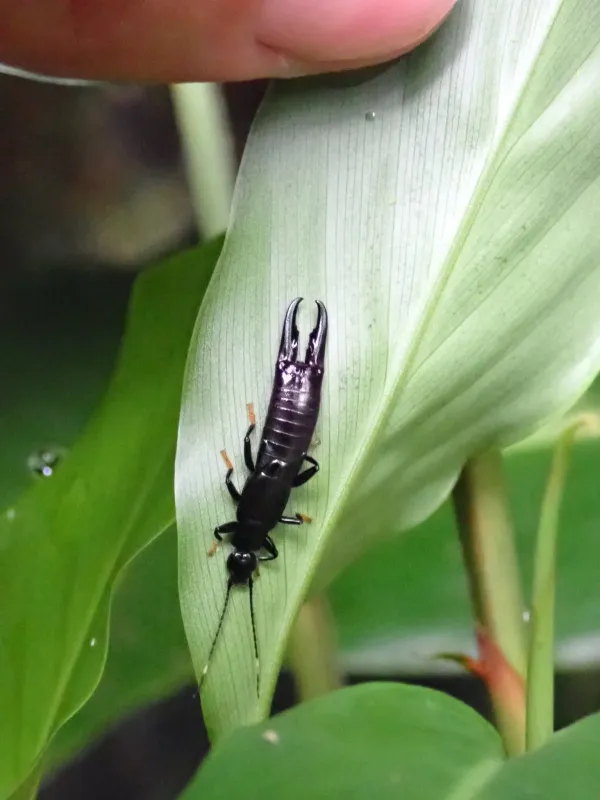
The black earwig (Chelisoches morio) is an insect of the order Dermaptera, belonging to the family Chelisochidae. Adult specimens have an elongated, jet-black body, measuring between 15 and 20 mm in length, with a distinct shiny exoskeleton.
The most recognizable feature of this species is the presence of powerful cerci (pincers) at the end of the abdomen, which are more curved in males than in females. The legs of the insect typically exhibit a yellowish-brown or reddish coloration.
These insects are primarily nocturnal, preferring to hide in narrow crevices of bark, leaf axils, or under decaying organic matter during the daylight hours to maintain optimal moisture levels.
The life cycle involves incomplete metamorphosis, where nymphs resemble smaller, wingless versions of adults. The population density can increase rapidly under warm and humid conditions.
While some earwig species act as minor predators, Chelisoches morio is widely recognized as a serious agricultural pest due to its destructive feeding habits on various plant species.
What it damages
This pest exhibits significant polyphagy, causing damage to a wide array of agricultural crops, including tropical fruit trees like bananas, coffee, and sugarcane, as well as various ornamental plants.
In greenhouses and gardens, the black earwig actively feeds on young shoots, flower buds, and succulent leaves, gnawing irregular holes that can lead to significant structural damage to the plants.
Damage to the reproductive parts of plants is particularly severe, resulting in the deformation of developing fruits, reduced yield quality, and the premature shedding of blossoms and young fruits.
Beyond direct feeding damage, the presence of these insects often facilitates the entry of secondary fungal and bacterial pathogens into the plant tissues, leading to rot and further decay.
- Feeding damage to fruit crops like bananas and coffee berries.
- Ragged holes and edges on the foliage of vegetable plants.
- Destruction of flower petals in ornamental gardens.
- Contamination of produce with excrement, reducing commercial value.
Signs of infestation
The primary indicators of infestation are characteristic feeding marks on leaves, which often appear as if they have been gnawed or trimmed with coarse scissors, alongside deep cavities in soft fruit.
During the day, pests can be discovered in their hiding spots, such as under loose bark, inside rolled-up leaves, or within dense flower heads where moisture is preserved.
The accumulation of small, dark fecal pellets on the underside of leaves or within damaged fruit clusters is a reliable sign of an established population in the area.
Nighttime inspection using a flashlight allows for the direct observation of the pests on the host plants, as they emerge from their shelters to feed under the cover of darkness.
A sudden shaking of branches or shrubs that results in the mass dropping of black insects with pincers confirms a high density of infestation that warrants immediate attention.
Control measures
The fundamental strategy for control is maintaining good horticultural sanitation, which includes the regular removal of plant debris and organic waste that serve as daytime refuges for the pests.
The application of sticky bands around the trunks of trees acts as an effective physical barrier, preventing the earwigs from climbing from the soil into the canopy to access ripening fruits.
When populations exceed economic thresholds, contact-action insecticides are used; applications are most effective when performed in the evening, coinciding with the peak nocturnal activity of the insects.
Using traps made of corrugated cardboard or burlap can help collect and destroy significant numbers of earwigs, as they naturally aggregate in these materials for daytime protection.
Biological control methods involving natural predators can supplement management, but chemical control remains the most reliable solution for protecting commercial plantations from severe damage.
Taxonomy
- Latin name
- Chelisoches morio
- Family
- Chelisochidae
- EPPO code
- CHCHMO
Discussion
No discussions yet — be the first.