
Pseudoscorpion
Chelifer
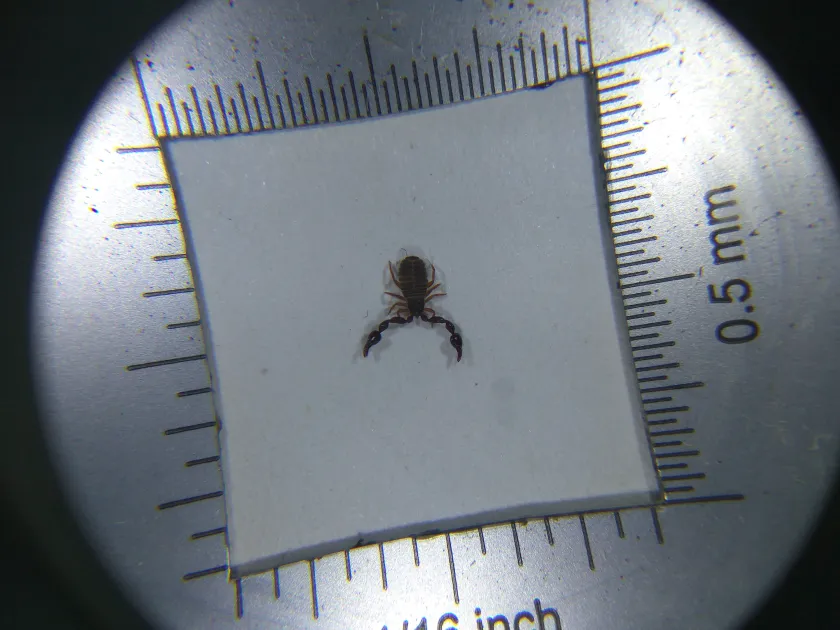
Description
How to identify
Pseudoscorpions (order Pseudoscorpionida) are tiny arachnids that resemble scorpions but lack the characteristic long tail and sting. The genus Chelifer is one of the most recognizable members of this order.
Adult individuals are small, typically ranging from 2 to 5 millimeters in length. Their bodies consist of a cephalothorax and a segmented abdomen, with prominent pedipalps (claws) at the front.
These arachnids use their claws to grasp small prey. The glands located in their claws contain venom that is powerful enough to paralyze tiny invertebrates but is completely harmless to plants and humans.
They are very agile and can move rapidly, often walking backward or sideways when disturbed. Due to their small size and secretive nature, they are rarely seen by humans in open garden spaces.
Taxonomically, they belong to the class Arachnida. It is crucial to distinguish them from true insects, as their biology and ecological roles are entirely different.
What it damages
From an agronomic perspective, it is a fact that pseudoscorpions are not plant pests. They do not feed on plant tissues, sap, roots, or fruit under any circumstances.
Instead, they function as beneficial predators in the garden ecosystem. They play an active role in regulating the populations of soil-dwelling invertebrates that can be potentially harmful.
Their diet consists of collembolans (springtails), mites, tiny insect larvae, and nematodes. By consuming these organisms, they act as a natural check against pest outbreaks in the soil.
Their presence on or around plants is a sign of a healthy, biologically diverse soil environment rather than an infestation. They are true allies for any gardener or farmer.
The damage potential of pseudoscorpions to agricultural crops is zero. Their role is strictly that of a predator, contributing to the balance of the garden's micro-fauna.
When it appears
The activity of pseudoscorpions is closely linked to temperature and moisture levels. They are most active during the warmer months, typically from spring through autumn.
They prefer humid environments, such as leaf litter, compost piles, or moist soil surfaces. During periods of drought, they seek shelter in deeper soil layers or bark crevices.
In greenhouse settings with consistent moisture and temperature, they may remain active throughout the entire year, provided there is a steady food supply of tiny soil invertebrates.
Their lifecycle progresses from eggs to nymphs and finally to adults. Females carry their eggs in a brood pouch attached to their abdomen, showing a form of maternal care.
During winter, they enter a state of diapause, finding protected spots to overwinter. Once spring temperatures arrive, they emerge and resume their predatory activities.
Control measures
No control measures are needed for pseudoscorpions. Because they are beneficial predators, efforts to eliminate them are unnecessary and can disrupt the natural balance of your garden.
Broad-spectrum insecticide use is discouraged, as these chemicals often kill off beneficial predators along with pests, leading to secondary outbreaks of other harmful species.
The best way to support these creatures is to maintain a healthy soil structure. Using organic mulches and avoiding excessive chemical soil sterilization provides them with a stable habitat.
Adopting integrated pest management (IPM) practices allows pseudoscorpions to thrive and continue their role as natural controllers of smaller garden pests.
- Avoid routine soil chemical treatments.
- Maintain adequate moisture and organic mulch cover.
- Use biological controls instead of harsh broad-spectrum pesticides.
Taxonomy
- Latin name
- Chelifer
- Family
- Cheliferidae
- EPPO code
- CHEFSP
Discussion
No discussions yet — be the first.