
Chaoborus punctipennis
Chaoborus punctipennis
Description
How to identify
Chaoborus punctipennis, commonly known as the phantom midge, belongs to the family Chaoboridae. Its larvae are famously called "phantom larvae" due to their transparent bodies, which make them nearly invisible in aquatic environments.
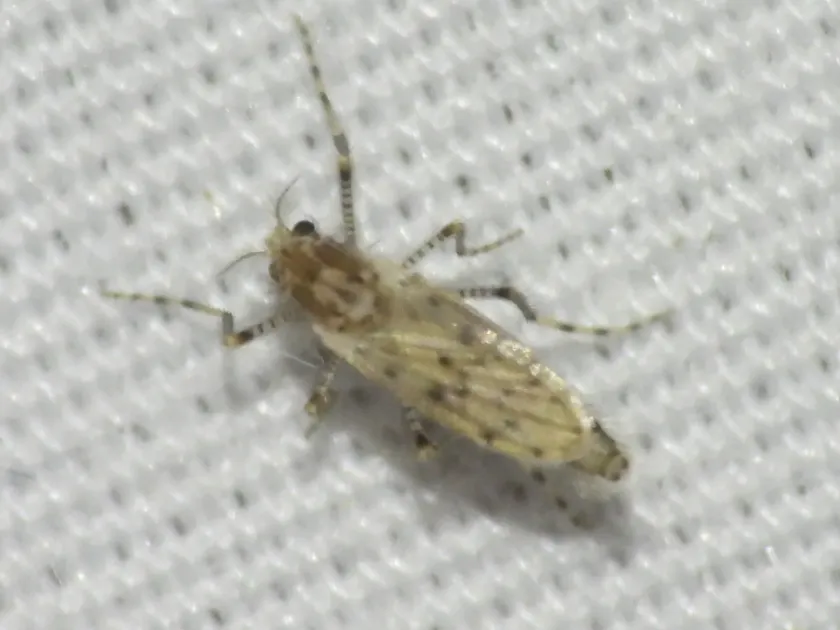
Adult insects resemble small gnats or midges but are non-biting. A distinguishing feature of the species is the presence of distinct dark spots on the wing veins, which serves as a primary marker for identification.
The larvae possess specialized hydrostatic air sacs, allowing them to remain neutrally buoyant. This enables them to perform daily vertical migrations, moving between the lake bottom and the surface.
The life cycle encompasses four larval stages, a pupal stage, and the adult stage. The insect spends the vast majority of its life cycle in water, making it a permanent resident of ponds, lakes, and sometimes aquaculture facilities.
Microscopic examination of the adult's wing venation or the larval body structure is required for precise identification. Field identification is usually performed by observing the movement of transparent larvae in water samples.
What it damages
The primary concern regarding Chaoborus punctipennis is its impact on aquaculture operations. These larvae are highly predatory and can cause significant losses by preying on juvenile fish and fry in hatchery ponds.
The presence of large numbers of larvae in fish ponds leads to intense competition for zooplankton. This depletes the food source necessary for fish development, resulting in stunted growth rates of the stock.
When infestation is severe, phantom larvae can consume a large percentage of fry populations, threatening the economic viability of fish farms. The larvae are particularly dangerous to early-stage fish.
In addition to direct predation, the presence of these midges requires expensive water treatment protocols and quarantine periods. This disrupts production cycles and increases overall management costs for farmers.
While they do not cause direct damage to terrestrial crops, their presence in irrigation reservoirs can alter the microbial and plankton composition of the water, potentially affecting overall pond health.
When it appears
Adult emergence typically begins in late spring and continues throughout the summer and early autumn. The timing is largely dictated by water temperature and the specific climate of the region.
Larvae overwinter in the bottom sediments, entering a state of diapause or reduced activity. As temperatures rise in the spring, they emerge from the mud to resume their predatory feeding behavior.
The number of generations per year varies based on the climate; in warmer southern areas, multiple generations are possible. Conversely, in northern latitudes, the species often follows a strict univoltine cycle.
Daily activity is highly structured, with larvae moving to the surface at night to feed and returning to the darker, deeper layers of the water column during the day to avoid visual predators.
The period of peak harmfulness coincides with the spring and summer months when fish fry are most vulnerable, as the larvae grow larger and increase their consumption rates accordingly.
Signs of infestation
A primary indicator of infestation is an unexplained drop in fry survival rates in ponds. Close inspection of water samples taken at night often reveals the presence of transparent larval organisms.
The observation of high numbers of adult midges resting in near-water vegetation during dusk is a strong indicator of a substantial larval population residing in the water.
A sudden decline in zooplankton density, particularly daphnia, is a classic sign. Since the larvae are active hunters, they rapidly reduce the availability of planktonic food sources.
Monitoring with light traps at night is an effective way to track adult population levels. A high capture rate of spotted-wing midges suggests that a large larval population will soon follow or is already present.
Sampling of the pond floor using a dredge or benthic net allows for the detection of late-stage larvae preparing to pupate. This helps managers anticipate the next emergence cycle and act accordingly.
Control measures
Complete draining and drying of ponds during the off-season is the most reliable method for controlling the population. Exposure to air and freezing temperatures kills both larvae and eggs.
Biological control can be implemented by introducing natural predators that feed on phantom midges. Furthermore, specific microbial biopesticides are available that target dipteran larvae while remaining safe for fish.
Regular maintenance, including the removal of excess aquatic vegetation and accumulated sediment, is crucial. Maintaining high water quality and using fine-mesh filtration on intake systems minimizes re-infestation.
Chemical control is rarely recommended due to the sensitivity of fish populations and the resistance developed by the larvae. Use of any chemicals should be strictly limited to approved products.
- Draining and drying ponds between production cycles.
- Application of biological larvicides (e.g., Bti).
- Physical removal of organic bottom sediments.
- Use of light traps for adult population monitoring.
- Stocking of predatory fish to control larvae.
Taxonomy
- Latin name
- Chaoborus punctipennis
- Order
- Diptera (flies)
- Family
- Chaoboridae
- EPPO code
- CHABPU
Discussion
No discussions yet — be the first.