
Chalcodermus
Chalcodermus
Description
How to identify
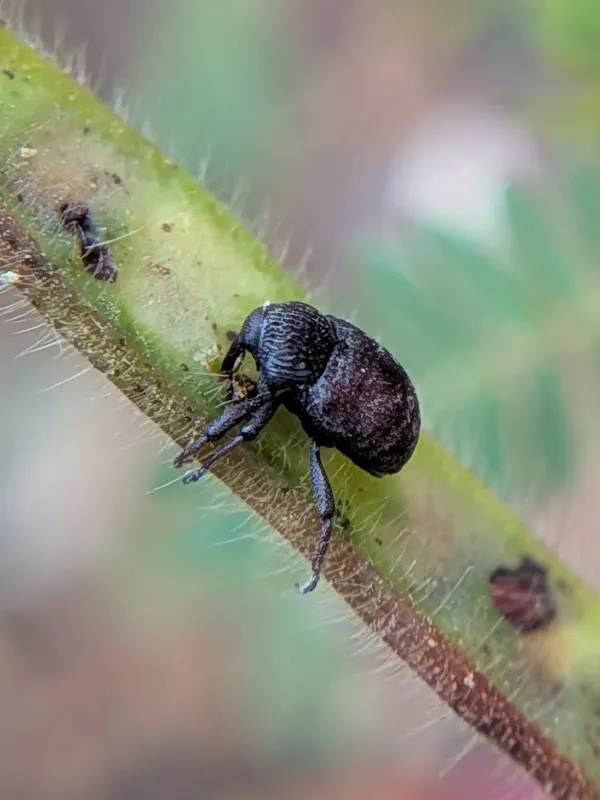
Chalcodermus is a genus of weevils belonging to the Curculionidae family. These insects are characterized by their distinct snout and a robust, dark-colored exoskeleton that provides them with significant protection against environmental stressors.
Adult beetles can be identified by their typical weevil morphology: a compact, often black or dark brown body with a finely punctate surface. They are typically small in size, making them difficult to spot against the backdrop of soil or plant stems.
The biology of Chalcodermus is strictly synchronized with the vegetative stages of host plants. Adults are capable of flight, allowing them to rapidly colonize new fields and disperse across planting sites to seek feeding and oviposition opportunities.
The life cycle undergoes complete metamorphosis, including egg, larva, pupa, and adult stages. The larval stage is particularly problematic because it occurs internally within the plant tissues, shielding the insect from external interventions.
Overwintering usually occurs in the adult stage within the soil or deep inside crop residues. This behavioral trait highlights the importance of post-harvest field sanitation in reducing the pressure of the following year's pest population.
What it damages
Chalcodermus primarily attacks legume crops, causing economic losses in staples such as cowpeas, soybeans, and other pulse crops. Both the adult feeding and the larval infestation contribute to the overall damage to the crop.
Adult beetles feed on leaves, creating distinct holes that reduce the plant's photosynthetic capacity. This feeding behavior weakens the plant during critical growth stages, leading to reduced vigor and lower yields.
The larvae act as internal feeders, boring into pods and consuming the developing seeds. This damage is often hidden until the pods are opened or harvested, directly reducing the quantity and quality of the yield.
Infested seeds lose their viability and marketability, becoming susceptible to secondary infections by fungi and bacteria. These infections often result in rot during storage, further compounding the financial impact on the grower.
In cases of severe infestation, Chalcodermus can destroy a significant portion of the harvest. The damage is exacerbated in drought conditions, as the plants lack the reserves to compensate for the tissue loss caused by the insects.
When it appears
The activity of Chalcodermus begins in the spring as temperatures rise, signaling the adults to emerge from their overwintering sites in the soil or crop debris to begin feeding.
Mass emergence and migration into legume fields usually coincide with the flowering stage of the crop. This period is critical, as females lay eggs directly on the newly formed pods, providing the larvae with an immediate food source.
The rate of development throughout the season is highly dependent on ambient temperature and moisture levels. Under favorable conditions, the insect can complete multiple cycles, increasing the overall population density before the end of the harvest.
As autumn approaches and temperatures drop, the adult beetles transition into a quiescent state. They seek shelter in the top layer of soil or protected areas within field residues to survive the winter months.
Understanding these seasonal patterns is essential for growers to implement scouting programs and schedule control measures effectively before the pest population peaks and larvae enter the pods.
Signs of infestation
The earliest signs of infestation are characteristic circular holes in the leaves, created by adult beetles feeding on plant tissue. In heavily infested fields, leaves may appear tattered or show signs of premature yellowing.
Observation of the pods often reveals small, dark puncture marks where females have laid eggs. These entry points can sometimes lead to localized necrosis or decay on the pod surface, providing a clear visual cue of pest presence.
Internal examination of pods often reveals seeds that have been hollowed out or partially consumed. The presence of larval excrement (frass) inside the pods is a definitive sign of successful larval development.
Visually, affected patches in a field may appear stunted, with plants showing signs of stress compared to healthy sections. The overall pod set may be reduced, or individual pods may dry out prematurely due to internal damage.
- Adults observed on the undersides of leaves during early morning inspections.
- Small, dark scars on the surface of developing legume pods.
- Reduced germination rates of stored seeds due to internal damage.
Control measures
Managing Chalcodermus requires an integrated pest management (IPM) approach that combines cultural, chemical, and biological strategies to keep populations below the economic injury level.
Cultural control is a primary line of defense. Deep plowing of fields after harvest buries the overwintering adults, significantly reducing the initial population for the next season. Implementing a rigorous crop rotation program is also essential.
Chemical control involves the timely application of insecticides during the adult stage, specifically before the larvae bore into the pods. Selecting systemic or contact insecticides based on local efficacy data is critical for effective management.
Utilizing resistant or early-maturing varieties can help avoid the window of peak pest activity. By ensuring the crop completes its sensitive growth stages before the population spikes, farmers can drastically minimize losses.
Biological control methods, such as the application of entomopathogenic fungi, offer a sustainable alternative. These natural agents can infect adult beetles, providing a mechanism for population reduction that minimizes the reliance on synthetic chemicals.
Taxonomy
- Latin name
- Chalcodermus
- Order
- Coleoptera (beetles)
- Family
- Curculionidae
- EPPO code
- CHLDSP
Discussion
No discussions yet — be the first.