
Three-toed skink
Chalcides chalcides
Description
How to identify
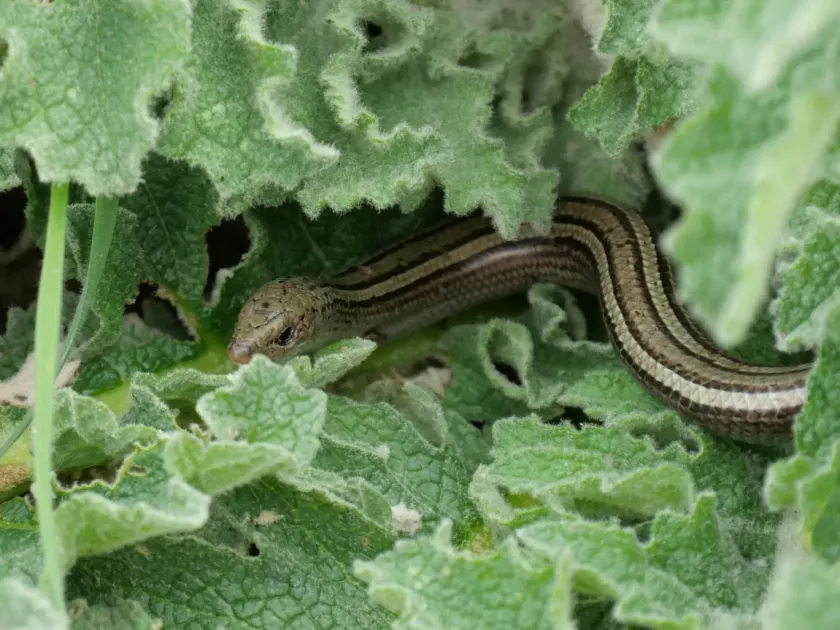
The three-toed skink (Chalcides chalcides) is a species of lizard belonging to the Scincidae family. It is characterized by an elongated, snake-like body and extremely short limbs, each possessing only three toes, which defines its common name.
Adult individuals can grow up to 40 centimeters in length. Their body is covered with smooth, shiny scales, and their coloration typically ranges from olive to brown, marked with distinct dark longitudinal stripes along the back and flanks.
This species is highly adapted to life in dense vegetation and leaf litter. It leads a secretive lifestyle, rarely emerging into open spaces, preferring the shelter provided by thick grass, shrubbery, or the debris layer of the forest floor.
The species reproduces via ovoviviparity, meaning the eggs hatch within the female's body. This biological adaptation allows the young to be born fully formed and ready to navigate their environment immediately, increasing their survival rates.
Native to the Mediterranean region, the three-toed skink thrives in humid, sun-drenched environments such as vineyards, gardens, and grasslands where the thermal conditions are optimal for its daily metabolic activities.
What it damages
From an agronomic perspective, the three-toed skink is strictly beneficial and is not classified as a plant pest. It acts as an entomophagous predator, contributing significantly to the natural suppression of insect populations.
Their diet consists primarily of grasshoppers, various beetles, insect larvae, and small arachnids. By feeding on these invertebrates, they play a role in maintaining the ecological balance within agricultural fields and garden landscapes.
There are no records of this species causing damage to crops. They do not consume plant tissues, roots, or fruits, nor do they spread plant diseases, making them completely harmless to agricultural productivity.
Misconceptions regarding their status as pests often arise from their serpentine appearance, which can be alarming to untrained observers. However, scientifically, these lizards are allies to the farmer rather than enemies.
Their presence is a positive indicator of an ecosystem that supports biodiversity. Protecting them is advantageous, as they provide continuous, cost-free pest management that reduces the reliance on synthetic pesticides.
Control measures
Since the three-toed skink is a beneficial organism, no control measures are required. Efforts should instead be directed toward preserving their natural habitats within agricultural landscapes to ensure their continued presence.
Agricultural operations can be adjusted to minimize disruption to skink populations, such as avoiding excessive mechanical tilling in areas identified as vital nesting or foraging grounds for the species.
If it becomes necessary to relocate skinks from protected structures like glasshouses or greenhouses, humanely catching them and moving them to a safe outdoor area is the recommended approach for property management.
The use of chemical agents to eliminate these reptiles is strictly discouraged. Such actions are counterproductive and harmful to the broader ecological integrity of the farm, leading to the loss of natural insect controllers.
Sustainable farming practices often emphasize the importance of integrated pest management. Encouraging the survival of such predators is a core component of sustainable agriculture, contributing to a healthier and more resilient crop environment.
Taxonomy
- Latin name
- Chalcides chalcides
- Family
- Scincidae
- EPPO code
- KHLDCH
Discussion
No discussions yet — be the first.