
Ceutorhynchus turbatus
Ceutorhynchus turbatus
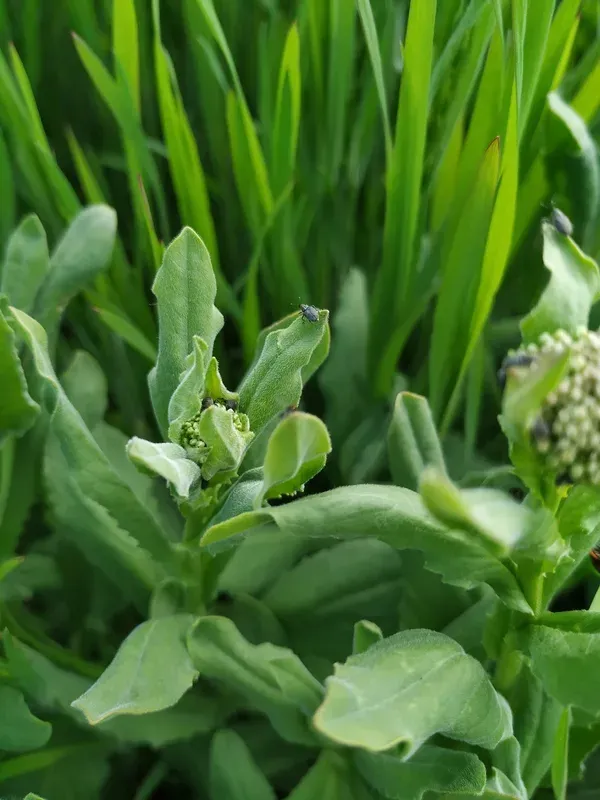
Description
How to identify
Ceutorhynchus turbatus is a species of weevil belonging to the family Curculionidae. These beetles are recognized by their characteristic elongated snout and typically dark, inconspicuous coloration which provides excellent camouflage.
Adult beetles are relatively small, usually measuring a few millimeters in length. Their body surface is often covered with small scales, making them difficult to spot on soil or plant debris unless they are moving.
The larvae are apodous, meaning they lack legs, and possess a curved, creamy-white body. They are specialized for life within the internal tissues of host plants, which protects them from environmental stressors.
The life cycle involves complete metamorphosis. Overwintering occurs in the adult stage within the soil or protected niches, allowing them to emerge rapidly when spring temperatures become favorable.
Accurate identification of this species often requires professional expertise due to the high morphological similarity to other closely related weevil species inhabiting cruciferous fields.
What it damages
This pest primarily attacks plants in the Brassicaceae family, with oilseed rape (canola) and mustard being the most economically significant hosts. Infestation can also impact various types of cabbage.
Adult feeding causes minor damage through the perforation of leaves, but this is rarely the cause of significant yield loss. The primary concern is the larval stage, which feeds internally within stems and petioles.
By consuming the internal plant tissue, larvae disrupt the vascular system, leading to impaired nutrient and water transport. This results in stunted growth and weakened plant vigor.
Structural damage to the stem often leads to brittleness, which can cause crops to lodge or break during high winds. This significantly hampers mechanized harvesting and leads to major yield reductions.
The tunnels created by larvae serve as infection points for secondary pathogens, including various fungi and bacteria that cause stalk rot and further decline in plant health.
When it appears
Adults emerge from hibernation early in the spring, typically when temperatures rise above 8-10 degrees Celsius. This timing usually aligns with the early vegetative growth phase of winter rapeseed.
A period of supplementary feeding follows emergence, during which adults feed on young leaves before the females begin the egg-laying process. This period is the primary window for monitoring and control.
Larval development takes place during the phase of rapid vegetative growth, extending through the stem elongation and budding stages. Damage peaks during these critical development windows.
Pupation takes place within the soil. A new generation of adults usually appears by early summer, though the exact timing is highly dependent on local meteorological conditions.
Understanding these biological stages is essential for the timely application of control measures. Late intervention is often ineffective because larvae are protected inside the stem tissues.
Signs of infestation
The first indicator of an infestation is the presence of small, characteristic feeding holes on the leaves. This leaf perforation is a visual cue for farmers to begin intensive monitoring.
Deformation or thickening of stems is a major sign of larval activity. If a plant appears twisted or shows localized swelling, it is highly likely that larvae are feeding within the stem.
Visible signs of plant stress, such as yellowing leaves or general wilting, are often observed in the later stages of infestation when the internal damage becomes severe.
- Larval excrement found inside the stem during physical examination.
- Broken or lodged stems in patches across the field.
- Presence of adult beetles captured in yellow sticky traps placed at canopy height.
Routine scouting, particularly during the early spring, is necessary to determine if the population density warrants chemical or biological intervention.
Control measures
Effective management relies on a sound crop rotation strategy. Avoiding the cultivation of cruciferous crops in the same field for multiple consecutive years is vital to disrupting the pest life cycle.
Fall tillage helps expose overwintering pupae and adults to harsh conditions, significantly reducing the population density. Weed control is equally important as host weeds harbor the pest.
Chemical control should be implemented using systemic insecticides that can reach larvae inside the plant tissues. Applications must be timed precisely before the eggs are laid.
Yellow water traps or sticky boards are effective tools for monitoring adult immigration. Spraying should only commence once threshold levels are surpassed, as indicated by trap counts.
Biological control through the preservation of natural predators and parasitoids is encouraged. Reducing unnecessary insecticide use during the flowering stage is critical to protect honeybees and other pollinators.
Taxonomy
- Latin name
- Ceutorhynchus turbatus
- Order
- Coleoptera (beetles)
- Family
- Curculionidae
- EPPO code
- CAOITU
Discussion
No discussions yet — be the first.