
Three-spotted weevil
Ceutorhynchus trisignatus
Description
How to identify
The three-spotted weevil (Ceutorhynchus trisignatus) is a species of beetle belonging to the family Curculionidae (true weevils). It is a specialized pest known to inhabit various agricultural regions where cruciferous crops are cultivated.
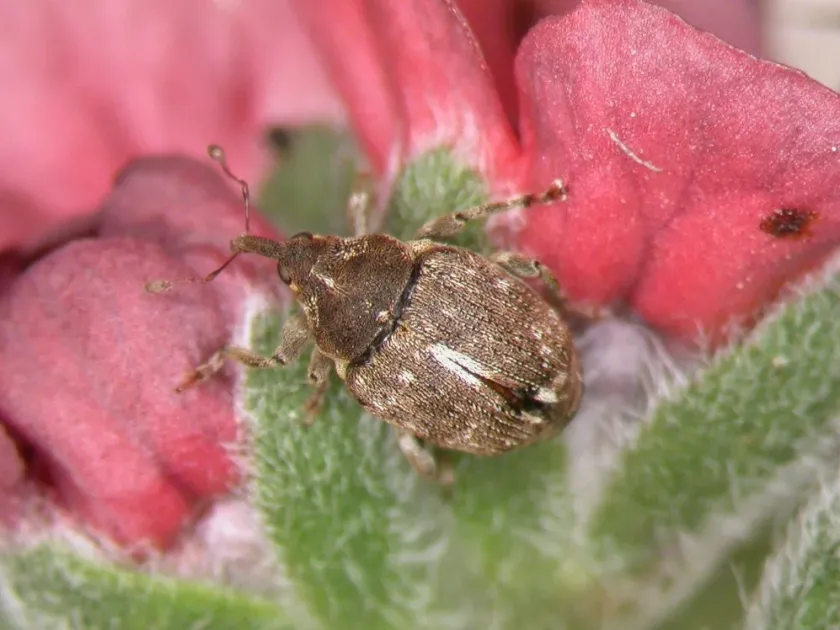
The adult beetle is small, typically measuring 3–4 mm in length, and is characterized by a long snout, which is typical for the genus. The elytra (wing covers) display three distinct light-colored spots against a darker background, which is the defining feature of this species.
The life cycle involves complete metamorphosis, consisting of the egg, larva, pupa, and adult stages. The larvae are fleshy, legless, and white or yellowish with a dark head, adapted to live inside plant tissues.
Adults primarily overwinter in the upper soil layer, under plant debris, or in dense vegetation near fields. As spring temperatures rise, they emerge to begin their active feeding and reproduction phase.
These insects exhibit a strong defense mechanism: when disturbed or sensing vibration, they drop from the plant to the ground and remain motionless, making them quite difficult to detect during field scouting.
What it damages
This pest is highly specialized and attacks plants in the Brassicaceae family, particularly winter and spring rapeseed, mustard, and cabbage. It poses a significant threat to the profitability of these crops.
Adult beetles cause damage by feeding on leaves and stems, creating small puncture wounds. While this feeding alone is rarely lethal, it stresses the plant and can cause damage to the growing points of young seedlings.
The primary damage is caused by the larvae, which burrow inside the stems or petioles. By feeding internally, they disrupt the vascular system of the plant, hindering the movement of water and nutrients.
The affected stems become weakened and prone to bending, lodging, or breaking under mechanical stress or heavy wind. Additionally, these tunnels act as entry points for secondary pathogens, leading to stem rots.
Severe infestations can lead to substantial yield reductions, as plants divert energy to tissue repair instead of developing flowers and pods, ultimately impacting the final seed quality and weight.
When it appears
Early spring marks the emergence of the beetles from their overwintering sites, typically occurring as soon as air temperatures consistently reach 8-10 degrees Celsius.
The oviposition period is extended and usually coincides with the phase of active stem elongation. Females use their snouts to bore small holes into the plant tissue, depositing eggs inside the stems or flower stalks.
Larvae hatch within one to two weeks and begin feeding inside the plant tissue. The larval stage lasts for approximately one month, during which time the insect grows and prepares for the pupal stage.
In mid-summer, larvae exit the plants and migrate into the soil to pupate. New generation adults emerge shortly thereafter, feeding briefly before entering diapause to overwinter.
The pest follows a univoltine cycle (one generation per year), meaning that the population density is heavily influenced by the survival rates during the overwintering stage and the conditions of the previous summer.
Signs of infestation
The first signs of infestation are small, pin-prick-like holes on the leaves, caused by the feeding of adults. Seeing these holes is a key indicator for growers to increase field monitoring efforts.
Deformations, swelling, or longitudinal cracking on the stems are clear symptoms of larval feeding activity inside the plant. These stems often appear misshapen and exhibit reduced structural integrity.
A cross-section of an infested stem will reveal tunnels packed with larval frass. The tissue surrounding these tunnels often shows signs of browning or necrosis due to the interaction with the insect's digestive enzymes.
General plant stunting, wilting, or yellowing of leaves in patches are late-stage signs. By the time these symptoms appear, the larvae have usually already caused significant internal damage.
- Pin-prick damage on leaves.
- Stem swelling and distortions.
- Presence of larvae in stem cross-sections.
- Premature yellowing or plant wilting.
Control measures
Cultural practices are essential, including crop rotation with a 3–4 year gap between cruciferous crops and spatial isolation from previous year's fields to minimize migration.
Deep autumn plowing is a highly effective method to disrupt the soil-dwelling stages (pupae or overwintering adults), reducing the overall population pressure for the following spring.
Integrated pest management should utilize yellow sticky traps or yellow water traps to monitor the migration of adults and determine the appropriate timing for insecticide applications.
Chemical control should be targeted at the period when adults are active but before they have laid eggs, as larvae are protected once they enter the plant tissues.
Proper nutrient management and certified seed selection help ensure rapid crop establishment, making the plants more resilient to pest pressure and improving their ability to recover from minor infestations.
Taxonomy
- Latin name
- Ceutorhynchus trisignatus
- Order
- Coleoptera (beetles)
- Family
- Curculionidae
- EPPO code
- CEUTTS
Discussion
No discussions yet — be the first.