
Swabian weevil
Ceutorhynchus suturalis
Description
How to identify
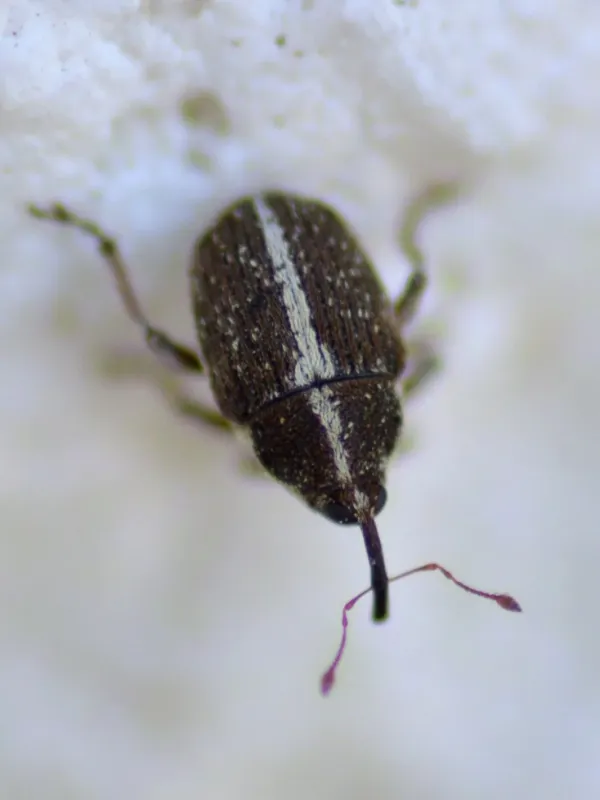
The Swabian weevil (Ceutorhynchus suturalis) belongs to the Curculionidae family of beetles. These insects are small, typically ranging from 2.5 to 3 mm in length, which makes them quite challenging to detect in large fields.
Adult beetles have a distinct rostrum (snout) which is characteristic of the weevil family. Their body color is generally dark, sometimes appearing brownish or black, often blending in with the soil or the base of plant stems.
The larvae are legless, fleshy, and light-colored with a brown head capsule. They spend their entire developmental phase feeding inside the tissues of the host plant, remaining hidden from predators and contact insecticides.
Adults overwinter in the soil or under plant debris. They emerge in the spring to feed on young host plants. Their activity is heavily dependent on temperature, with the most significant movement occurring during warm spring days.
Identifying the pest often requires using yellow sticky traps or careful scouting of the plant base. They are known for "playing dead" (thanatosis) when disturbed, dropping from the leaves to the ground instantly.
What it damages
The Swabian weevil primarily attacks plants from the Brassicaceae (cruciferous) family. This includes important agricultural crops such as winter and spring oilseed rape, as well as mustard and various weeds.
Adult weevils cause damage by feeding on leaves and stems, creating small pits or puncture holes. While this foliage damage alone is rarely lethal, it significantly weakens the plant, especially during the early growth stages.
The larvae represent the most destructive stage, as they tunnel through the stems and stalks of the plant. This mining activity disrupts the vascular system, reducing the plant's ability to transport water and nutrients efficiently.
Stunted growth, deformation of the stems, and premature wilting are common symptoms of heavy larval infestation. In severe cases, the structural integrity of the plant is compromised, leading to lodging.
In addition to structural damage, the wounds created by the larvae provide easy access for secondary pathogens. Infections such as various stem rots often follow an infestation, leading to further yield loss.
Control measures
Crop rotation is the most effective cultural practice to manage the Swabian weevil. By avoiding consecutive planting of cruciferous crops on the same field, farmers can effectively reduce the local population density of the pest.
Post-harvest tillage is crucial for breaking the lifecycle of the weevil. Turning the soil helps bury or destroy the pupae and overwintering adults that remain in the upper soil layers after the crop is harvested.
Chemical control should be implemented based on scouting results. If the number of adult beetles exceeds the economic threshold, the application of systemic or contact insecticides is recommended to prevent larval development.
The use of monitoring tools such as yellow water traps allows for precise timing of chemical applications. This approach reduces unnecessary pesticide use and ensures the best possible coverage during the pest's peak activity.
Maintaining optimal field conditions, including balanced fertilization and weed management, helps crops develop strong defenses. Healthy plants are better equipped to compensate for minor damage caused by weevil activity.
Taxonomy
- Latin name
- Ceutorhynchus suturalis
- Order
- Coleoptera (beetles)
- Family
- Curculionidae
- EPPO code
- CEUTSU
Discussion
No discussions yet — be the first.