
Cabbage stem weevil
Ceutorhynchus scrobicollis
Description
How to identify
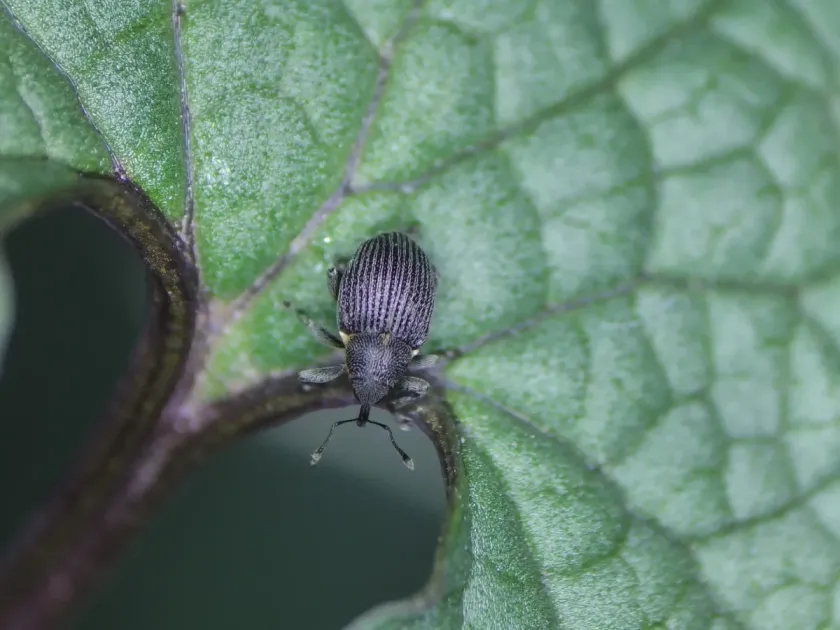
The adult cabbage stem weevil is a small beetle, measuring approximately 3 to 4 millimeters in length, with a dark gray to black coloration.
Its body is covered in fine scales, and it features a characteristic long, slender rostrum (snout) which is typical for the Curculionidae family.
Larvae are legless, creamy-white in color, and possess a distinct brown head capsule, specialized for feeding inside plant stems.
Pupation occurs in the soil, where the insects form protective cocoons that allow them to survive until the adult stage emerges.
They are known to be elusive, often dropping to the ground and playing dead when disturbed, which makes early detection difficult for farmers.
What it damages
This pest is a major threat to crops belonging to the Brassicaceae family, including cabbage, broccoli, cauliflower, oilseed rape, and radishes.
While adult feeding causes minor leaf damage, the most severe destruction is caused by larvae boring into the plant stems.
The internal tunneling disrupts the vascular system, preventing the transport of essential nutrients and water from the roots to the foliage.
Stems damaged by the larvae become structurally weak, prone to snapping, and highly susceptible to secondary bacterial and fungal infections.
Severe infestations can lead to stunted growth, reduced head size in cabbage, and in young plants, complete crop loss.
When it appears
Adult weevils overwinter in the soil or under plant debris, emerging in early spring as temperatures rise above 8-10 degrees Celsius.
After emergence, they feed on young foliage before mating and laying eggs into small incisions made in the leaf stalks or stems.
The larval development period lasts about 30 to 40 days, during which they feed and grow hidden within the host plant's tissues.
Upon maturity, the larvae exit the stems, burrow into the soil to pupate, and emerge as a new generation of adults by mid-summer.
Depending on the climatic zone, the cycle may repeat or the new generation may prepare for hibernation in the soil.
Signs of infestation
Visible punctures or small, pin-prick holes on the leaves are often the first signs that the adults have arrived on the crop.
Swollen, twisted, or distorted stems are clear indicators of larval activity occurring inside the plant's structural tissue.
Yellowing of the lower leaves, combined with signs of wilting even when soil moisture is adequate, points to internal damage by the larvae.
Internal inspection of the stem reveals galleries filled with frass, which are distinct signs of long-term infestation by the weevil.
- Circular holes on leaves.
- Stem deformation and twisting.
- Stunted plant development.
- Internal tunnels in the stem.
Control measures
Implementing a strict crop rotation program is the most effective preventative measure to disrupt the pest's life cycle in the field.
Deep autumn plowing of the soil is highly recommended to expose larvae and overwintering adults to frost and natural predators.
Rigorous weed control, particularly of wild cruciferous species, helps eliminate alternative host plants and reduces the local weevil population.
In cases of high pest pressure, the application of systemic insecticides at the time of adult migration can prevent egg-laying.
Protective covers, such as floating row covers, are an effective organic method to physically bar the weevils from reaching young cabbage plants.
Taxonomy
- Latin name
- Ceutorhynchus scrobicollis
- Order
- Coleoptera (beetles)
- Family
- Curculionidae
- EPPO code
- CEUTSC
Discussion
No discussions yet — be the first.