
Rape stem weevil
Ceutorhynchus rapae
Description
How to identify
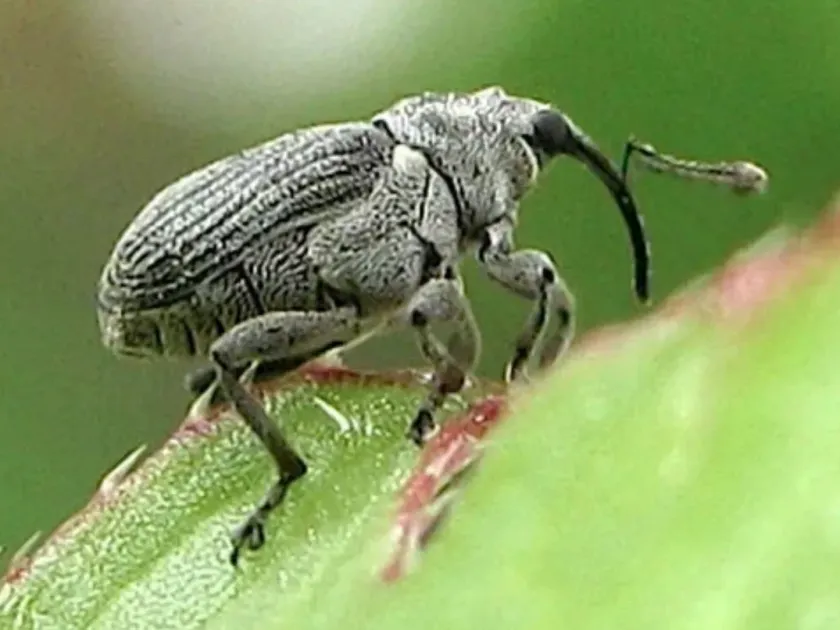
The rape stem weevil is a beetle belonging to the Curculionidae family within the order Coleoptera. Adult specimens measure between 2.2 and 3 mm in length and exhibit a color range from dark grey to black, often with a slight metallic sheen.
A key identifying morphological feature is the elongated rostrum (snout) curved downwards, which is typical for this group of weevils. The body surface is covered in fine scales, providing a matte or greyish appearance that helps the insect blend into its environment.
The larva is legless, curved, and reaches a length of 4-5 mm. The larval head is light brown, while the body itself has a yellowish-white hue, making it relatively easy to distinguish when extracted from plant tissues.
In the wild, the pest overwinters as an adult in the soil or under plant debris along field edges and forest strips. In early spring, the weevils leave their overwintering sites and migrate to cruciferous crops.
To identify the species in the field, agronomists typically use visual inspections during morning hours or deploy yellow water traps, which are highly effective at attracting adult weevils in the crop area.
What it damages
The rape stem weevil primarily attacks plants within the Brassicaceae family. Its main host crops include winter and spring oilseed rape, mustard, turnip rape, and various cruciferous weed species that serve as secondary hosts.
Adult weevils feed mainly on the leaves and young stems, creating small "shot-hole" punctures in the epidermis. However, the most significant damage is caused by larvae that feed internally within the plant tissues.
The female deposits eggs into the stems or leaf petioles of the rape plants. After hatching, the larvae burrow into the stems, feeding on the parenchyma. This feeding activity disrupts the plant's metabolic pathways and stunts growth.
Severe larval infestation causes stem deformation, stunted plant development, and premature yellowing of leaves. In high populations, the damaged stems may lodge, leading to significant yield losses and reduced crop quality.
Furthermore, the puncture sites created by the females during oviposition serve as entry points for various fungal and bacterial pathogens, which can lead to secondary stem rot and tissue decay, further weakening the plant.
When it appears
The pest's activity cycle begins in early spring when the average daily temperature reaches +8...10 degrees Celsius. The arrival of adults in fields usually coincides with the start of the winter oilseed rape growth season.
The mating and egg-laying period is extended and depends heavily on regional weather conditions. Peak oviposition occurs during the stem elongation and early budding phases of the crop, making this a critical window for crop protection.
Larvae develop inside the stems for 3 to 5 weeks. Once fully grown, they exit the plant tissue and drop into the soil to pupate at a depth of approximately 5-10 centimeters beneath the surface.
New generation adults emerge in mid-summer, typically between June and July. These beetles feed for a period before entering a state of diapause, during which they remain inactive until the following spring.
While weather variations such as cold springs can shift the timing of emergence, the biological cycle remains consistent. Regular monitoring during the active growth phase is essential to manage potential outbreaks effectively.
Control measures
Integrated pest management for the rape stem weevil begins with strict crop rotation. It is essential to avoid planting oilseed rape on the same land more frequently than every 3-4 years to break the insect's life cycle and limit population buildup.
Agronomic practices include deep plowing after harvest. This action effectively destroys larvae and pupae residing in the soil, preventing them from surviving and emerging in subsequent seasons.
Chemical control should be implemented once the economic threshold of damage is reached. During the migration phase, systemic or contact-stomach insecticides registered for use on oilseed rape are applied to protect the crops.
- Monitoring using yellow sticky traps to track flight activity.
- Maintaining spatial distance from previous year's rape fields.
- Eliminating cruciferous weeds that serve as alternative breeding grounds.
- Using seeds treated with systemic insecticides for early protection.
Special attention must be given to field borders, as this is where the migration from overwintering sites typically begins. Targeted border treatments can often curb the spread of the pest across the entire field.
Taxonomy
- Latin name
- Ceutorhynchus rapae
- Order
- Coleoptera (beetles)
- Family
- Curculionidae
- EPPO code
- CEUTRA
Discussion
No discussions yet — be the first.