
Cabbage stem weevil
Ceutorhynchus puncticollis
Description
How to identify
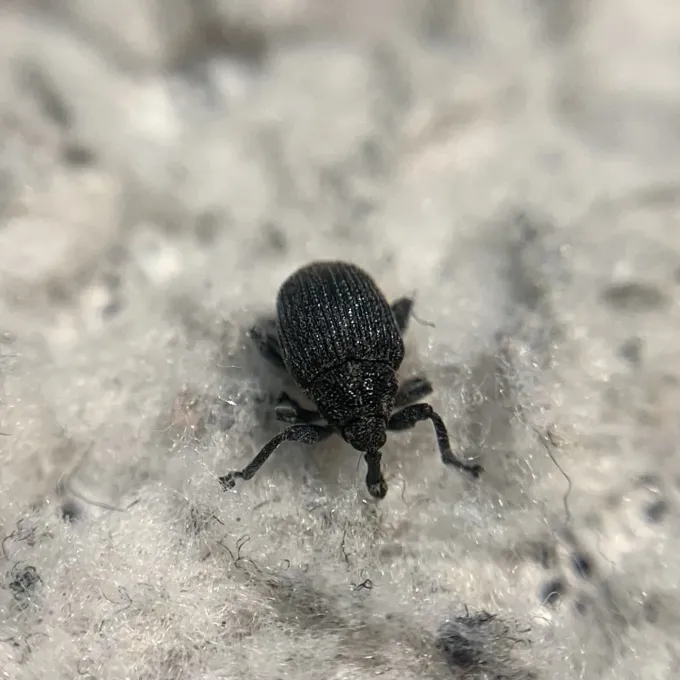
The cabbage stem weevil (Ceutorhynchus puncticollis) is a member of the Curculionidae family. Adult beetles are small, measuring about 2.5 to 3 mm in length, with a dark, almost black, body color.
The most distinctive feature of this pest is its long, slender, downward-curved snout (rostrum), which is typical for weevil species and used for feeding and egg-laying.
The larvae are legless, slightly curved, and white with a distinct brown head. They live exclusively inside the plant tissue, which makes them difficult to detect early.
Adults overwinter in the soil or under plant debris. They emerge in the spring as soon as soil temperatures reach approximately 8°C, seeking out host plants.
The beetles are highly mobile, allowing them to rapidly colonize new fields or garden plots of cabbage and related crops immediately after planting.
What it damages
The cabbage stem weevil targets all crops in the Brassicaceae family, including cabbage, cauliflower, broccoli, radish, turnip, rapeseed, and mustard.
Adult beetles cause damage by feeding on leaves, creating tiny, pinprick-like holes. While this does not usually kill the plant, it stresses young seedlings.
The larvae are the most destructive stage. They bore into the stems, creating tunnels that disrupt the plant's ability to transport nutrients and water efficiently.
Infested plants show reduced growth, yellowing foliage, and in severe cases, the stems may collapse or break, especially under windy conditions.
The damage is systemic, often leading to total crop failure if infestation levels are high, especially during the early stages of plant development.
Signs of infestation
The first sign of presence is the appearance of small, light-colored punctures on the leaves of young cabbage plants, signaling the adults are feeding.
As the infestation progresses, plants will start to wilt during the warmest part of the day, even if soil moisture is adequate, indicating internal stem damage.
Inspecting the base of the stem often reveals small swellings or bumps. If you cut the stem, you will find larval galleries filled with frass (insect waste).
Growth stunting is a common visual sign; the plants may appear distorted or have a purplish discoloration due to metabolic disruption.
If you break open the main stem of an affected plant, you are likely to find the white, small larvae inside, confirming the presence of the pest.
Control measures
Cultural control is the most effective approach. Implementing a strict crop rotation cycle, avoiding crucifers in the same plot for at least 3-4 years, is essential.
Deep autumn cultivation of the soil helps expose overwintering adults to natural predators and weather extremes, reducing the next season's population.
Sanitation practices, such as removing all crop residues immediately after harvest and managing cruciferous weeds, are vital to preventing outbreaks.
Chemical control using authorized insecticides may be necessary during the peak emergence of adults in spring to prevent them from laying eggs in the stems.
- Covering seedlings with floating row covers (agrofleece).
- Encouraging biological control agents in the garden.
- Applying balanced fertilizers to strengthen plant resistance.
- Monitoring fields with yellow sticky traps to detect adult movement.
Taxonomy
- Latin name
- Ceutorhynchus puncticollis
- Order
- Coleoptera (beetles)
- Family
- Curculionidae
- EPPO code
- CEUTPT
Discussion
No discussions yet — be the first.