
Cabbage seed pod weevil
Ceutorhynchus obstrictus
Description
How to identify
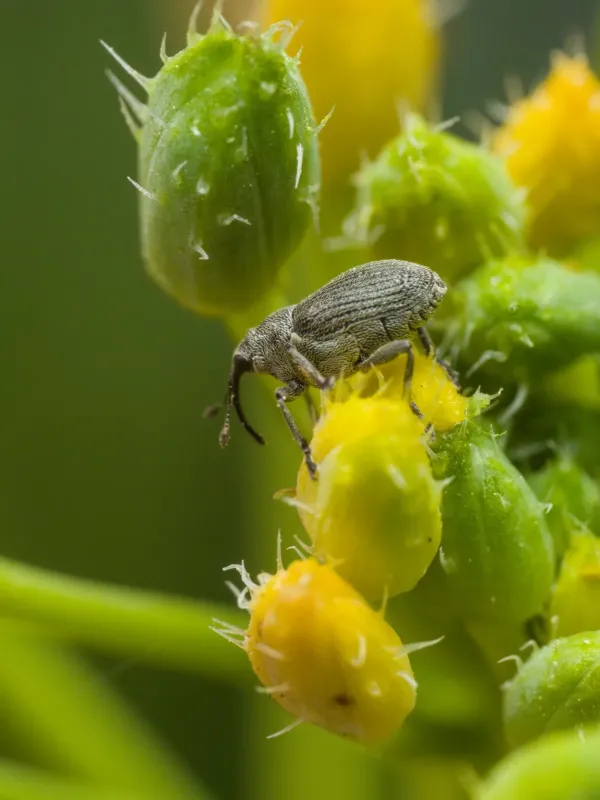
The Cabbage seed pod weevil (Ceutorhynchus obstrictus) is a small beetle belonging to the Curculionidae family and the Coleoptera order. Adult weevils are typically 2.5–3 mm long, with a greyish-black body covered in fine scales, giving them a dusty appearance.
The most distinctive feature of this insect is its long, slender, curved snout (rostrum), which the female uses to drill holes into the pods of host plants to lay eggs. These beetles are highly specialized, targeting primarily cruciferous plants like canola, mustard, and cabbage.
The life cycle involves four distinct stages: egg, larva, pupa, and adult. The larvae are cream-colored, legless grubs with a brown head, usually developing hidden within the pod. They thrive by feeding on the developing seeds of the host plant.
Adults overwinter in soil debris, field edges, or nearby woodlands. When spring temperatures rise above 10-12°C, they emerge and migrate to fields, where they feed on flower buds and emerging pods to gain energy for reproduction.
Field scouting is essential for identification. Agronomists often use yellow water traps (Moericke traps) or perform plant inspections in the early morning hours when the beetles are less active and more easily detected on flower stalks.
What it damages
The economic impact of Ceutorhynchus obstrictus is significant, as it directly reduces seed yield in canola and other oilseed crops. A single larva can consume several seeds within a pod, leading to direct weight loss and decreased oil quality.
Beyond seed consumption, the female's egg-laying punctures and the larvae's exit holes create entry points for secondary pathogens, such as Alternaria or other fungal infections. This leads to premature pod senescence, rotting, and overall yield decline.
The most critical loss occurs during harvest. Infested pods are physically weakened and prone to premature shattering. Consequently, seeds fall to the ground before or during the harvesting process, leading to substantial field losses that are difficult to quantify.
The damage often remains hidden until the pods begin to mature and yellow. By the time the exit holes are visible, the larvae have already left the pods to pupate in the soil, making any chemical control measures completely ineffective at that stage.
High infestations, if not managed, can result in yield losses exceeding 30%. The focus should therefore be on proactive protection during the early pod-formation stage when the pods are most vulnerable to initial egg-laying.
When it appears
The pest's activity is tightly synchronized with the flowering and pod-development stages of the canola crop. Adult weevils migrate into the fields during the bolting and flowering phases, targeting the young, soft pods for oviposition.
The egg-laying period can last several weeks. A female typically lays one egg per pod, selecting pods that are about 2-4 cm in length. This behavior ensures that the larva has sufficient resources to complete its development before the pod matures.
Larval development inside the pod usually lasts between 3 to 5 weeks. Once fully developed, the larvae chew an exit hole through the pod wall and drop to the soil, where they form a cell and pupate. The new generation of adults emerges in late summer.
Environmental factors, particularly temperature and rainfall, significantly influence the speed of development. Warm, dry spring conditions often accelerate beetle migration and larval growth, requiring more vigilant monitoring by crop managers.
After the harvest, adult weevils feed on remaining cruciferous weeds before seeking hibernation sites. This autumn period is crucial for weed management to disrupt the pest's cycle and reduce the population density for the following season.
Signs of infestation
The earliest signs of infestation are microscopic puncture marks on the surface of young pods, often accompanied by slight bruising or dark spotting. These are caused by the female's rostrum during egg deposition.
The presence of round exit holes, approximately 1 mm in diameter, on the pod wall is a definitive sign of successful larval development. These holes signify that the larva has vacated the pod, leaving behind a damaged and often empty or partially filled seed chamber.
Visually, infested pods may exhibit premature yellowing, twisting, or irregular swelling compared to healthy pods. These symptoms indicate that the plant's physiological development has been disrupted by the feeding larvae inside.
During the flowering stage, the detection of adult weevils on the racemes is a clear warning sign. Threshold-based scouting involves counting weevils on multiple plants across the field to determine if the population density warrants a control intervention.
Uniformity of ripening is also affected. Patches of the field that show earlier-than-normal maturity often point to areas of heavier infestation, which can cause logistical challenges during harvest and increase the risk of seed shattering.
Control measures
Integrated Pest Management (IPM) is the most effective approach. Crop rotation is paramount; avoiding planting canola in the same field or in close proximity to the previous year's infested fields helps significantly reduce initial migration.
Chemical control must be applied at the right time—typically when the crop is in the budding to early flowering stage, before the weevils have a chance to lay eggs. Systemic or contact-systemic insecticides are preferred for their efficacy in controlling adult beetles.
Cultural practices such as removing cruciferous weeds (like shepherd's purse or field pennycress) limit the availability of secondary hosts. This practice helps maintain low pest pressure throughout the growing season and after harvest.
Harvest management, including the use of desiccants or pod sealants, can reduce the risk of shattering in infested fields. Shortening the harvest window ensures that pods are picked before the structural damage becomes too severe to withstand mechanical operations.
- Use yellow water traps for monitoring beetle arrival.
- Maintain spatial isolation from previous year's canola fields.
- Apply insecticides based on economic thresholds before egg-laying.
- Clean up volunteer canola and weeds after harvest.
Taxonomy
- Latin name
- Ceutorhynchus obstrictus
- Order
- Coleoptera (beetles)
- Family
- Curculionidae
- EPPO code
- CEUTAS
Discussion
No discussions yet — be the first.