
Cabbage stem weevil
Ceutorhynchus granulicollis
Description
How to identify
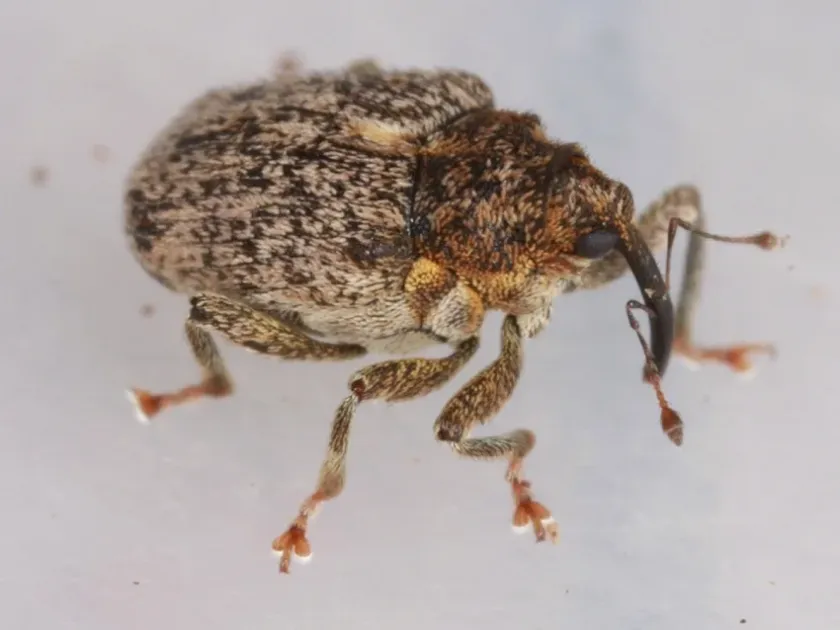
The cabbage stem weevil (scientific name Ceutorhynchus granulicollis) belongs to the order Coleoptera and the family Curculionidae. It is a small beetle, typically measuring 2.5 to 3 mm in length, with a grayish-black appearance and a distinct elongated snout.
Adult weevils are characterized by a hard chitinous exoskeleton, which provides protection against environmental stress. The larvae are legless, creamy white with brown heads, and develop hidden within plant tissues, making early detection a significant challenge for growers.
Their coloration serves as camouflage against soil and plant debris, allowing them to remain inconspicuous. The beetles are primarily active during daylight hours, preferring warm weather for their feeding and mating activities.
The insect's life cycle includes the egg, larva, pupa, and adult stages. Adults overwinter in the upper soil layers or under plant residues, emerging in early spring as temperatures begin to rise consistently.
Females lay eggs by boring small holes into the petioles or stems of cruciferous plants. A single female can produce several dozen eggs, which leads to a rapid spread of the population across the vegetable plot if left unchecked.
What it damages
This pest specifically targets members of the Brassicaceae family. Primary crops affected include cabbage (white, red, and cauliflower), as well as rapeseed, radish, swede, and various species of mustard.
Damage is caused by both adults, which feed by creating small punctures on leaves and petioles, and larvae, which tunnel inside the stem. This disrupts the plant's vascular system, hindering the transport of water and nutrients.
The puncture marks and larval tunnels serve as entry points for secondary infections, including bacterial and fungal rots. Such infections further weaken the plant's immune system, making it susceptible to additional diseases.
Severe infestations can lead to significant yield losses and poor crop quality. Leaves may yellow and wilt, and in heavy cases, the stems can become deformed, causing the plant to stop growing or eventually die.
For young seedlings, the damage caused by stem weevils is often fatal. Early monitoring is essential, as the threshold for economic damage is reached relatively quickly when a small number of insects begin their feeding cycle.
When it appears
Adult weevils typically emerge from their overwintering sites in April or May, when temperatures reach 12–15°C. Initially, they feed on wild cruciferous weeds before migrating to cultivated vegetable crops.
Peak activity occurs in May and June, coinciding with the prime mating and egg-laying period. This is when the pests are most destructive, as they target young plants that are in a critical stage of vegetative growth.
The summer generation of adults usually appears by late June or July. After a period of feeding, these insects prepare for hibernation, seeking shelter as the season winds down and the food source diminishes.
The duration of the life cycle from egg to adult depends on regional climate conditions, usually spanning about two months. Warmer and more humid summers can accelerate this cycle, potentially increasing the pest population by autumn.
As temperatures drop in the autumn, adults move into the soil to a depth of 5–10 cm to hibernate. Successful overwintering is highly dependent on soil moisture levels and the presence of organic debris, which provides the necessary insulation from winter frosts.
Signs of infestation
The primary symptom of an infestation is the appearance of tiny, pin-prick-like punctures on the leaves and petioles. These marks are often surrounded by slight discoloration or small necrotic spots where the tissue has been damaged.
Affected plants often appear stunted, with yellowing or curling leaves. In cases of severe stem infestation, the stems may twist, bend, or exhibit internal swelling due to the larvae feeding inside the vascular tissue.
Careful examination of the stem base or petioles can reveal larval tunnels. If a stem is cut open, dark winding channels filled with larval excrement will be visible, confirming that the plant has been colonized by the larvae.
- Tiny puncture marks on the petioles and leaf veins.
- Yellowing and wilting of the lower leaves.
- Deformed or twisted stems in young cabbage plants.
- Stunted growth despite proper irrigation and fertilization.
- Dark internal tunnels in the stem visible upon sectioning.
During the early morning, weevils are less active and often hide on the underside of leaves. If disturbed, they may drop to the ground and mimic death, making them difficult to spot without a deliberate and patient search of the plant foliage.
Control measures
Integrated pest management begins with cultural practices, most notably crop rotation. Avoid planting cabbage or other crucifers in the same area for at least 3–4 years to break the lifecycle of the weevil.
Effective weed control is critical, particularly targeting cruciferous weeds like shepherd's purse and field pennycress. These weeds act as early-season reservoirs for the weevil before the main crops are established.
Deep autumn plowing of the soil is an effective way to expose overwintering beetles to colder temperatures, significantly reducing the population density for the next season. Removing crop residues after harvest also minimizes available nesting sites.
When infestation levels exceed the economic threshold, targeted application of insecticides is required. Treatments are most effective when applied during the peak emergence of adults, before they have the opportunity to lay eggs inside the plant tissue.
Using protective row covers or nets over young plants serves as a physical barrier against the weevils. This method is highly effective for home gardens and organic farms, providing a way to protect the crop without relying exclusively on chemical pesticides.
Taxonomy
- Latin name
- Ceutorhynchus granulicollis
- Order
- Coleoptera (beetles)
- Family
- Curculionidae
- EPPO code
- CEUTGR
Discussion
No discussions yet — be the first.