
Cabbage seed weevil
Ceutorhynchus floralis
Description
How to identify
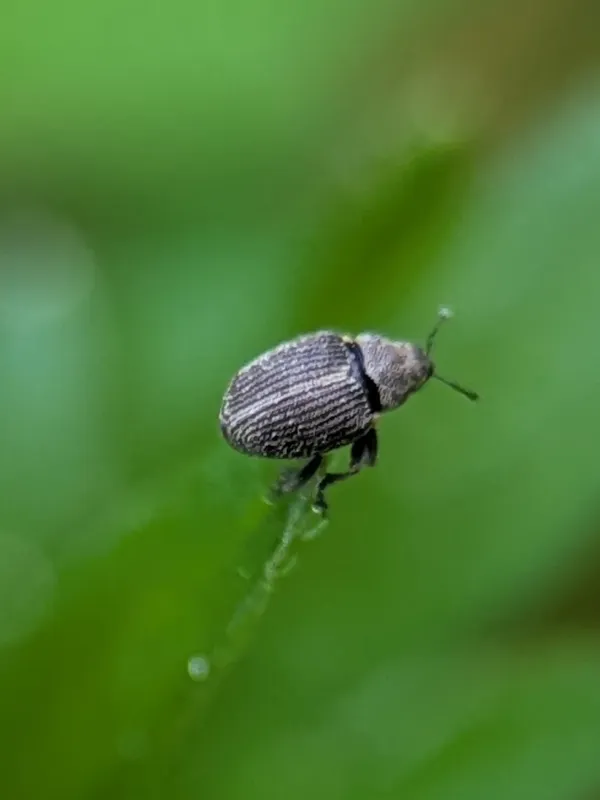
The cabbage seed weevil (Ceutorhynchus floralis) is a small beetle belonging to the Curculionidae family. These insects are typically 2-3 mm long, with a dark, often black body covered in scales that give it a dusty or grayish appearance under magnification.
Their most defining physical characteristic is the elongated snout or rostrum. They are highly adept at escaping detection; when disturbed, the beetles reflexively fold their legs and drop from the host plant to the soil, where they blend in perfectly with the surrounding environment.
What it damages
This pest exclusively targets Brassicaceae family crops, which include oilseed rape, cabbage, mustard, radish, and turnip. Both adults and larvae contribute to the damage, causing significant economic losses if left unmanaged during the early developmental stages of the crop.
Adults feed on the leaves and stems, leaving small, circular holes in the foliage, which reduces the plant's overall photosynthetic surface. In young seedlings, this damage can lead to structural weakness, stunted growth, and in severe cases, the death of the plant.
When it appears
The adult weevils overwinter in the soil or within dense plant debris, such as stubble or hedgerows surrounding the fields. They emerge in the spring as soon as average daily temperatures rise above 8–10 degrees Celsius, signaling the start of their active season.
Migration onto host fields coincides with the emergence of the first true leaves, making this period critical for crop monitoring. The life cycle is highly temperature-dependent, with peak reproductive activity usually occurring during the warmer days of late spring and early summer.
Signs of infestation
The most reliable sign of an infestation is the presence of multiple tiny puncture wounds across the leaf surface. As the leaf grows, these punctures often expand into visible holes, causing the foliage to appear tattered and stressed, leading to secondary physiological issues.
Infested plants may exhibit severe chlorosis, loss of vigor, and uneven development compared to healthy crops. If larvae are present within the stalks, the plant may show internal necrosis, which further weakens the structural integrity of the stems and reduces seed yield.
Control measures
Integrated pest management starts with cultural practices such as crop rotation, which breaks the life cycle of the weevil. Eliminating volunteer brassica plants in and around the fields is essential to remove secondary host sources that sustain the pest population.
Chemical control should be implemented based on consistent monitoring and economic threshold assessment. It is crucial to use selective insecticides that minimize harm to beneficial pollinators, applying them during optimal conditions to ensure maximum efficacy and protection.
Taxonomy
- Latin name
- Ceutorhynchus floralis
- Order
- Coleoptera (beetles)
- Family
- Curculionidae
- EPPO code
- CEUTFL
Discussion
No discussions yet — be the first.