
Cabbage seedpod weevil
Ceutorhynchus denticulatus
Description
How to identify
The cabbage seedpod weevil (Ceutorhynchus denticulatus) is a beetle belonging to the Curculionidae family, known for its significant impact on cruciferous crops.
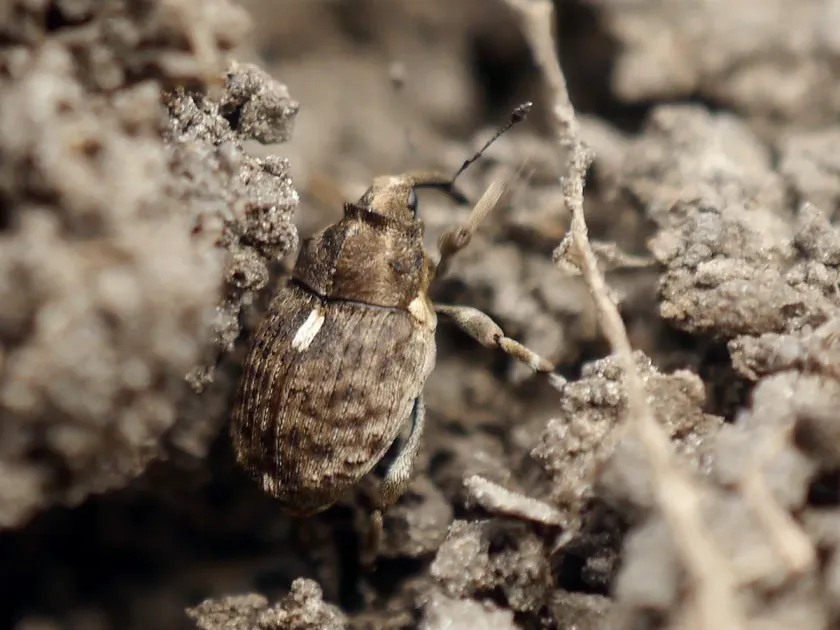
Adult beetles are small, measuring approximately 2-3 mm, and possess a long, distinct snout used for feeding and piercing plant tissues to lay eggs.
Their coloration is typically brownish-grey, which provides excellent camouflage against soil particles or the stems of host plants.
The larvae are legless, white-yellowish grubs with a brown head, which develop internally within the stems or pods, remaining hidden from external predators.
Identification is based on the specific shape of the rostrum and the structure of the thorax, often requiring magnification for accurate field diagnosis.
What it damages
Larval feeding causes the most severe damage, as they create tunnels within the stems and reproductive structures, disrupting water and nutrient transport.
Adults feed on foliage, resulting in numerous small, pin-sized holes, which can weaken young plants and reduce the overall photosynthetic capacity of the crop.
Host plants include oilseed rape (canola), cabbage, mustard, radish, and various wild cruciferous weeds that support the pest throughout the season.
Injured tissues become prone to secondary infections, specifically fungal pathogens like Sclerotinia or Alternaria, which exploit the entry points created by the larvae.
Severe infestations lead to stunted plant growth, deformed stems, and significant yield losses due to flower abortion or poor pod development.
When it appears
The pest overwinters as an adult beetle in the upper soil layers or beneath plant debris in fields where cruciferous crops were grown in the previous season.
Emergence occurs in early spring as temperatures rise, with beetles initially feeding on wild weeds before migrating to established commercial crop fields.
The peak period of adult migration typically aligns with the rosette stage or early stem elongation of oilseed rape, which represents a critical protection window.
Larval development takes place throughout the late spring and early summer, with larvae eventually dropping to the ground to pupate in the soil.
Usually, there is one generation per year, though regional climatic variances may influence the timing of emergence and the duration of the life cycle.
Signs of infestation
The first observable signs of infestation include tiny punctures on leaves, often described as a shot-hole appearance, caused by adult feeding.
Stems may show localized swelling or deformity, which serves as a clear indicator of larval activity occurring inside the plant tissue.
Affected plants often display reduced vigor, yellowing leaves, or premature wilting compared to healthy plants in the same field.
- Small circular holes on leaf surfaces.
- Curvature of the main stem or flower stalks.
- Premature abscission of buds or pods.
- Internal tissue decay visible when splitting the stem.
Observing the base of the plants on warm days may reveal the presence of adult beetles, which often exhibit a "death-feigning" behavior when disturbed.
Control measures
Cultural control through strict crop rotation is essential, with a recommended gap of at least 3-4 years between planting cruciferous hosts on the same plot.
Effective weed management, focusing on removing wild radish or shepherd's purse, significantly reduces the pest population by eliminating early-season food sources.
Post-harvest deep tillage or plowing disrupts the overwintering sites, significantly reducing the survival rate of the beetles before the next cropping cycle.
Chemical control requires the application of systemic insecticides at the onset of adult migration to ensure the pest is controlled before egg-laying occurs.
Using yellow sticky traps is a standard monitoring practice that allows growers to time insecticide applications efficiently, minimizing environmental impact.
Taxonomy
- Latin name
- Ceutorhynchus denticulatus
- Order
- Coleoptera (beetles)
- Family
- Curculionidae
- EPPO code
- CEUTDE
Discussion
No discussions yet — be the first.