
Cabbage seedpod weevil
Ceutorhynchus cochleariae
Description
How to identify
The cabbage seedpod weevil (Ceutorhynchus cochleariae) is a small beetle belonging to the Curculionidae family. It is a specialized pest that feeds primarily on cruciferous plants, such as cabbage, radish, and various types of mustard and oilseed rape.
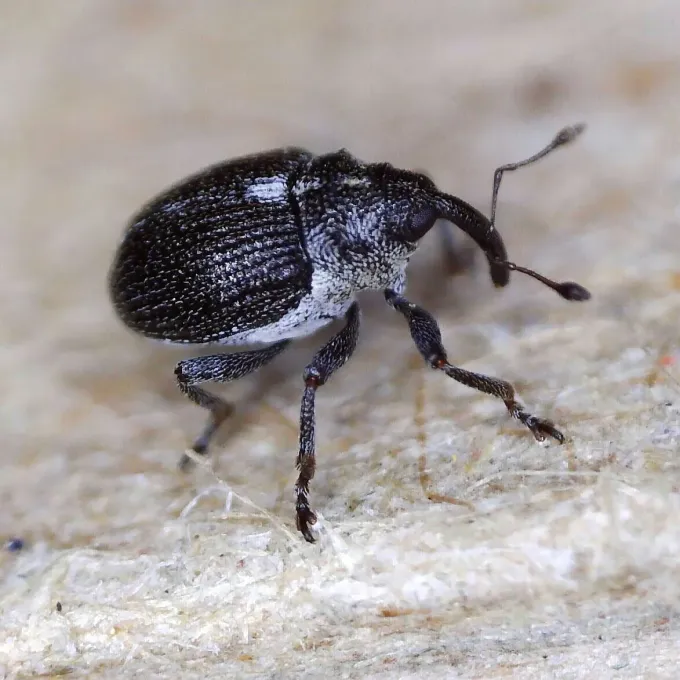
The adult beetle is small, typically measuring 2 to 3 mm in length, and is characterized by a prominent snout (rostrum). Its color is generally dark, ranging from dark grey to black, and the body may be covered with fine scales.
The life cycle involves complete metamorphosis, including egg, larval, pupal, and adult stages. The insects overwinter as adults, finding shelter in the soil or under debris, which allows them to emerge quickly in the spring.
Adult weevils are highly mobile and begin feeding on early seedlings as soon as temperatures allow. After mating, females deposit eggs into the plant tissue, marking the start of the next generation.
Larvae are legless, creamy-white in color with a brown head capsule. They develop within the plant's stems or leaf stalks before exiting to pupate in the soil, emerging later as a new generation of beetles.
What it damages
This pest affects a wide range of Brassica crops, including commercial vegetables and oilseeds. The damage is caused by both the adult stage (feeding on leaves) and the larval stage (internal feeding).
Adults create small, circular feeding punctures in leaves, which weaken the plant and can reduce overall photosynthesis. Heavy infestations on young seedlings can cause significant stunting or total loss of the crop.
The most severe damage is caused by the larvae, which bore into stems and petioles. This destruction of the vascular tissue disrupts the plant's ability to transport water and nutrients efficiently.
Internal feeding makes the plant prone to wilting and death, especially under moisture stress. Furthermore, these entry holes can facilitate the development of secondary bacterial rots.
For high-value crops, even moderate damage can significantly reduce marketable yield and quality, making effective management crucial for agricultural production.
When it appears
The activity of the cabbage seedpod weevil typically begins in the early spring, coinciding with the warming of the soil and the emergence of the first true leaves of cruciferous crops.
The primary period of adult feeding and egg-laying occurs during the spring months, when the plants are in their most vulnerable state of development.
Larval development happens throughout the late spring and early summer. During this time, the larvae consume internal plant tissues, which correlates with the rapid vegetative growth of the crops.
The new generation of adults usually emerges in mid-to-late summer. These beetles may feed intermittently before seeking overwintering sites as temperatures decline in the autumn.
Monitoring should be most intense during the early establishment phase of the crop, as protecting the plant during this time is essential for ensuring healthy development.
Signs of infestation
The most visible sign of infestation is the presence of numerous tiny, pin-prick holes on the leaves of young seedlings. These feeding marks are often found in clusters as the weevils feed.
Small dark spots or blisters on the stems or leaf petioles indicate sites where females have laid eggs. Careful inspection of these areas can reveal the presence of developing larvae inside.
Wilting of leaves that cannot be attributed to lack of water is a clear sign that larvae are feeding inside the petiole or stem, disrupting the plant's internal fluid movement.
If a stem or petiole is cut open, one can find internal tunnels containing larval excrement, which confirms the diagnosis and identifies the pest species involved.
Stunted growth, yellowing of the outer leaves, or a crooked stem are secondary symptoms resulting from internal tissue destruction by the larvae.
Control measures
Effective management starts with cultural practices such as crop rotation, which breaks the pest's cycle by moving host plants away from areas where the previous generation overwintered.
Eliminating wild cruciferous weeds (like shepherd's purse or field mustard) from the field and surrounding areas removes critical early-season feeding sites for the beetles.
In smaller plots or for high-value seedlings, covering the plants with fine-mesh insect netting is an excellent mechanical barrier that prevents weevils from accessing the plants.
Chemical control involving systemic insecticides is often used when pest thresholds are reached. These chemicals are absorbed by the plant and kill larvae feeding internally.
It is vital to follow all label instructions regarding application timing to ensure effectiveness and to minimize impact on pollinators and non-target beneficial insects.
Taxonomy
- Latin name
- Ceutorhynchus cochleariae
- Order
- Coleoptera (beetles)
- Family
- Curculionidae
- EPPO code
- CEUTCO
Discussion
No discussions yet — be the first.