
Blossom beetle
Ceutorhynchus assimilis
Description
How to identify
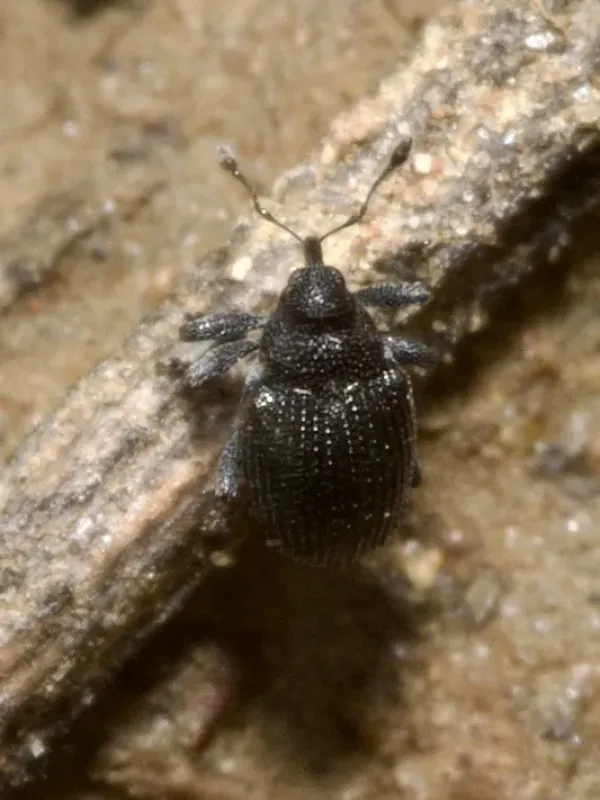
The blossom beetle (Ceutorhynchus assimilis), also known as the rape pollen beetle, belongs to the order Coleoptera and the Curculionidae family. Adult beetles are small, measuring 2-3 mm, with a dark, metallic greenish-black body covered in fine scales.
The larvae are small, roughly 4-5 mm long, with a white, C-shaped body and a brown head. They are primarily found inside the flower buds of their host plants, which protects them from environmental stressors.
Adults overwinter in the soil or under leaf litter, emerging in early spring as temperatures rise above 10 degrees Celsius. They initially feed on the pollen of early-flowering plants before migrating to rapeseed fields.
Mating occurs when the host plants reach the bud development stage. Females chew tiny holes in the buds to deposit their eggs inside, ensuring a ready food supply for the hatching larvae.
After completing their larval stage, they drop to the soil to pupate. The new generation of adults emerges in summer, feeds on leaves or pods, and eventually seeks overwintering sites as temperatures drop in autumn.
What it damages
The blossom beetle attacks a variety of cruciferous crops, including oilseed rape (canola), mustard, turnips, and cabbage. The primary economic damage is caused by adults feeding on flower buds before the plant blooms.
By chewing into the buds to reach the pollen, the beetles cause them to wither and fall off. This process, known as "blind stalks," significantly reduces the number of pods produced by the plant.
Larvae consume the interior parts of the bud, including reproductive structures. While adults do the most significant initial damage, larvae can continue to stress the plant and occasionally feed on young, developing seed pods.
Severe infestations can lead to substantial yield losses, sometimes exceeding 40-50% if the population density is high and the crop is at a susceptible stage for an extended period.
Economic damage is most severe during the green bud stage. Once the plants reach the yellow bud stage and start to bloom, they become less susceptible as the beetles shift their preference to the available open pollen.
Signs of infestation
The most visible sign of an infestation is the presence of small holes in the flower buds. Affected plants often display stunted or missing buds, resulting in bare flower stalks where blossoms should be.
Monitoring the fields is best achieved using yellow water traps. These traps attract the beetles, allowing agronomists to count the number of individuals and determine if the economic threshold has been reached.
If you suspect an infestation, gently shake the flowering clusters over a white tray. The sudden presence of numerous small, black, shiny beetles confirms their activity in the specific area.
Uneven pod set and reduced yields at harvest are the ultimate indicators of previous blossom beetle damage. Keeping a detailed log of field observations helps in planning better protection strategies for future seasons.
Environmental factors like prolonged cold spells during the budding stage can exacerbate the damage, as the plants remain in the susceptible phase for a longer period, allowing the beetles more time to feed.
Control measures
Integrated Pest Management (IPM) is essential for controlling this beetle. Cultural practices include choosing vigorous crop varieties that bloom quickly to shorten the window of susceptibility to the pest.
Crop rotation helps minimize the risk by ensuring that new plantings are not immediately adjacent to fields that hosted cruciferous crops in the previous year, thus slowing down the migration of the beetles.
Chemical control is often required when beetle populations exceed the economic injury level. Insecticides from the pyrethroid or neonicotinoid groups are commonly used to prevent massive damage during the budding phase.
Environmental stewardship is a key priority; applications must be timed to avoid harming bees and other pollinators. It is recommended to apply treatments early in the morning or late in the evening when bees are not active.
Monitoring for insecticide resistance is crucial, as some populations have developed tolerance to specific active ingredients. Always rotate chemicals with different modes of action to ensure effective and sustainable control.
Taxonomy
- Latin name
- Ceutorhynchus assimilis
- Order
- Coleoptera (beetles)
- Family
- Curculionidae
- EPPO code
- CEUTPL
Discussion
No discussions yet — be the first.