
Cabbage seed weevil
Ceutorhynchus asperulus
Description
How to identify
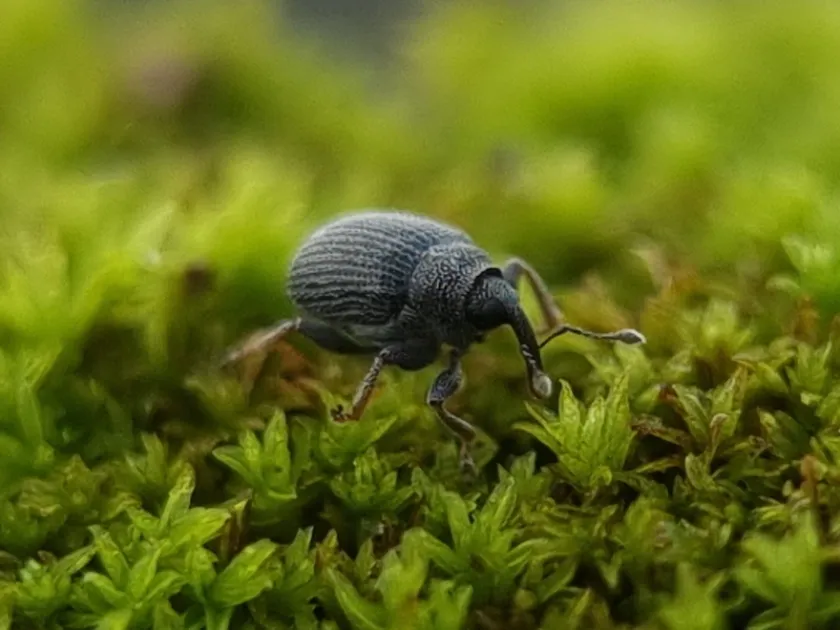
The Cabbage seed weevil (Ceutorhynchus asperulus) is a member of the Curculionidae family. Adult beetles are small, typically measuring 2.5–3 mm in length, and are known for their distinct snout.
Their bodies are covered with grey or brownish scales, providing excellent camouflage against soil and plant debris, making them difficult to spot in the field.
Larvae are legless, white grubs with light brown heads, typically developing inside the reproductive structures of the host plants to avoid predators and environmental stress.
Adults exhibit a defensive behavior known as thanatosis, where they feign death and drop to the ground when disturbed, an evolutionary trait that protects them from visual predators.
The life cycle involves an egg-laying stage followed by a larval stage that feeds internally, protecting the offspring until they are ready to pupate in the soil.
What it damages
These pests primarily target members of the Brassicaceae family, including canola (rapeseed), cabbage, radish, and various mustard varieties grown for seed production.
The primary damage is caused by larvae feeding on developing flower buds and ovaries, which leads to the premature shedding of blossoms and significant yield loss.
Adults contribute to damage by feeding on stems and leaves, creating small holes that can weaken the plant and allow secondary pathogens to enter the plant tissue.
Severe infestations result in distorted pods and complete destruction of seeds, which drastically lowers the quality and marketability of the harvested agricultural product.
Infested crops may show uneven development, as the damage to the generative organs disrupts the plant's hormonal balance and nutrient allocation during the flowering phase.
When it appears
Overwintered adults emerge from the soil in early spring, usually when temperatures become conducive to insect activity, typically above 8–10 degrees Celsius.
The activity peaks during the budding and flowering stages of cruciferous crops, which are the most critical times for damage prevention.
Larval development takes place throughout the spring and early summer, after which mature larvae exit the plants to burrow into the soil for pupation.
A new generation of adults usually appears in mid-summer, often migrating to wild cruciferous hosts where they feed before preparing for the overwintering phase.
The pest's phenology is closely synchronized with the growth stages of its host plants, ensuring that the next generation of larvae has immediate access to food sources.
Signs of infestation
Premature abscission (dropping) of flower buds is a key indicator of an infestation, as larvae feed inside, causing the plant to abort the affected flowers.
Careful inspection of flower buds may reveal tiny entry holes, which are the punctures made by the female weevil during the oviposition process.
Deformed or underdeveloped pods are clear signs that larvae have been feeding on the developing seeds inside, often leading to shriveled or missing grains.
The physical presence of adult beetles, especially during the early morning hours, confirms the active threat level in the field or seed plot.
In cases of high pest density, the entire crop may appear yellowed or thin, and the lack of successful fruit set is a major hallmark of weevil-induced damage.
Control measures
Crop rotation remains the most effective long-term strategy, ensuring that host plants are not grown in the same field for multiple consecutive seasons to break the pest cycle.
Field sanitation, particularly the removal of wild cruciferous weeds, limits the available host population and reduces the potential for weevil migration into crops.
Insecticidal intervention is recommended during the bud stage, targeting adults before they can deposit eggs, which is the most critical window for protection.
Deep autumn plowing of the soil can expose pupae to freezing temperatures and natural predators, significantly reducing the survival rate of the overwintering generation.
Integrated Pest Management (IPM) practices, including the use of yellow sticky traps, help in monitoring population densities to make informed decisions about chemical applications.
Taxonomy
- Latin name
- Ceutorhynchus asperulus
- Order
- Coleoptera (beetles)
- Family
- Curculionidae
- EPPO code
- CEUTAP
Discussion
No discussions yet — be the first.