
Japanese Bush Warbler
Cettia diphone
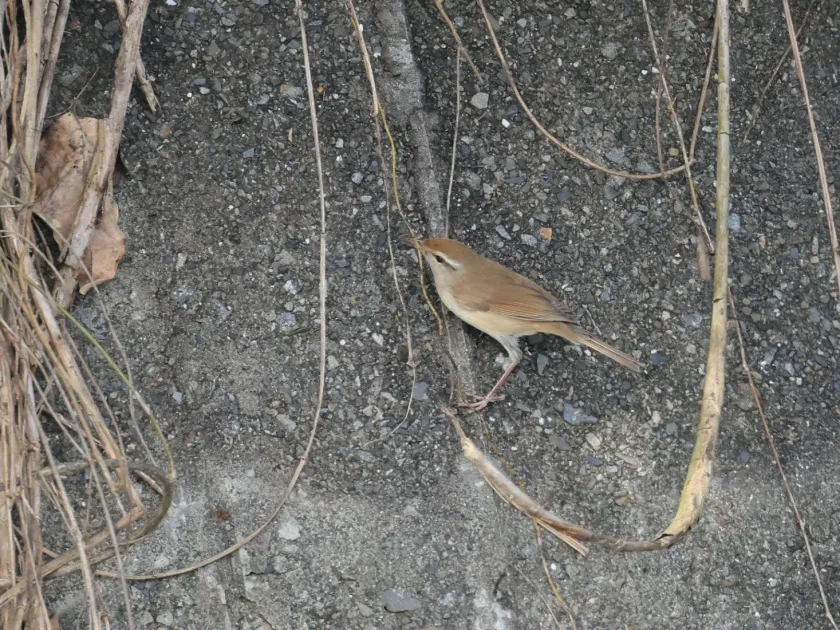
Description
How to identify
The Japanese Bush Warbler (Cettia diphone) is a small passerine bird belonging to the Cettiidae family, known for its secretive nature.
Its plumage is primarily olive-brown on the upper parts and grayish-white on the underparts, providing excellent camouflage in dense vegetation.
The species is characterized by a relatively long tail and short, rounded wings, which are adapted for maneuvering through dense thickets.
The male's distinct, loud, and melodic song is the primary identifier, often heard in agricultural landscapes during the breeding season.
They prefer bushy habitats, tall grasses, and reeds, often colonizing agricultural areas where these habitats exist alongside crops.
What it damages
While primarily insectivorous, the Japanese Bush Warbler can cause significant damage to young vegetable and berry crops during periods of high nesting density.
They often peck at soft sprouts and flower buds, which delays the growth of young plants and reduces their overall photosynthetic efficiency.
During nest construction, these birds utilize the stems and leaves of cultivated plants, often causing breakage and physical damage to fragile seedlings.
Direct damage to ripening berries allows for the entry of fungi and bacterial pathogens, leading to fruit rot and spoilage before harvest.
By consuming beneficial insects, they disrupt the local ecosystem and reduce the natural biological control of other more destructive agricultural pests.
When it appears
The period of greatest agricultural concern occurs during the spring and summer months, which aligns with the peak growth cycle of many crops.
Spring is the time when birds select nesting sites, often coinciding with early vegetable planting and the appearance of tender sprouts.
Summer brings increased activity as the birds forage for food to support their offspring, coinciding with the flowering and fruiting of garden plants.
While activity levels decline in autumn, late-harvesting crops can still be subjected to damage if the birds remain in the vicinity.
The bird's breeding cycle is tightly linked to vegetation growth stages, making them a recurring factor in agricultural management during the warm season.
Signs of infestation
The most prominent sign is the repetitive, high-volume song, which is easily detectable in the early morning or evening hours in agricultural fields.
Physical evidence of damage includes pecked fruits, bent or broken plant stems, and missing foliage on young, succulent plant tips.
Nests hidden in thick hedges, shrubbery, or trellises are definitive proof that the species is established within the cultivation area.
Droppings on leaves and signs of soil disturbance near the base of the plants further indicate the presence of these birds.
- Loud and repetitive bird song.
- Pecked fruits and berries.
- Broken or bent plant stems.
- Nest structures in shrubs or trellises.
- Presence of bird droppings.
Control measures
The installation of fine-mesh bird netting is the most reliable method for protecting high-value crops from direct physical damage by the Japanese Bush Warbler.
Visual deterrents, such as reflective streamers, scare-eyes, or raptor decoys, can discourage birds from settling near specific crop zones.
Cultural management techniques, such as pruning dense hedges and overgrown shrubbery around the fields, reduce the availability of suitable nesting sites.
Acoustic deterrent systems that broadcast predator calls or distress signals are effective for protecting larger acreages of susceptible crops.
The application of bio-friendly repellents can create an environment that the birds find unsuitable for foraging or nesting, minimizing impact safely.
Taxonomy
- Latin name
- Cettia diphone
- Family
- Cettiidae
- EPPO code
- CETTDI
Discussion
No discussions yet — be the first.