
Fishhook water flea
Cercopagis pengoi
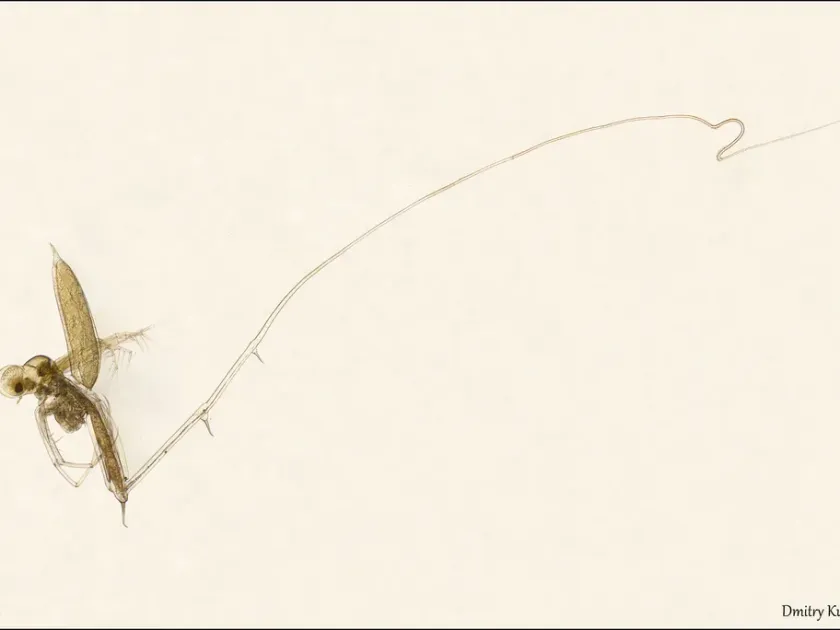
Description
How to identify
The Fishhook water flea (Cercopagis pengoi) is a small predatory cladoceran crustacean belonging to the family Cercopagidae. Originally from the Ponto-Caspian region, it has become a globally recognized invasive species due to its resilience and ability to dominate plankton communities in diverse freshwater ecosystems.
The species is easily identified by its long, thin caudal appendage (tail) which is several times the length of its body. The tip of this tail is looped into a hook shape, which allows the organism to snag onto substrates, aquatic plants, and fishing gear. Adult specimens typically grow up to 10–12 mm in length.
Cercopagis pengoi reproduces through both sexual and asexual (parthenogenetic) means, allowing for rapid population growth. Its resting eggs are highly resistant to environmental stress, including desiccation and freezing, which facilitates their transport via ship ballast water and movement across large distances.
What it damages
The primary impact of the fishhook water flea is its role as a fierce competitor for food. By consuming vast quantities of smaller zooplankton, such as Daphnia and copepods, it reduces the available food supply for juvenile fish. This resource depletion can lead to decreased growth rates and lower survival in fish populations.
Additionally, the species causes significant economic damage to the fishing industry. Its hook-like tails become entangled in fishing nets and trawls, forming gelatinous, mucus-like clumps. This clogging of gear creates difficulties for commercial fishermen, reduces catch efficiency, and increases the time and costs associated with cleaning equipment.
When it appears
Population density of the fishhook water flea typically peaks during the summer and early autumn months when water temperatures are most conducive to rapid reproduction. Significant outbreaks usually occur between July and August, coinciding with the critical feeding period for young fish species in nearshore areas.
Signs of infestation
The most prominent sign of infestation is the appearance of thick, mucus-like substance on fishing nets when removed from the water. Upon drying, this material often turns into a crusty, fine residue. Direct microscopic observation of water samples will also reveal the presence of these distinct, hook-tailed crustaceans.
Control measures
Eradication of the fishhook water flea from open water systems is currently impossible due to its integration into the existing food web. Management strategies focus on prevention, particularly the strict regulation of ballast water discharge from cargo ships that travel between distinct aquatic basins.
In aquaculture facilities, managers should employ fine-mesh filtration systems at water intake points to prevent the entry of these organisms into managed ponds. Regular cleaning and decontamination of fishing gear and boats are essential practices to minimize the risk of spreading the species into uninfested areas.
Taxonomy
- Latin name
- Cercopagis pengoi
- Family
- Cercopagididae
- EPPO code
- CCPGPE
Discussion
No discussions yet — be the first.