
Cercopagis
Cercopagis
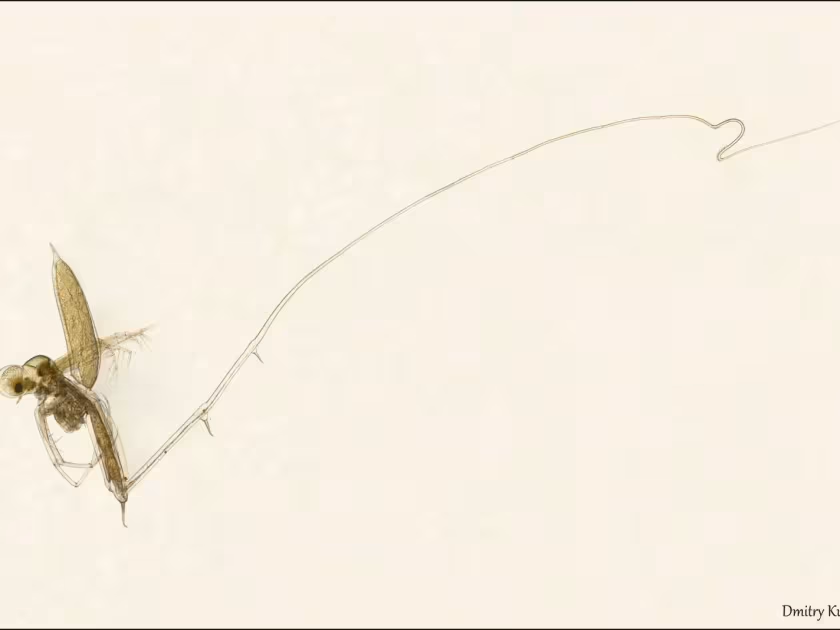
Description
How to identify
Cercopagis is a genus of predatory cladocerans belonging to the family Cercopagididae. While primarily recognized as aquatic organisms, they present significant challenges in agricultural water management when populations reach high densities in irrigation reservoirs and open channels.
The organism is easily identified by its elongated, tail-like appendage which features distinct barbs. This morphological feature is crucial for diagnostic purposes when checking irrigation water samples, as the structural integrity of this appendage allows it to become trapped in fine mesh filtration systems.
The biology of the species involves a unique reproductive strategy characterized by rapid parthenogenetic reproduction during warm periods. Under favorable environmental conditions, populations can surge exponentially, leading to large-scale biomass accumulation in water sources utilized for crops.
Cercopagis also produces resting eggs, which are highly resilient to desiccation and extreme temperatures. These eggs can persist in sediments for extended periods, ensuring that populations can re-emerge whenever environmental conditions align with their developmental needs.
Understanding their life cycle is vital for agronomists, as it helps predict the timing of mass outbreaks. By monitoring water temperatures and biological activity, farm managers can preemptively adjust their irrigation maintenance schedules to mitigate the risks associated with this organism.
What it damages
The damage caused by Cercopagis is primarily mechanical and technical rather than direct herbivory on crops. The primary impact is the clogging of irrigation infrastructure, particularly fine-mesh filters and drip emitters, which are essential for precision water delivery.
When high concentrations of these organisms enter pump stations, they quickly obstruct filtration grids. This blockage reduces water flow and pressure, leading to an uneven distribution of moisture across fields, which is detrimental to high-value vegetable and specialty crops.
Technical failure of irrigation systems due to clogging leads to increased operational costs. Frequent downtime for maintenance, cleaning of filters, and repair of damaged emitters represent a significant financial burden on the farm budget throughout the growing season.
Beyond mechanical issues, the accumulation of decaying biomass in storage reservoirs can degrade water quality. The decomposition process may increase the concentration of organic matter, which can potentially harbor secondary pathogens that affect crop health through irrigation water.
Ultimately, the economic damage stems from the compromise of irrigation efficiency. Inadequate watering directly translates into reduced yields and lower produce quality, making the management of this organism a key part of overall farm management strategy.
Control measures
Effective control of Cercopagis requires a multi-faceted approach to water filtration and reservoir management. Implementing multi-stage filtration systems is essential, as these can effectively separate organic matter and crustacean biomass from the water before it reaches the drip lines.
Regular flushing of the main irrigation lines and the use of chemical treatment agents, when appropriate and compliant with safety regulations, can significantly reduce the pressure exerted by crustacean populations on technical equipment.
Monitoring the source water is a primary preventive measure. By tracking the population density in open-water reservoirs, operators can decide when to switch to alternative water sources or increase the frequency of system maintenance to prevent sudden equipment failures.
Managing the surrounding environment is also beneficial. Clearing excessive aquatic vegetation from the edges of irrigation canals removes critical habitat for the organism, thereby limiting the starting point for population explosions within the farm's water supply.
Modern precision agriculture tools, such as automated pressure sensors within the drip network, offer a way to detect blockages in real-time. By utilizing these technologies, farmers can minimize the impact of clogging by addressing the issue immediately upon detection.
Taxonomy
- Latin name
- Cercopagis
- Family
- Cercopagididae
- EPPO code
- CCPGSP
Discussion
No discussions yet — be the first.