
Centrinus weevil
Centrinus
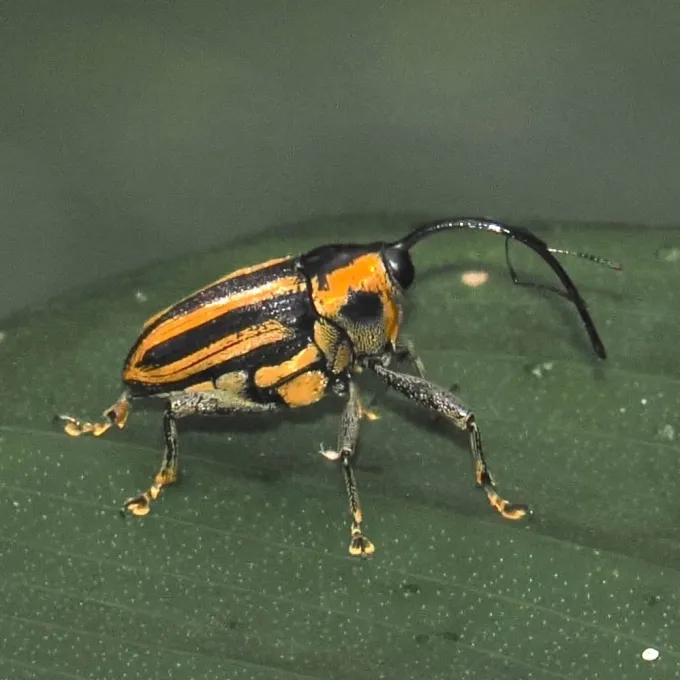
Description
How to identify
The Centrinus weevil belongs to the family Curculionidae (true weevils). These insects are recognized by their characteristic elongated snouts, which are adapted for feeding on plant tissues and oviposition.
Adult beetles are typically small, measuring 3-4 mm in length, and possess a dark, often dull coloration that helps them blend in with the stems and foliage of their host plants.
The larvae of the Centrinus weevil are legless, C-shaped grubs with a pale body and a distinctive brownish head. They develop entirely within the host plant's stem, shielded from the environment.
The life cycle encompasses a complete metamorphosis, including egg, larva, pupa, and adult stages. Overwintering occurs in the soil or under debris, with activity resuming in early spring.
Systematically, they are part of the order Coleoptera, and their presence is highly correlated with the presence of host plants from the Brassicaceae family.
What it damages
Centrinus weevils primarily target cruciferous crops, with oilseed rape (canola) being one of the most economically significant hosts for this pest.
In addition to oilseed rape, the pest can affect mustard, radish, and various wild cruciferous weeds, which serve as alternative food sources throughout the growing season.
Damage occurs in two distinct ways: adults feed on external plant tissues, while larvae tunnel into the core of the stem, effectively disrupting nutrient and water transport.
Stem tunnelling by larvae weakens the structural integrity of the plant, often causing it to become brittle, stunted, or prone to secondary infections like fungal or bacterial rot.
In severe infestations, the overall yield is significantly reduced due to impaired plant metabolism and the inability of the plant to fill its pods properly.
When it appears
Adult beetles emerge from their overwintering sites in the soil during the early spring as soon as ambient and soil temperatures reach favorable levels.
The period of intensive stem growth in crops coincides with the peak of egg-laying activity, as developing larvae require the nutrients found within the stems.
Larval development occurs throughout the late spring and early summer, typically remaining hidden inside the plant until the larvae complete their growth cycle.
After finishing their feeding cycle within the stem, the mature larvae bore their way out and enter the soil to undergo pupation, which usually happens in mid-summer.
The new generation of adults emerges later in the season, feeds briefly on vegetation, and then seeks shelter in the soil or organic mulch to enter diapause for the winter.
Signs of infestation
The earliest signs of infestation are small puncture marks on the stems and leaf petioles, created by adults during feeding and the laying of eggs.
Visual distortion of the stem, such as twisting, swelling, or the formation of galls, serves as a clear indication that larvae are present and feeding inside.
A longitudinal section of the stem will reveal internal cavities filled with larval frass and destroyed pith, confirming the presence of an internal infestation.
Stunted growth, wilting, or premature yellowing of individual shoots are often observed as a direct result of the damaged vascular system of the host plant.
- Stunted plant height.
- Exit holes visible on the surface of the stems.
- Increased susceptibility of the crop to environmental stress and disease.
Control measures
Implementing a strict crop rotation cycle is the primary strategy to prevent the buildup of the weevil population in a specific field location over time.
Deep autumn ploughing is highly effective, as it exposes overwintering pupae and adults to harsh weather conditions and natural predators, significantly reducing their survival rate.
Eliminating alternative host plants, particularly cruciferous weeds, around field margins helps to limit the population size and migration of the pests into the main crop.
Chemical control should be timed with the migration of adults onto the crop, ideally targeting them before they have a chance to lay eggs inside the stems.
Regular monitoring using yellow sticky traps allows agronomists to determine the precise timing for insecticide applications, ensuring maximum efficiency and minimal environmental impact.
Taxonomy
- Latin name
- Centrinus
- Order
- Coleoptera (beetles)
- Family
- Curculionidae
- EPPO code
- CENTSP
Discussion
No discussions yet — be the first.