
White-headed capuchin
Cebus capucinus
Description
How to identify
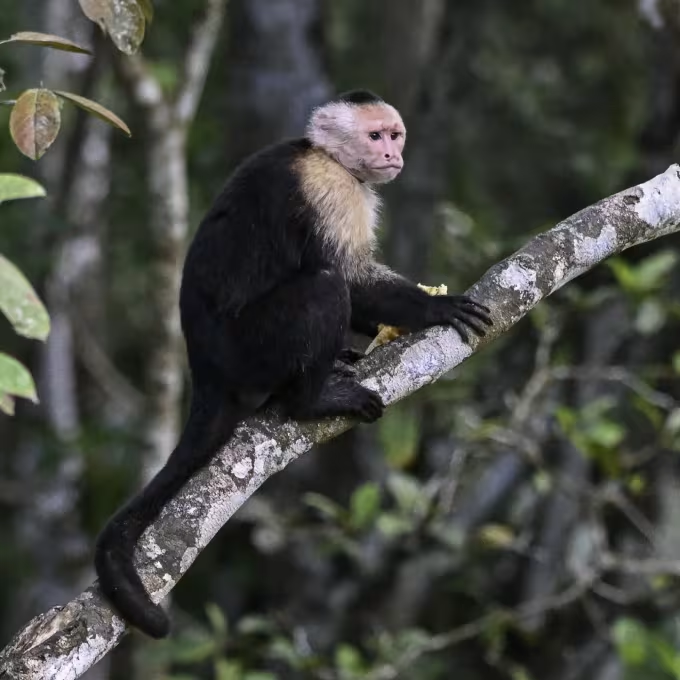
The white-headed capuchin (Cebus capucinus) is a highly intelligent primate native to Central and South America. They are easily identified by their distinct white fur on the head, neck, and shoulders, contrasted with their black bodies.
These monkeys are arboreal by nature but frequently descend to the ground to forage on agricultural land. Their high level of social cooperation allows them to carry out coordinated raids on orchards.
Physical features include a strong, prehensile tail used for balance and climbing. They are incredibly agile, capable of navigating dense fruit tree canopies with high speed and precision.
They live in troops ranging from a few individuals to over 30 monkeys. This group size is a significant factor in the severity of damage they can inflict on a plantation in a single visit.
Capuchins are known for their problem-solving skills, which makes them difficult to deter with simple mechanical barriers, as they often find ways to dismantle or bypass obstacles.
##damage##White-headed capuchins cause severe economic losses by damaging various tropical crops, including bananas, cacao, coffee, and mangoes. They often destroy more fruit than they actually consume.
Their destructive feeding style involves picking fruits to test them for ripeness and discarding them if they do not meet their standards, leading to massive post-harvest waste.
Beyond fruit consumption, these primates often break branches and damage the structural integrity of trees, reducing the overall yield potential for subsequent years.
On cacao plantations, capuchins are notorious for biting into pods to feed on the mucilage surrounding the seeds, rendering the pods useless for chocolate production.
In sugar cane fields, the monkeys strip the stalks to extract sweet sap, which weakens the plant and exposes it to secondary infections from fungi and bacteria.
When it appears
The severity of damage is strictly correlated with the phenological stage of the crops. Raids increase significantly during the peak ripening phase of the plantation's produce.
During the dry season, when natural food sources in the surrounding forests are scarce, capuchins move toward agricultural areas that provide reliable water and calories.
They are primarily diurnal and typically execute their raids during the early morning or late afternoon, exploiting times when human monitoring might be less vigilant.
The presence of capuchins is constant, but their intensity spikes whenever new crops reach a state of nutritional maturity that attracts them from their natural habitat.
Farmers observe seasonal patterns of activity that mirror the harvest cycles of the specific trees they choose to cultivate, making plantation timing a risk factor.
Signs of infestation
The most prominent sign of a capuchin raid is the presence of partially consumed fruit litter scattered beneath trees, often showing clear incisor marks.
Broken branches and damaged tree canopies are strong indicators of monkey activity, as they often damage trees while trying to reach inaccessible fruits.
Audible signals are another common sign; capuchins are vocal animals, and their chattering and distress calls during group movement are easily identifiable by locals.
Footprints and handprints on muddy soil near water sources or field boundaries are reliable signs of the routes the troop takes to access the plantation.
Sudden, rapid disappearance of large quantities of fruit from high-canopy trees, without signs of common agricultural pests, is a strong symptom of primate damage.
Control measures
Physical exclusion is the most reliable method. High-tensile mesh fencing, often topped with angled deterrents, helps prevent access to high-value orchard plots.
Acoustic deterrents that broadcast warning calls can be effective, provided they are rotated frequently to prevent the monkeys from habituating to the sound.
Integrated pest management in this context involves planting "trap crops" outside the main plantation to divert the attention of the troop toward less valuable vegetation.
Active surveillance using motion-activated cameras and human patrols is essential to identify the troop's entry routes and timing, allowing for targeted deterrent deployment.
- Electric barrier fencing
- Automated sound systems
- Strategic orchard layout
- Biological deterrent sprays
Taxonomy
- Latin name
- Cebus capucinus
- Family
- Cebidae
- EPPO code
- CEBUCA
Discussion
No discussions yet — be the first.