
Capuchin monkey
Cebus
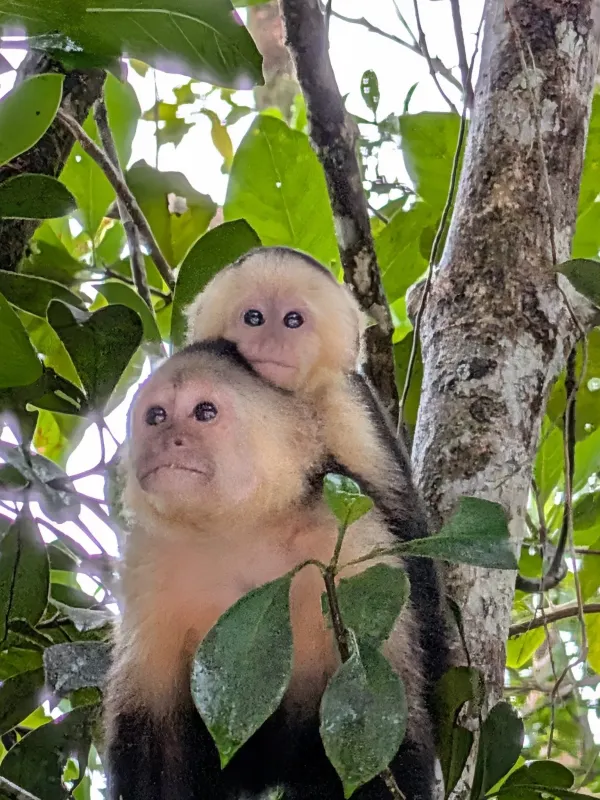
Description
How to identify
Capuchin monkeys (genus Cebus) are primates of the family Cebidae, widely distributed across the tropical forests of Central and South America.
They are medium-sized animals with a distinct hair pattern on their heads that resembles a monk's hood, which is the source of their common name.
Capuchins possess high intelligence, a prehensile tail, and dexterous hands, enabling them to navigate trees and access agricultural fields with ease.
Their highly social nature and troop-based lifestyle make them particularly difficult to deter from farm lands once they identify a food source.
Physiologically, these primates are well-adapted to diverse tropical environments and function as opportunistic omnivores.
What it damages
Capuchin monkeys cause severe damage to plantations of cocoa, coffee, sugarcane, and corn, as well as various fruit orchards, including citrus.
They often destroy significantly more produce than they actually consume, by picking unripe fruit and discarding it on the ground.
Damage frequently includes gnawing on the bark of young trees, which weakens the plants and makes them susceptible to fungal infections.
In corn-producing regions, these monkeys can devastate fields during the milk stage, leading to yield losses of up to 30-50%.
Beyond crop consumption, troops of capuchins break branches of fruit trees, reducing the long-term productivity of the orchards.
When it appears
Primate activity in agro-ecosystems increases during the ripening periods of major commercial crops, especially during dry seasons.
When natural food resources in the forest become scarce, capuchins migrate toward human-made landscapes in search of accessible nourishment.
The greatest damage is reported during early morning and late afternoon hours, as troops raid plantations while remaining concealed in the canopy.
The timing of raids often correlates with the fruiting phenology of specific crops, which allows agronomists to predict high-risk periods.
Because these animals maintain high mobility throughout the year, the risk of crop damage persists during the entire vegetative cycle.
Signs of infestation
The primary sign of capuchin presence is the discovery of bitten, scattered fruit on the ground, marked by distinct tooth indentations.
In corn fields, damaged stems and half-eaten cobs that were harvested before reaching maturity are clear indicators of a raid.
In orchards, broken branches that could not support the weight of the active group and scarred bark on young saplings serve as evidence.
Unique vocalizations, such as chirps and shrieks in adjacent forest patches, often precede the troop's arrival at the site.
Other signs include the presence of excrement on branches and clearly defined animal trails through dense vegetation at the field edge.
Control measures
The most effective management strategy involves installing physical barriers, such as mesh fencing or low-voltage electric fences.
Visual and auditory repellents, such as predator decoys or ultrasonic emitters, typically provide only short-term success against these intelligent animals.
Agrotechnical methods include creating buffer zones planted with less valuable crops to divert the monkeys away from primary high-value produce.
It is essential to limit access to water sources and resting habitats around plantations to decrease the site's attractiveness to the troop.
In some commercial settings, active protection using trained guard dogs or regular patrol monitoring by farm personnel is implemented.
Taxonomy
- Latin name
- Cebus
- Family
- Cebidae
- EPPO code
- CEBUSP
Discussion
No discussions yet — be the first.