
Turkey Vulture
Cathartes aura
Description
How to identify
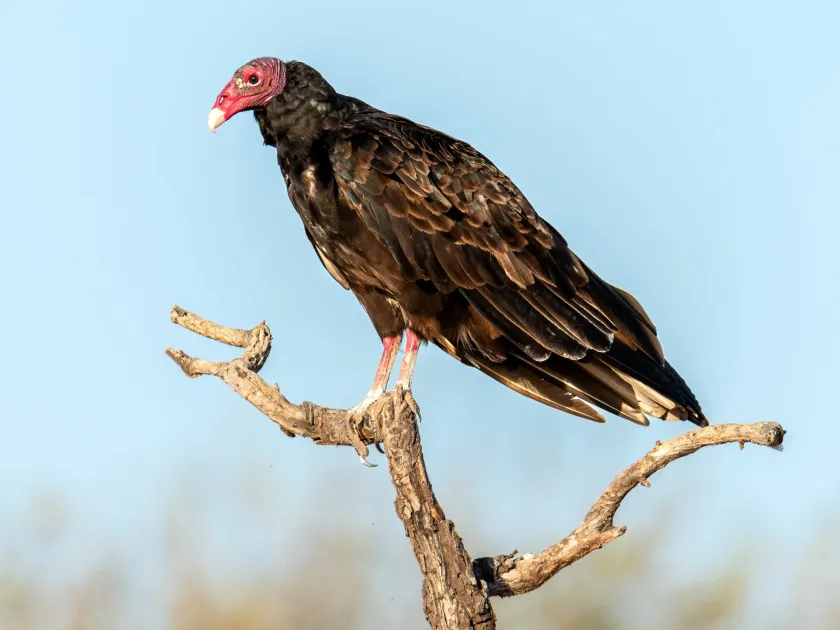
The Turkey Vulture (Cathartes aura) is a large, widespread scavenger bird species known for its distinct appearance, featuring a naked red head and dark brownish-black plumage.
These birds are exceptionally skilled at soaring, utilizing thermal currents to stay aloft for hours while searching for carrion. Their flight is characterized by a V-shaped wing profile and a noticeable side-to-side rocking motion.
Biologically, they are unique among birds for their highly developed sense of smell, which they use to locate food across vast agricultural and forested landscapes.
They do not build traditional nests but rather prefer to lay their eggs in secluded locations such as rock crevices, hollow trees, or abandoned agricultural structures.
Within agricultural ecosystems, they are frequently encountered in open fields, pasture lands, and around livestock facilities where they play the role of nature's scavengers.
What it damages
Turkey Vultures are not crop pests in the traditional sense, as they do not consume vegetation, fruits, or grains. Their impact on agriculture is primarily focused on infrastructure and sanitary risks.
Large gatherings of these birds around farm buildings can lead to significant accumulation of corrosive guano, which can damage roofing materials, equipment, and structural components over time.
While they rarely pose a threat to healthy adult livestock, their presence near calving areas can cause stress and sanitary concerns, requiring farmers to maintain vigilant monitoring.
The accumulation of excrement and discarded food debris around farm facilities creates a poor sanitary environment, potentially attracting other pests and increasing the risk of disease transmission.
Therefore, their management is centered on mitigating their impact on farm infrastructure and maintaining high hygienic standards in livestock and storage areas.
Signs of infestation
One of the most obvious signs of Turkey Vulture activity is the persistent presence of circling birds over specific farm areas, indicating potential food sources or resting spots.
Visible accumulations of whitewashed droppings on rooftops, silos, and farm machinery serve as a clear indicator that the birds have been utilizing these areas for roosting.
A foul, musky odor in areas where birds gather or attempt to nest is a common sensory cue that indicates their frequent use of the location.
Increased sightings of these large scavengers on the ground near livestock pastures are indicative of their interest in the area for food acquisition.
- Regular flight patterns of vultures over farm infrastructure.
- Heavy deposits of droppings on roofs and equipment.
- Structural damage to building materials caused by acidic guano.
Control measures
Effective management of Turkey Vultures relies on deterrent strategies aimed at making the farm environment less attractive for roosting and congregation.
Acoustic deterrents, such as propane cannons or recorded predator calls, are useful, provided they are rotated frequently to prevent the birds from habituating to the noise.
Exclusion is the most reliable method for buildings; ensuring all attic spaces, abandoned sheds, and storage rooms are sealed prevents the birds from nesting inside.
Sanitation is key to reducing attractiveness; farmers should promptly dispose of any livestock carcasses and minimize organic waste to limit the availability of carrion.
Visual deterrents, including reflective tape, holographic scare devices, or decoy predators, can be highly effective when placed near sensitive roof areas and storage structures.
Taxonomy
- Latin name
- Cathartes aura
- Family
- Cathartidae
- EPPO code
- KTHSAU
Discussion
No discussions yet — be the first.