
European beaver
Castor fiber
Description
How to identify
The European beaver (Castor fiber) is a member of the order Rodentia, family Castoridae. It is a large, semi-aquatic mammal native to Eurasia.
Adult beavers can weigh up to 30 kg and measure 1 meter in length, excluding the tail. They possess iconic, constantly growing orange incisors.
They are known for their ability to modify their environment by building complex dams, lodges, and canals to maintain stable water levels.
Beavers are primarily nocturnal and highly territorial, living in family units that occupy specific sections of river banks or wetlands.
Their musculoskeletal structure is perfectly evolved for wood cutting, allowing them to fell large trees to access food and construction materials.
What it damages
Beavers cause significant damage by felling trees, which impacts forestry operations, fruit orchards, and riparian landscape integrity.
They feed on the bark, leaves, and twigs of willow, aspen, birch, and poplar, frequently destroying valuable orchard trees near water sources.
Beyond direct tree consumption, beaver activity leads to mass deforestation in areas surrounding their habitats, creating vast clearings.
Flooding caused by dams often leads to root rot in fruit trees and agricultural crops, resulting in total loss of plantation health.
Clogging of irrigation and drainage systems with mud, sticks, and debris frequently leads to the overflow of fields and soil degradation.
When it appears
Activity peaks during spring and summer months as the animals engage in foraging for fresh green fodder and maintaining their extensive infrastructure.
In spring, snowmelt and rising water levels drive beavers to repair damaged dams, which can inadvertently flood agricultural infrastructure.
The autumn season is characterized by intense tree felling as beavers prepare winter food caches, leading to rapid loss of trees near banks.
Winter activity is reduced due to colder temperatures, but they continue to consume bark from underwater branches kept in their food caches.
From June to August, beaver activity is most observable as they clear vegetation along banks to improve access to water and food supplies.
Signs of infestation
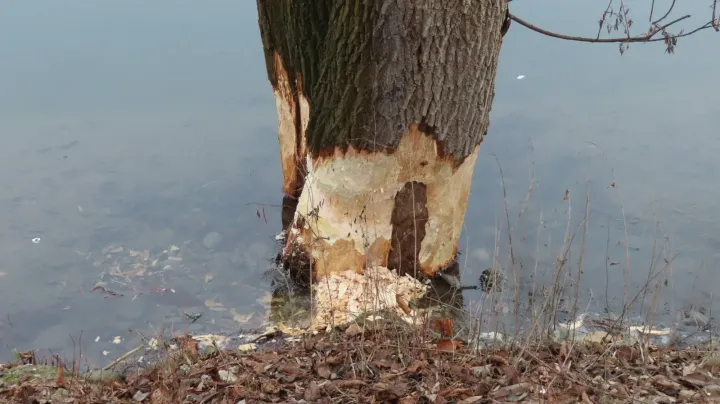
The most prominent indicator of a beaver presence is the presence of deep, cone-shaped teeth marks and felled trees with "hourglass" shaped trunks.
The discovery of dam structures blocking waterways, streams, or irrigation channels is a definitive sign of active beaver colonization.
Well-trodden paths leading from the water into the woods are clear signs of beaver foraging trails where vegetation has been cleared.
Fresh piles of wood chips at the base of trees and the appearance of stump remnants indicate recent feeding activity on the site.
A sudden, unexplained rise in water levels in drainage pipes or adjacent ponds is a common sign of a dam being built downstream.
Control measures
Encasing tree trunks in hardware cloth or metal mesh up to 1.5 meters high is the most reliable way to prevent damage to valuable specimens.
Routine inspection and clearing of drainage pipes and culverts prevent beavers from using them as structural points for their dams.
Applying taste-aversion repellents or pungent odors around the perimeter of an orchard can sometimes discourage beavers from grazing.
Water-level control devices, such as "beaver deceivers," can be installed in dams to manage water flow and prevent flooding without complete destruction.
For severe damage, professional relocation or controlled trapping by wildlife management agencies is the only legal and effective long-term solution.
Taxonomy
- Latin name
- Castor fiber
- Order
- Rodents
- Family
- Castoridae
- EPPO code
- KASTFI
Discussion
No discussions yet — be the first.