
North American beaver
Castor canadensis
Description
How to identify
The North American beaver (Castor canadensis) is a large, semi-aquatic rodent known for its engineering capabilities. It belongs to the Castoridae family and is primarily active during the night.
The species is physically adapted for water, featuring a thick, waterproof coat, webbed hind feet, and a broad, flat tail. These physical traits help them maneuver through water effectively while gathering materials.
Beavers are highly social animals that live in family groups. Their lifespan in the wild can reach 10 to 15 years, during which they continuously modify their environment to suit their safety and foraging needs.
They are famous for their ability to fell large trees using their continuously growing incisors. This biological necessity makes them a significant ecological agent that can reshape entire stream systems.
The reproductive cycle occurs annually, typically in the spring. Offspring remain with their parents for approximately two years, learning vital survival skills including building and dam maintenance.
What it damages
Beavers cause significant damage to forest stands by felling deciduous trees such as aspen, willow, and birch. This activity destroys valuable timber and degrades protective forest belts near agricultural zones.
The construction of dams often leads to the flooding of fertile agricultural lands and pastures. Water logging from these artificial ponds kills crops and damages the soil structure, rendering land unusable for farming.
Beavers frequently obstruct drainage systems, culverts, and irrigation canals. By filling these vital agricultural structures with sticks, mud, and debris, they cause extensive flooding in previously dry fields.
Burrowing activities near riverbanks and irrigation ditches lead to bank destabilization and erosion. This can collapse the integrity of roads, irrigation banks, and other vital infrastructure on a farm.
In forest nurseries, beavers can destroy large numbers of young saplings, causing substantial economic loss for reforestation projects and long-term timber supply planning.
Signs of infestation
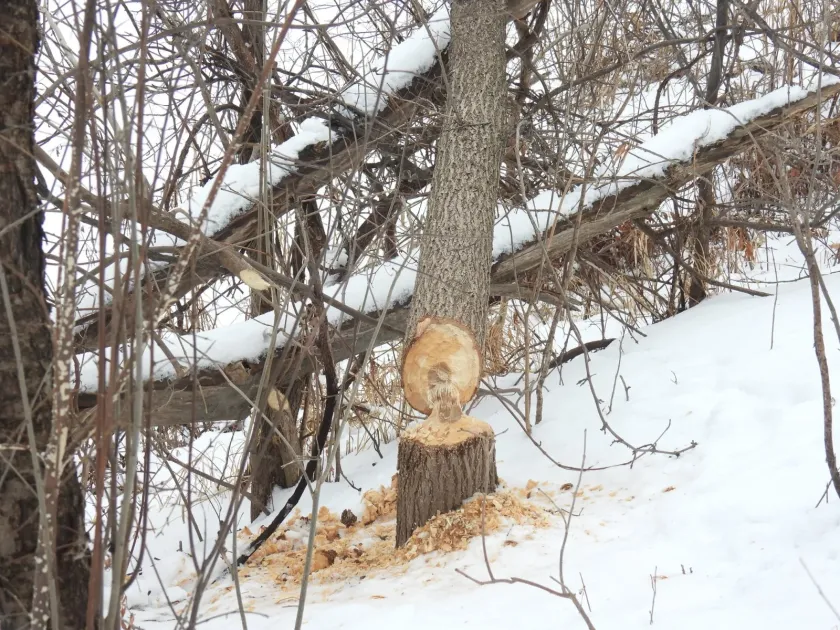
The most recognizable sign is the presence of stumps with conical, pencil-shaped marks. Large piles of wood chips around the base of trees indicate recent feeding or construction activity.
Dams crossing streams and rivers are a clear indicator of beaver presence. These structures significantly alter the water level, often creating large, stagnant ponds in areas that previously had fast-flowing water.
Well-worn paths, often called beaver slides or channels, lead from the water to the woods where the animals are actively harvesting materials. These paths are usually mud-covered and heavily compressed.
The presence of a lodge, a dome-shaped house built of mud and sticks located in the water, confirms that a colony has established a permanent home on the property.
Increased mortality of trees in areas surrounding a pond, caused by rising water levels and root inundation, is a secondary sign of long-term beaver habitat establishment.
Control measures
The most effective method for population management involves professional trapping using live traps or specialized kill traps, depending on local regulations and permit availability.
Routine breaching of beaver dams can alleviate flooding, but because beavers are diligent builders, this method is usually only temporary and requires frequent maintenance to remain effective.
Protecting high-value trees in orchards or nursery zones can be achieved by wrapping trunks with heavy-duty galvanized wire mesh to a height of at least one meter.
Installing water-level control devices, such as the "beaver deceiver" pipe systems, can maintain pond levels at a safe height, preventing flooding while allowing the beaver colony to remain.
Integrated management plans should prioritize land-use planning, creating riparian buffer zones where beaver activity can be tolerated without causing damage to critical agricultural infrastructure.
Taxonomy
- Latin name
- Castor canadensis
- Order
- Rodents
- Family
- Castoridae
- EPPO code
- KASTCA
Discussion
No discussions yet — be the first.